REVIEW · HOLBOX
Holbox: Bioluminescence Kayaking and Stargazing
Book on GetYourGuide →Operated by Eco Adventure Holbox · Bookable on GetYourGuide
Glow at sea starts here in Holbox. This bioluminescence kayak night trip turns ordinary paddling into a moving light show, then tops it with a sky-watch if conditions cooperate. You’ll also get a very practical lesson on what’s making the water glow and why the timing matters.
Two things I really like: first, you paddle far enough into darker water that your movements can trigger the glow—so it feels personal, not like a distant view. Second, the walking-and-swimming moment on the sandbar is hands-on and weird-in-a-good-way, with footprints lighting up in blue-green dots and your body lighting too.
One drawback to plan for: visibility changes with season and water conditions, so you may get a stronger show some months than others. And yes, it’s night on the coast—bring real insect repellent, because mosquitoes are part of the deal.
In This Review
- Key Things I’d Mark on Your Map
- Why Holbox Bioluminescence Looks Like Magic (and What’s Actually Happening)
- Getting There: Pickup in Off-Road Vehicles and the Las Nubes Start
- The Paddle Out: 15–20 Minutes Toward the Sandbanks (No Punta Mosquito)
- Walking the Sandbar and Swimming When Your Body Lights Up
- Stargazing That Depends on the Sky (and the Season)
- What to Bring: Swimwear, Water Shoes, and Mosquito Tactics
- Kayaks, Group Feel, and Who This Tour Fits Best
- Price and Value: $52 for a 2-Hour Night That Includes Transport
- My Booking Advice: When You Should Say Yes
- FAQ
- Where does pickup happen?
- How long is the tour?
- Do you go to Punta Mosquito itself?
- How strong is the bioluminescence?
- What colors of glow should I expect?
- Are kayaks single or double?
- Do I need to bring mosquito repellent?
- Can I take photos with flash?
- What should I bring for the activity?
- Is it appropriate for everyone?
Key Things I’d Mark on Your Map
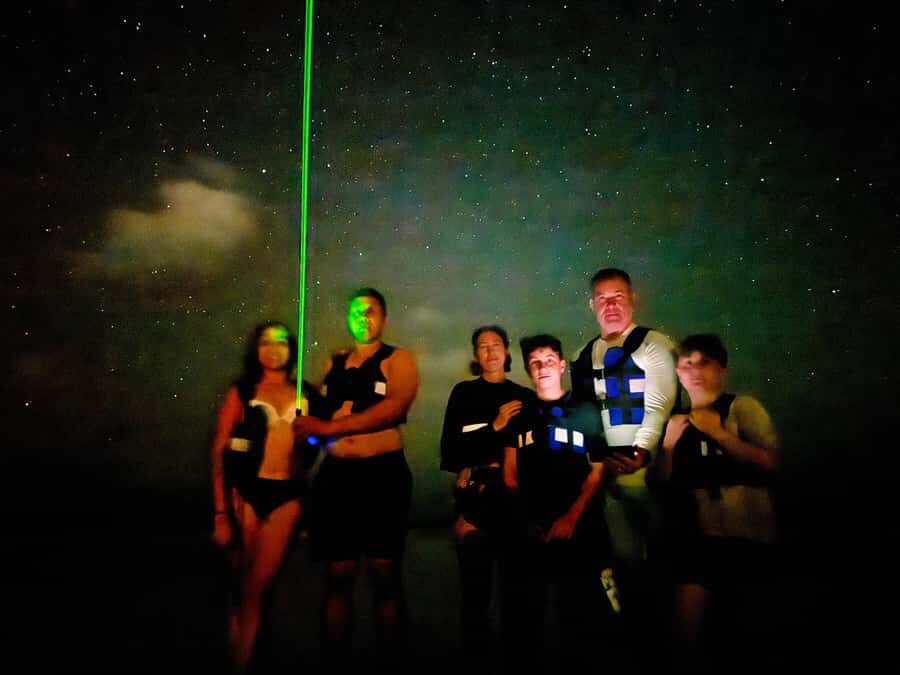
- Kayak under dark sky: they aim to reduce light pollution as much as possible within safe navigation limits
- Protected-zone rule: you do not go to Punta Mosquito, since access is forbidden there
- Three possible glow colors: green, white, or blue, and the exact mix is unpredictable
- Footprints + skin glow: you walk first, then swim where your motion lights up the water
- Short but complete loop: about 15–20 minutes of paddling, then ~45 minutes on the sandbar and in the water
- Guides who teach as they guide: names that come up often include Victor, Juan, Isa, Lisa, and Ugo
Why Holbox Bioluminescence Looks Like Magic (and What’s Actually Happening)
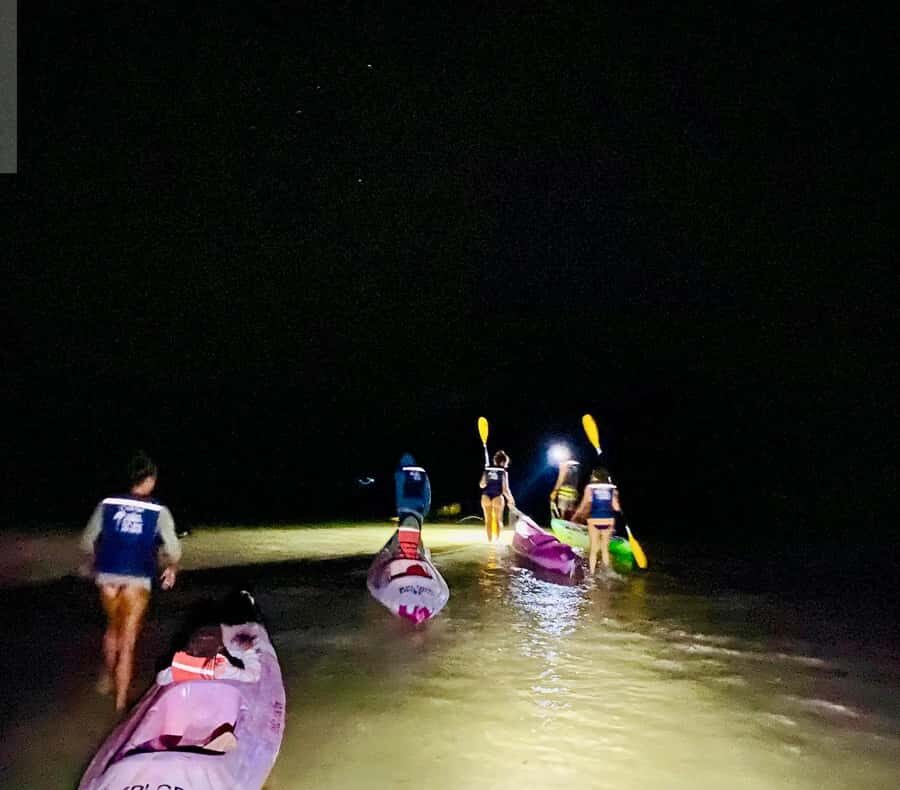
The core of this experience is bioluminescence. Not sci-fi. Not painted light. It’s tiny organisms in the sea that can glow when disturbed. When you move your paddle, step on the sandbar, or swim through the water, you’re basically giving them the spark they respond to.
What makes it so memorable on Holbox is the timing and the control. The guides try to get you away from artificial light and into an area with enough plankton concentration for a strong reaction. If the conditions are right, you can see the glow from every paddle stroke. If not, you still get a fun science-night swim, just with less intensity.
You also get a basic explanation of the phenomenon during the tour. That matters, because once you understand what triggers the glow, you stop treating it like luck and start doing small things that bring better results—like changing how you move in the water or how you step on the sand.
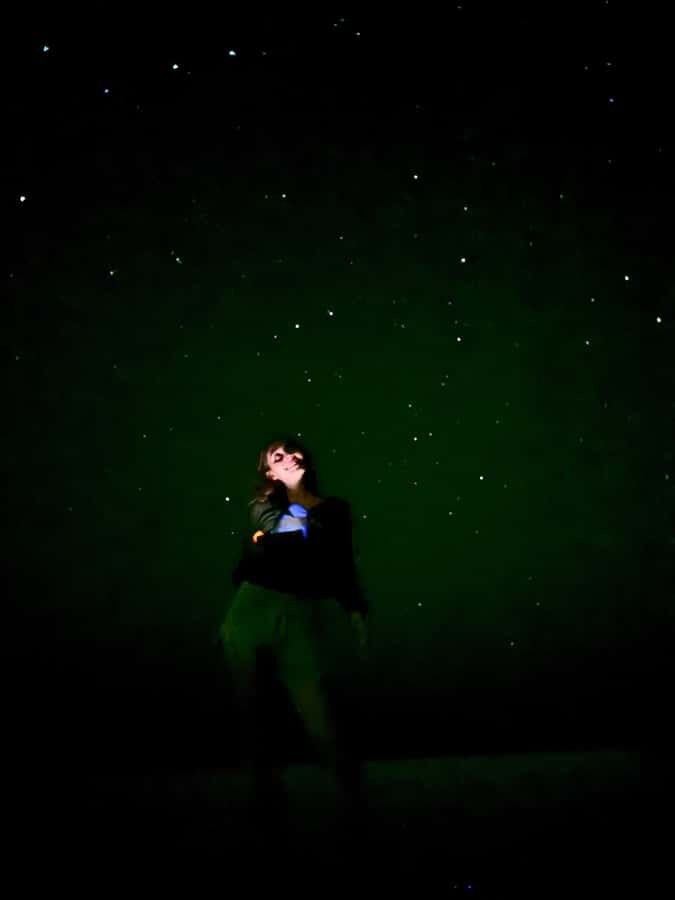
Finally, there’s the stargazing piece. If the sky is clear, you’ll see stars while you’re on the water and/or during the stops. It’s not a planetarium show, but it can feel like a real escape from city light—especially on Holbox’s darker stretches.
A few more Holbox tours and experiences worth a look
Getting There: Pickup in Off-Road Vehicles and the Las Nubes Start
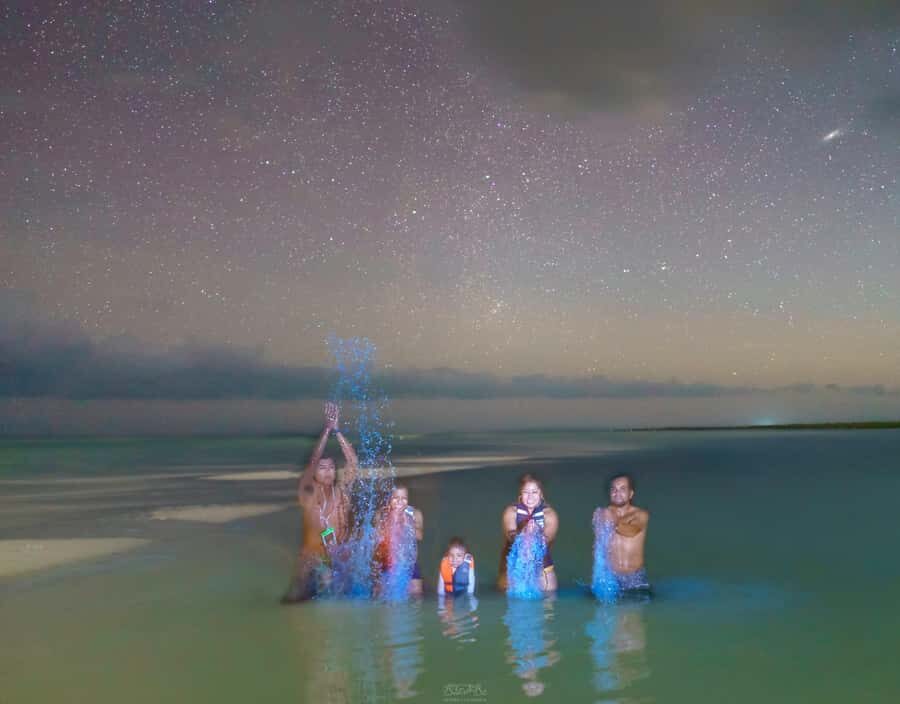
Your evening starts with a pickup from your hotel area in Holbox. The format is practical: if street conditions allow, they use off-road vehicles; if not, the ride can be a mix that still gets you to the beach area. Either way, you’ll want to be ready on time because the driver picks you up about 15 minutes before the agreed start.
A common pattern is a transfer to the last hotel zone in the area, Las Nubes, before you go to the water. That extra ride time is not wasted. It helps you start the kayaking part in a more organized way—less chaos, more actual time paddling and swimming.
You’ll then receive instructions before you go. This is where the guide’s vibe really matters. Guides like Victor and Juan tend to be both upbeat and focused on making sure you know what to do. If you’re nervous about kayaking at night, this “instructions first” approach helps you relax faster.
At the end, you’re not stuck in the dark with no plan. The vehicle is ready to take you back to your hotel, or to the central park area if street access gets tricky.
The Paddle Out: 15–20 Minutes Toward the Sandbanks (No Punta Mosquito)
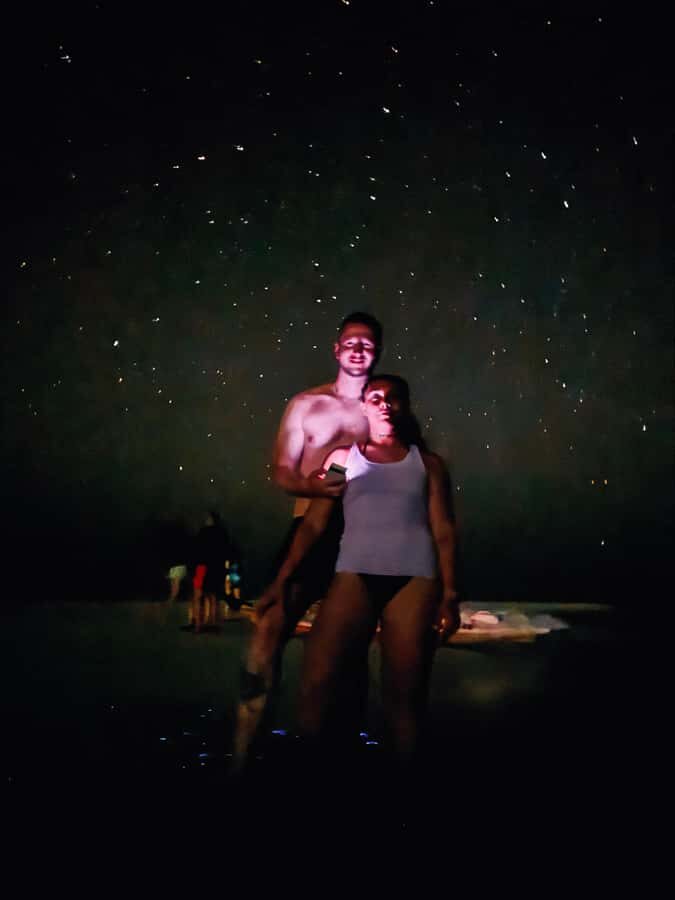
Once you’re on the water, expect a short paddle: about 15–20 minutes toward the famous sandbanks area they call Punta Mosquito sandbanks. Important detail: you do not go to Punta Mosquito itself. It’s protected, and access is completely forbidden there.
That rule is actually part of the value. It means the operators are following the conservation limits instead of pushing into places that shouldn’t be used. And since this is a nighttime wildlife-focused activity, conservation makes a big difference to the experience.
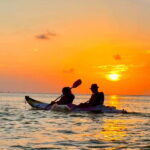
As you paddle out, the guides aim to get you as far from light pollution as possible—while still staying within navigation limits. In real life, that’s a balancing act. One light source can ruin your sky view, and even a single boat can wash out some of the darkness.
That’s why you’ll sometimes see guides take extra steps. For example, one guide (Victor) has been noted using a light-blocking sheet at a key spot to improve visibility when stray light is around. It’s a small detail, but it can make a noticeable difference to what you see.
You’ll also be able to react to the glow with every movement. The intensity depends on the season. Usually, from May to September, the bioluminescence can be 70% to 100% intensity. Outside those months, visibility can be 30% to 80%, and it can vary even within the same month.
The big takeaway for you: don’t judge the trip only by the first couple minutes. If conditions are good, the show often becomes more obvious once you’re in the darker, plankton-rich area.
Walking the Sandbar and Swimming When Your Body Lights Up
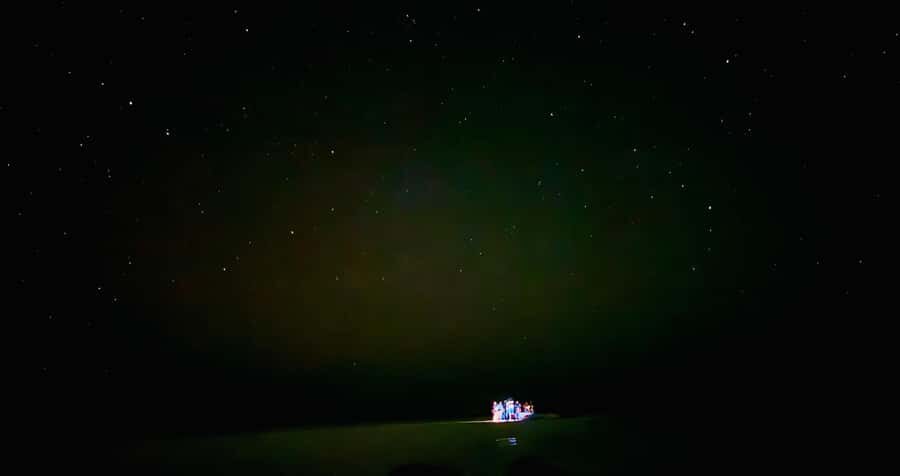
This is the moment most people remember. You’ll spend about 45 minutes total on the sandbanks and in the water.
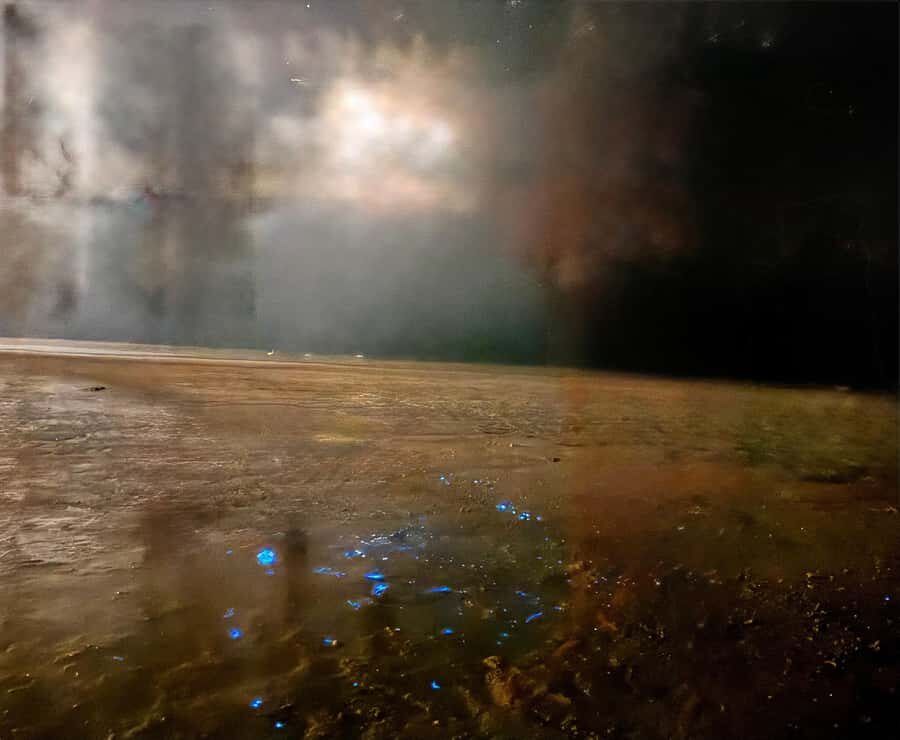
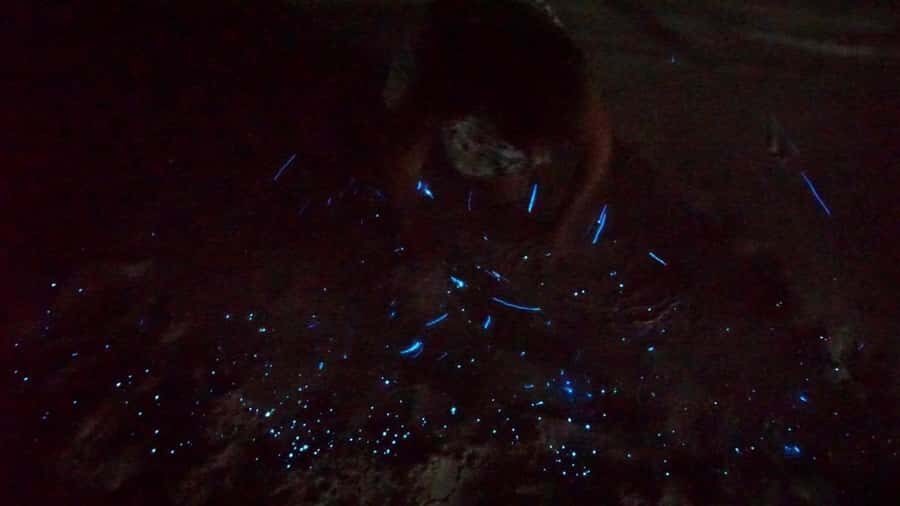
First comes the sandbar walk. You get out of the kayak and step onto the sand where the bioluminescent organisms are concentrated. The coolest part is watching how your footprints light up as blue-green dots. It’s like your body is triggering little constellations under your steps.
Then you walk further into the sea to a reasonable depth for swimming. The water doesn’t need to be deep to create the effect. Once you’re in, your movement can make the glow pop around you, almost like the water is responding to your motion.
You can see three colors: green, white, or blue. The color is unpredictable. That unpredictability is part of the charm—there isn’t a single guaranteed look, and that keeps the experience feeling alive rather than like a repeatable trick.
Also, you’ll want to treat the water calmly. The goal is to move in a way that shows the glow, not to panic around in it. If you’re not a strong swimmer, you’ll still likely be able to participate at the swim depth they choose, but you should be honest about comfort levels before you get in.
The guide will explain what’s going on and tie it to the nature reserve context. That adds meaning beyond the photo moment, because you start to see it as part of a living system, not just a night show.
Stargazing That Depends on the Sky (and the Season)
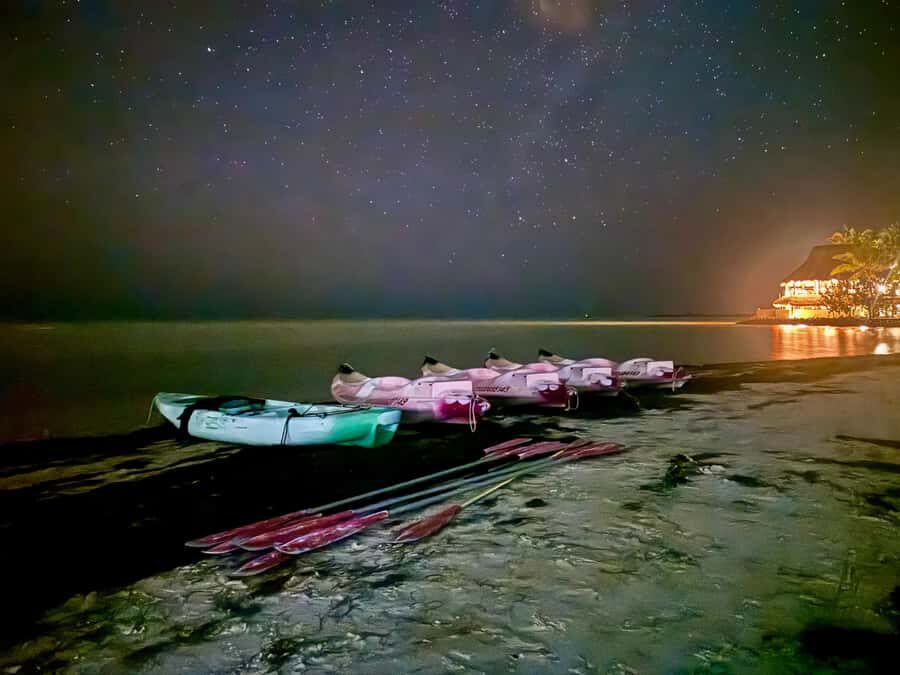
The star part is real, but it’s weather-dependent. If the sky is clear, you’ll get another show: constellations and a much darker view than most of us get at home.
Even when stars are visible, light pollution is still the enemy. That’s why they focus on going far away from lights while still respecting safe navigation limits. Night trips like this are never fully in your control—boats move, clouds roll in, and the ocean’s “active” layer can shift.
Season matters too. May through September is usually the strongest for bioluminescence intensity. But even in shoulder months, you may get a decent glow. The main thing is to show up with flexible expectations and a willingness to enjoy the explanation, the sandbar walk, and the swim—glow intensity is the variable, not the whole experience.
If you’re the type who wants the best odds, keep your schedule aligned with the stronger months. And when the guide says to move, wait, or position yourself a certain way, take that seriously. Small changes can help you see the glow and the stars together.
What to Bring: Swimwear, Water Shoes, and Mosquito Tactics
You’re going to be wet. So plan like it’s a beach swim with added science.
Bring:
- Swimwear and a change of clothes
- A towel
- Water shoes (this helps on a sandbar and in the water)
- Insect repellent, ideally biodegradable insect repellent
- Mosquito repellent is not included, so pack it and use it
One extra practical note: even with repellent, mosquitoes can still find you. I’d treat it like risk management, not a guarantee. Put repellent on before you get to the water, not at the last second.
Gear is handled for you. You’ll get life jackets and kayak gear. You also get one 10-liter dry bag per couple, so you can keep essentials protected. What this means for you: bring minimal valuables, since the activity has a strict no-valuable vibe.
Safety rules are firm:
- No flash photography
- No intoxication
- No alcohol and drugs
- No alcoholic drinks in the vehicle
- No drones
- No luggage or large bags
If you’re tempted to bring a camera, switch your mindset from flash to low-light settings. Flash is not allowed, and the whole point is letting your eyes and the natural glow do the work.
Kayaks, Group Feel, and Who This Tour Fits Best
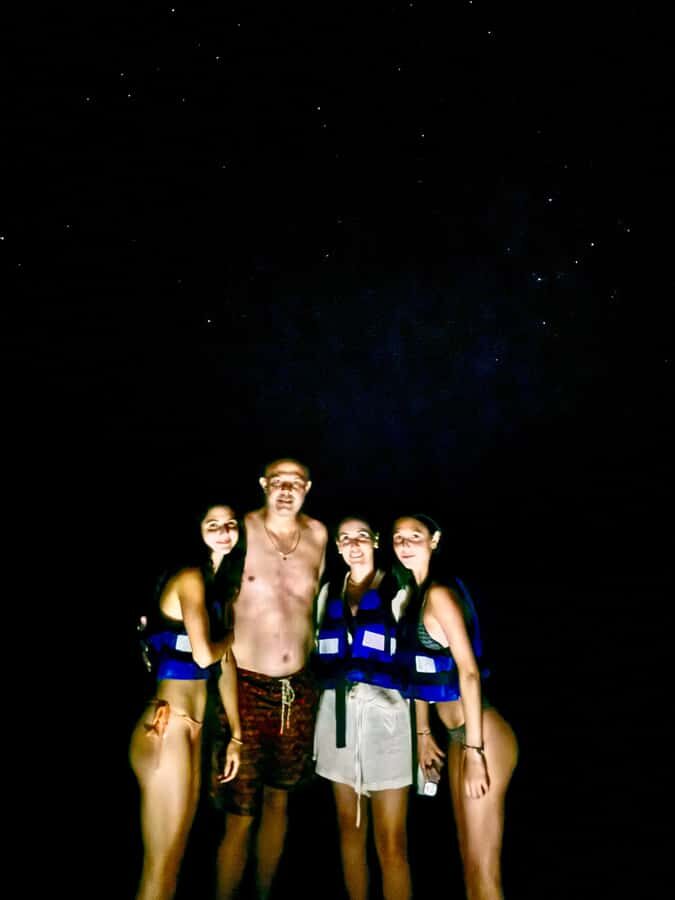
You can use a single or double kayak. That’s a practical option if you’re going solo or with a partner. Just remember: this is night kayaking plus swimming, so you should feel comfortable handling yourself after the instructions.
From what’s been shared about the guides, the experience tends to feel like a mix of wonder and coaching. Some guides—like Juan and Isa—come through as fun and enthusiastic about explaining both stars and microorganisms. That matters because it keeps you from feeling like you’re just along for the ride.
This tour also seems to work best when you’re open to the natural conditions. Bioluminescence is not always consistent. Some nights are spectacular. Other nights are still interesting, just less intense.
Who should book:
- Adults and couples who like night nature experiences
- People who can handle kayaking and a swim in open water
- Anyone who enjoys learning while they’re doing
Who should skip:
- Children under 2 years old
- Pregnant women
- People with back problems, heart problems, epilepsy, or recent surgeries
- People over 75 years old (and also over 70)
- People with mobility impairments, wheelchair users
If you fall into any of the health categories above, don’t “power through.” This activity has real physical and safety demands at night.
Price and Value: $52 for a 2-Hour Night That Includes Transport
At $52 per person for about 2 hours, the value comes from what’s included. You’re not just buying a kayak. You’re buying a guided night experience with safety support and transportation.
Included:
- One-way transfer from your hotel
- Life jackets and kayak gear
- Passenger insurance and accident-related expenses
- Certified guide
- One 10-liter dry bag per couple
- Drop-off back at your hotel or in the city center
Not included:
- Tip (optional)
- Mosquito repellent
- Any extra taxi fare if you want to stop for shopping or cash during pickup
What that means in real terms for you: the price is easier to justify because the operator takes care of the “hard parts” like safe gear, insurance coverage, and getting you to the water area. For a night activity that depends on timing and dark-sky setup, that support matters.
Is it the cheapest way to see bioluminescence? Maybe not. But it’s also a focused format: enough kayaking to reach the right water, then a strong chunk of time walking and swimming where the glow happens. If you want food, drinks, and longer downtime built in, you may want to compare with longer options. Here, the focus is on the water show and learning.
My Booking Advice: When You Should Say Yes
If you want a Holbox night that feels hands-on—paddle, walk, swim, and watch light appear from your own movement—then this is a strong pick. The tour is also a good match if you like nature explanations, because guides like Victor and Juan are repeatedly praised for mixing science with a relaxed, excited approach.
I’d book if:
- You can travel in May–September for the best bioluminescence intensity odds
- You’re comfortable in the water and don’t mind it being dark and ocean-cool
- You pack insect repellent and water shoes, and you’ll follow the no-flash rule
I’d hold off if:
- You have any of the listed medical or mobility concerns
- Night swimming makes you anxious without a lot of guidance
- You’re hoping for guaranteed maximum glow every time, because nature controls the outcome
If you fit the “comfortable with night water” profile, this is one of those Holbox experiences that makes the island feel like more than a beach town.
FAQ
Where does pickup happen?
Pickup is included and you’ll be picked up from your hotel area in Holbox. You should wait at reception or outside your hotel where the taxi can arrive.
How long is the tour?
The duration is 2 hours.
Do you go to Punta Mosquito itself?
No. You paddle to the sandbanks area called Punta Mosquito sandbanks, but they do not go to Punta Mosquito because it is protected and access is forbidden.
How strong is the bioluminescence?
It depends on the season. From May to September, visibility is usually 70% to 100% intensity. Other months can be 30% to 80%, depending on conditions.
What colors of glow should I expect?
You can see three colors: green, white, or blue. The exact color is unpredictable.
Are kayaks single or double?
Both are available. You can choose a double or single kayak, depending on what’s offered and your situation.
Do I need to bring mosquito repellent?
Yes. Mosquito repellent is not included, and it’s recommended to bring insect repellent (biodegradable is suggested).
Can I take photos with flash?
No. Flash photography is not allowed.
What should I bring for the activity?
Bring swimwear, a change of clothes, a towel, water shoes, and insect repellent. Also consider using biodegradable insect repellent.
Is it appropriate for everyone?
It’s not suitable for children under 2 years old, pregnant women, and people with certain health or mobility conditions (including wheelchair users, people with heart problems, and people with epilepsy, among others).