REVIEW · HOLBOX
Holbox: Bioluminescence by Kayak and Stargazing.
Book on GetYourGuide →Operated by Eco Adventure Holbox · Bookable on GetYourGuide
One paddle stroke can turn the sea into a light show. That’s the pull of Holbox bioluminescence kayaking and stargazing: you glide away from light pollution, then watch the water react to you. I love the hands-on approach—walking on a sandbar where your footprints light up, then swimming where your movement makes the glow flare. I also like the clear, no-nonsense guiding, with explanations that help you understand what you’re seeing (names like Victor come up in the guide lineup).
The main thing to consider is that this is a natural phenomenon, so visibility varies by season and water conditions. If you’re going in the off months or the water is calmer but less plankton-heavy, you might get a lighter show than the peak season.
In This Review
- Key Things I Think Are Worth Your Time
- Why Holbox Night Kayaking Feels Like Its Own Thing
- Getting There in the Dark: Pickup and the Timing That Matters
- Kayaks Out to the Punta Mosquito Sandbanks (Protected-Area Rules Included)
- The Bioluminescence Show: From Glowing Footprints to Swimming Glow
- What Helps You See More (And What to Stop Wishing For)
- Stargazing When the Sky Cooperates
- How the Tour Guide Turns a Nature Moment into an Actual Lesson
- The Price: Is $49 for Two Hours a Good Deal?
- What to Bring (So You’re Comfortable During the Glow)
- Who Should Choose This Bioluminescence Kayak and Stargazing Tour
- The One Part to Pay Attention To: Natural Variability
- Should You Book It?
- FAQ
- How long is the Holbox bioluminescence by kayak and stargazing tour?
- Where does pickup happen?
- Will the tour go to Punta Mosquito itself?
- When is bioluminescence usually strongest?
- What activities are included during the bioluminescence portion?
- What should I bring?
- Are flash photos allowed?
- Is alcohol allowed?
- Is it suitable for everyone?
Key Things I Think Are Worth Your Time
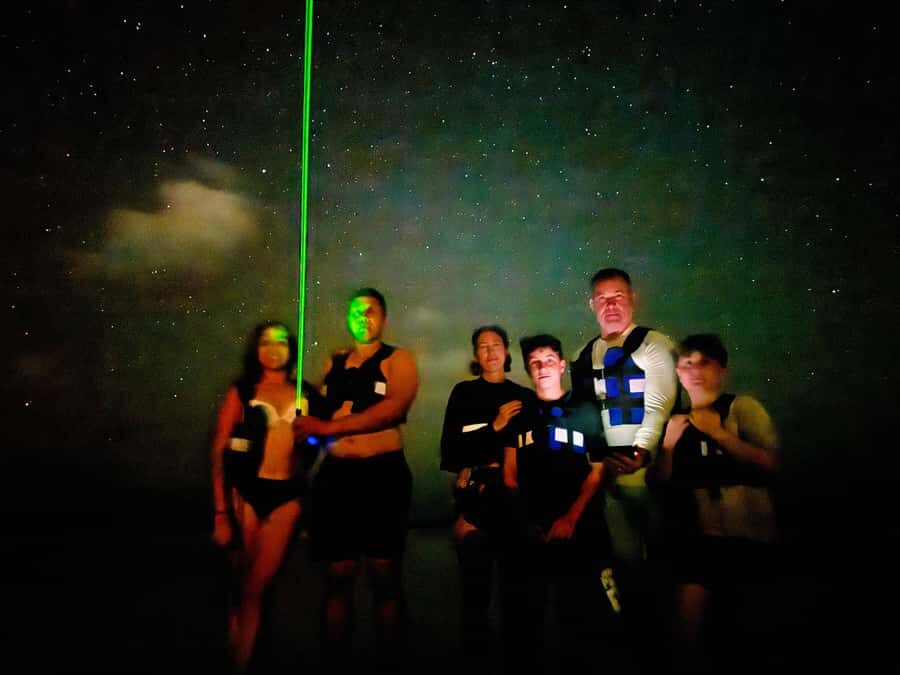
- Hotel pickup by all-terrain vehicles means less hassle when you’re trying to get to a dark beach fast.
- Punta Mosquito sandbanks, not Punta Mosquito itself (the protected area stays protected).
- Footprints + swimming: you get glowing effects on land and in the water, not just one moment.
- Light-pollution planning: they go far enough from lights to make the glow easier to see.
- Seasonal intensity: May to September is typically stronger, but you still may see a good effect year-round.
- Stargazing depends on the sky: clear weather can add a whole extra show.
Why Holbox Night Kayaking Feels Like Its Own Thing
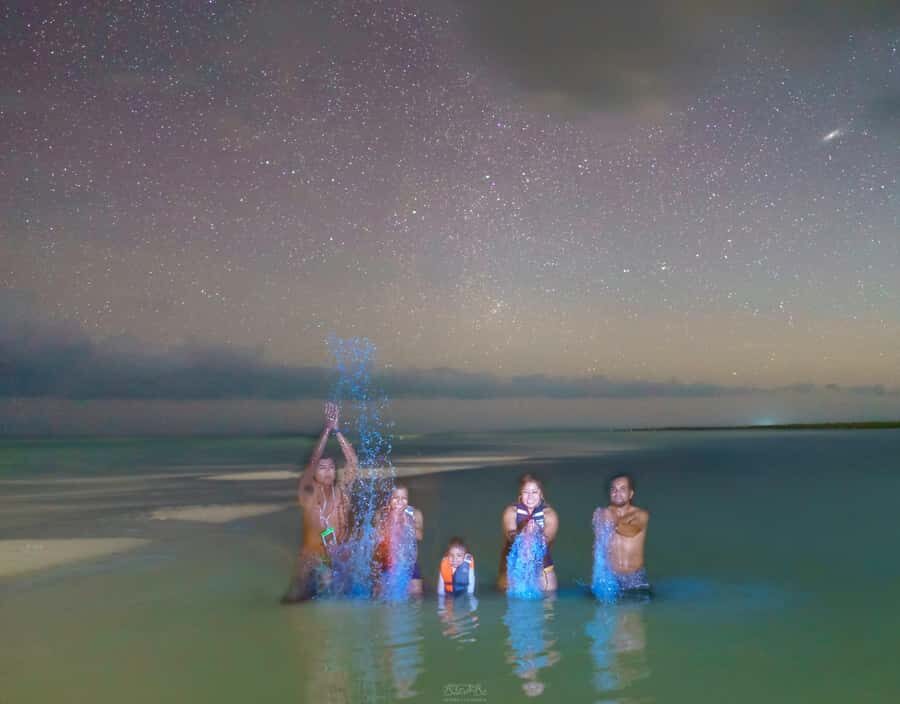
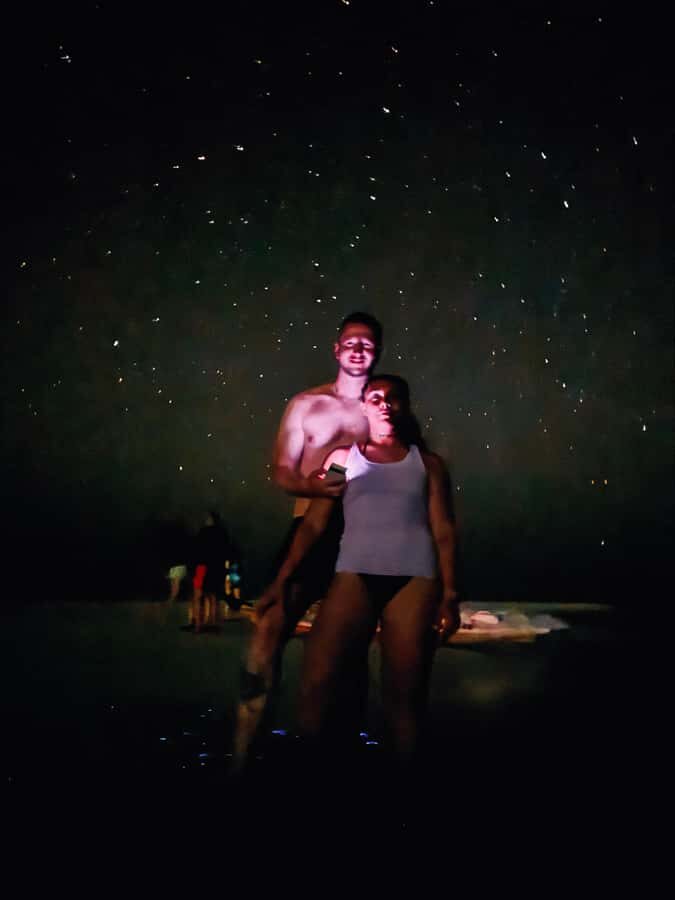
Holbox is flat, beachy, and famous for night skies. This tour leans into that. Instead of sitting on a boat watching from above, you’re down in the water-level experience—paddling, then stepping onto a sandbar in the middle of the sea, then swimming into glowing water.
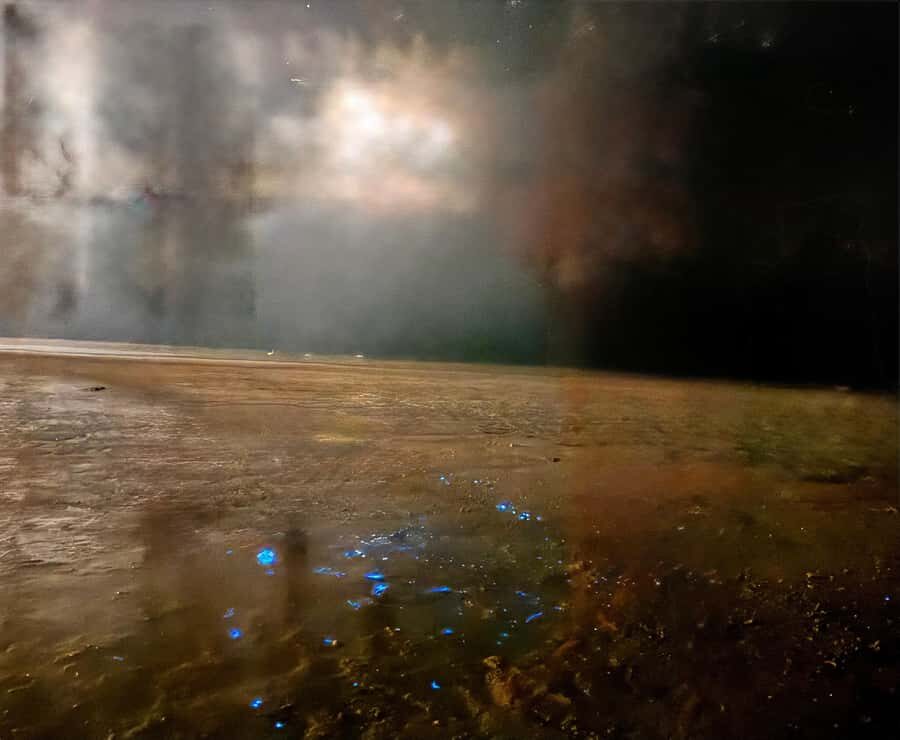
The “wow” moment isn’t one single trick. You’ll likely see the sea glow when you move your kayak, watch your footprints light up with blue-green dots, and then get that body-lightening effect while you swim. It’s the kind of nature experience that feels personal because you can’t help but be part of what’s happening.
A few more Holbox tours and experiences worth a look
Getting There in the Dark: Pickup and the Timing That Matters
The night start is part of the experience. You’re picked up from your hotel (in the Holbox area) if road conditions allow, then transported by all-terrain vehicles (and you’ll use golf-cart-style transport as part of the flow). Expect about a 15-minute transfer before you’re at the last hotel stop in the zone, where the group moves toward the beach.
This matters for two reasons. First, you want to arrive before the best conditions evaporate—calm water and low light pollution help the glow show better. Second, Holbox gets dark quickly, so arriving on time helps you skip that stressful rush of changing shoes and putting on repellent at the last second.
Kayaks Out to the Punta Mosquito Sandbanks (Protected-Area Rules Included)
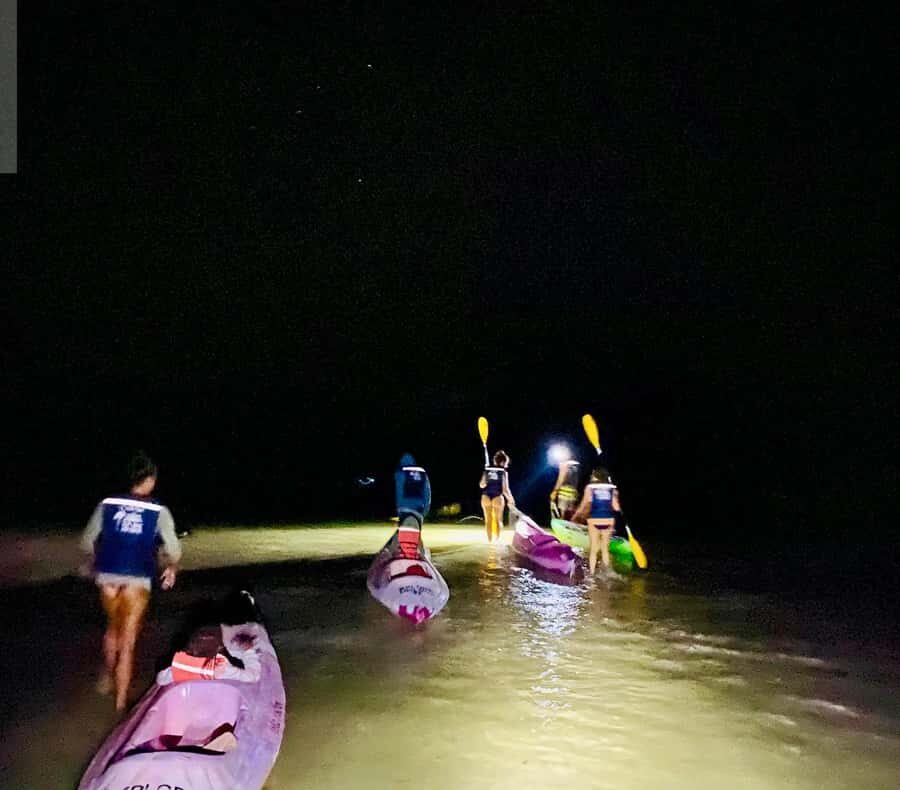
Once you’re at the water, you get instructions before you paddle. You’ll take either a single or double kayak, depending on the setup for your group. Then you paddle for roughly 15 to 20 minutes toward the famous Punta Mosquito sandbanks area.
One key detail: you don’t reach Punta Mosquito itself. That protected area is off-limits, so the tour goes to nearby sandbanks instead. For me, that’s a good sign. It means the experience is designed around conservation rules, not just an aggressive “go wherever” attitude.
They also navigate with light pollution in mind. In plain terms: they try to get you far enough from lights so the glow isn’t washed out. That’s not something you can control once you’re on the water, so it’s worth trusting the plan.
The Bioluminescence Show: From Glowing Footprints to Swimming Glow
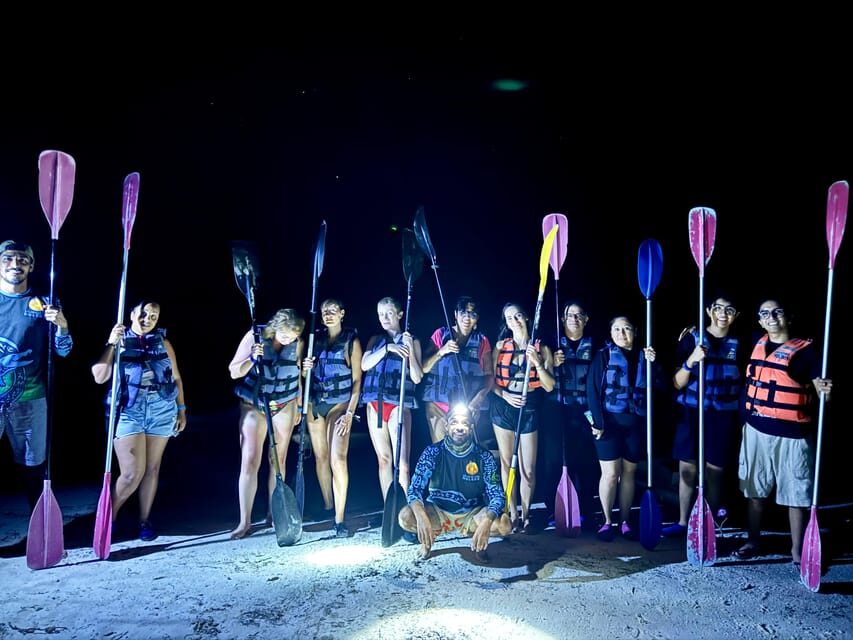
This is the centerpiece, and it’s built in stages.
Stage 1: Glow with movement (paddling)
Depending on the season, you can start noticing bioluminescence from the moment you paddle—often seen from May to September, with intensity described as roughly 70% to 100%. Outside that stretch, visibility can vary more, but the tour guidance suggests around 30% to 80% intensity at different times.
The color isn’t guaranteed. When you do the swim portion, you may see green, white, or blue, and the tour notes that the colors can be unpredictable. That unpredictability is normal. It comes down to plankton concentration, water temperature, and ocean currents.
Stage 2: Walking on the sandbar (footprints light up)
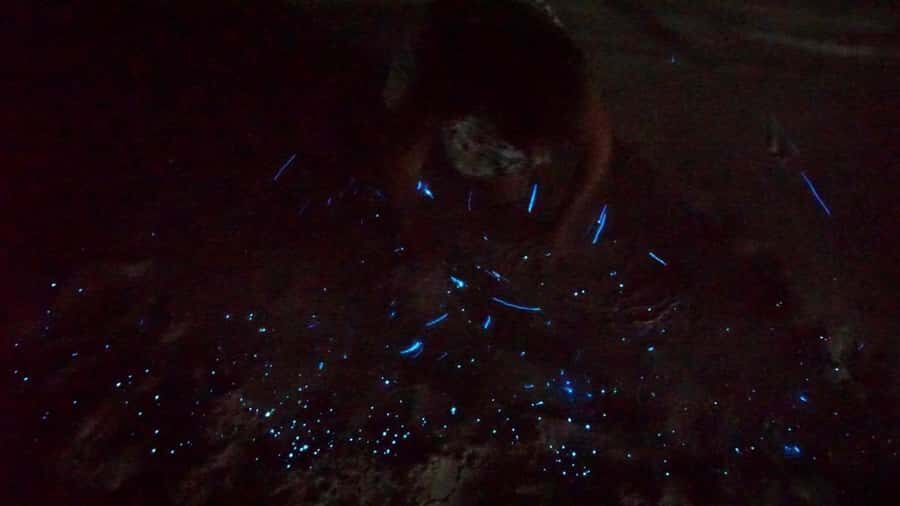
Once they find a spot with a high concentration of plankton, everyone gets out of the kayaks. You walk on the sandbanks where your footprints appear as blue-green dots. This is one of those rare moments where you can see cause-and-effect instantly: you step, and the sand responds.
It’s also the part of the experience that feels easiest to “get” for first-timers. You don’t have to be a swimmer to understand what’s happening. You just need steady steps and water shoes that can handle a sandy surface.
Stage 3: Swimming at a reasonable depth (your body lights up)
After the sandbar walk, the guide brings you to a swim-friendly depth. Then the glow responds to your movement, which is where the experience turns into a light-and-limb show.
You’ll see millions of luminescent microorganisms glowing with each motion. The tour describes the explanation and the natural reserve context here too, so you’re not just watching—you’re also learning what’s producing the effect. That knowledge helps you notice subtler things, like how quickly the glow fades after a movement stops.
What Helps You See More (And What to Stop Wishing For)
The tour experience is strongly influenced by conditions you can’t fully control. That’s the nature side of bioluminescence.
Here’s what’s spelled out in the tour info and how I’d translate it into your expectations:
- If plankton concentration is high, the glow tends to be more obvious.
- If water temperature and currents are favorable, the effect may look stronger or more consistent.
- If the sky is clear, stargazing adds a second layer of magic.
- If the conditions aren’t perfect, you can still get the experience, but it might be subtler.
So instead of chasing a guarantee, think “best chance of a strong show” and pack for comfort. If you go in with that mindset, even a lighter display still makes sense because you’ll be close enough to see the effect respond to your actions.
Stargazing When the Sky Cooperates
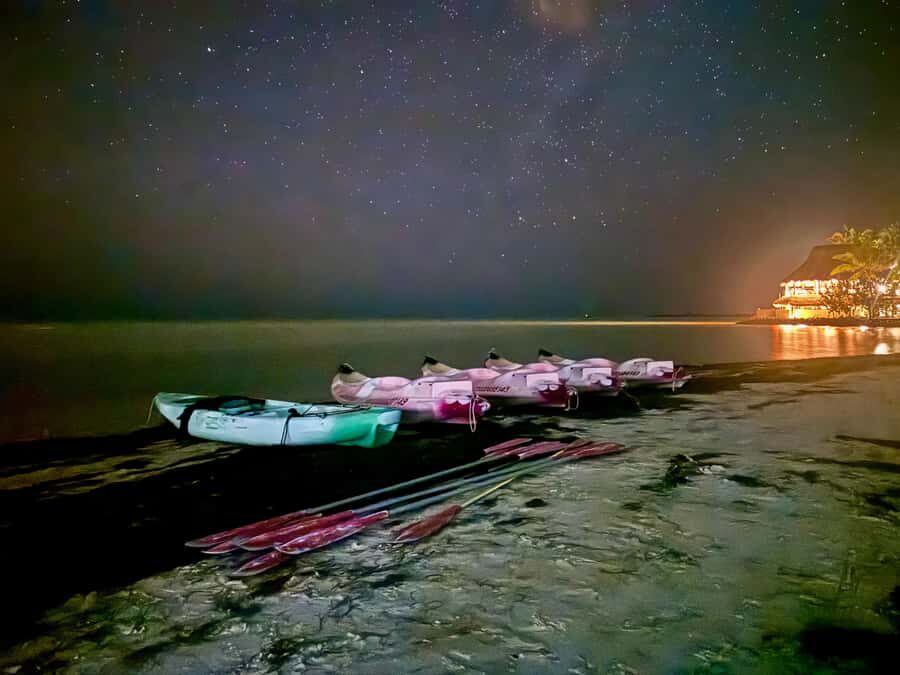
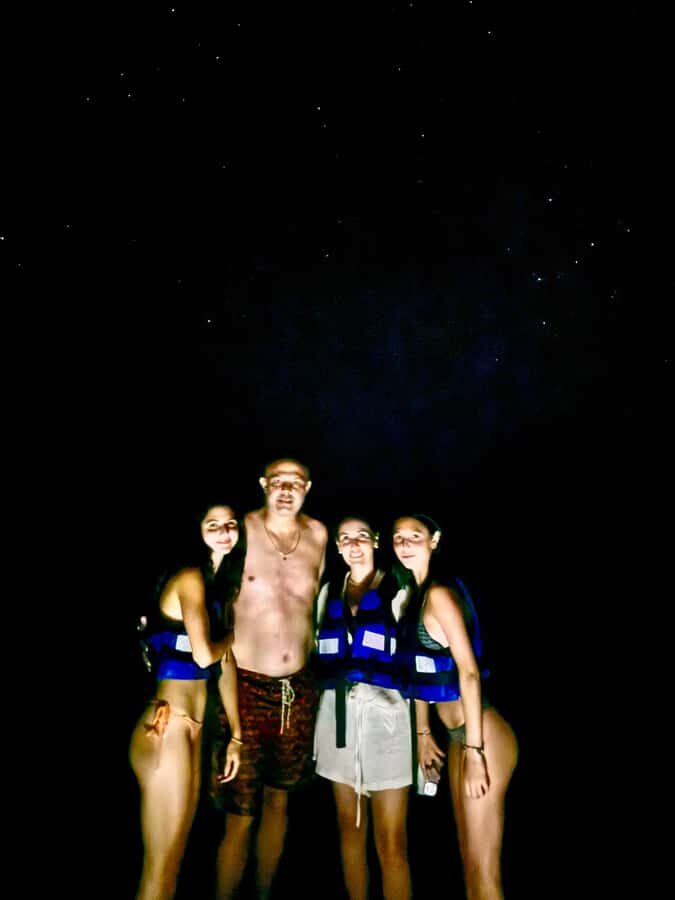
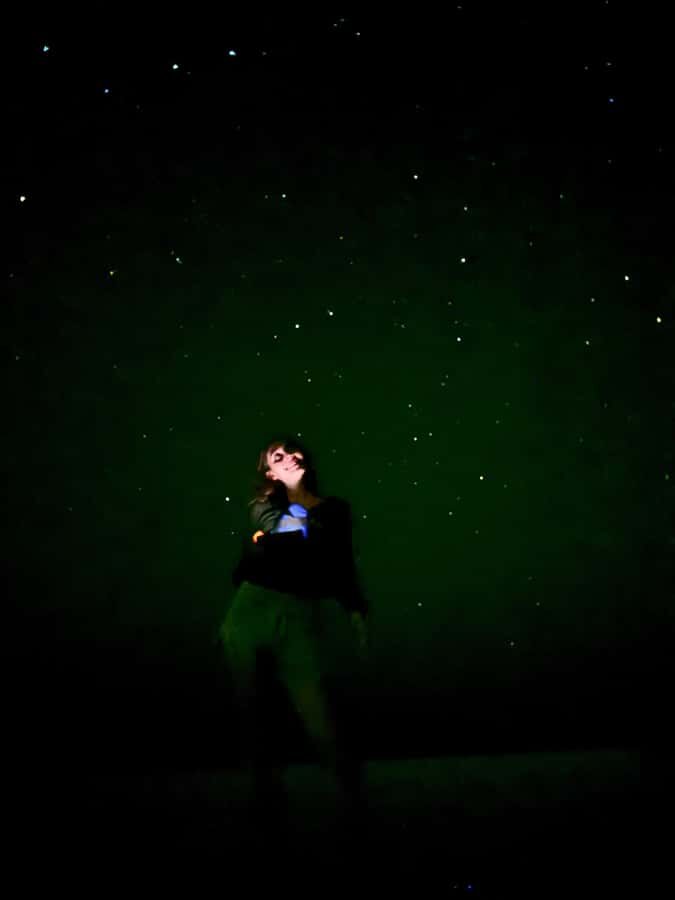
This tour isn’t only about the water. Once you’re farther from artificial lights and the sky gets a clear view, the stars become part of the night narrative.
The guide specifically notes that if the sky is clear, you’ll get another amazing spectacle. That’s not a promise you can lock in, but it’s a strong reason to choose this type of tour over something that keeps you inside one bright boat lane.
Practical tip: if you’re the kind of person who gets impatient waiting for your eyes to adjust—this is where you practice a little patience. The darker you are, the more you notice.
How the Tour Guide Turns a Nature Moment into an Actual Lesson
The tour is described as a live-guided experience in Spanish and English. The guiding style matters here because bioluminescence can feel mysterious at first. You want to know what you’re looking at, why it glows, and why it changes with conditions.
From the guide names that come up, Victor is mentioned as a great guide in at least one account. The consistent theme is clear guidance and solid explanations—so you’re not just paddling and hoping. You’re getting context for the reserve and the phenomenon, which makes the whole thing stick with you longer after the night ends.
The Price: Is $49 for Two Hours a Good Deal?
At $49 per person for a roughly two-hour experience, this is priced as a focused nature outing rather than an all-day trip. What you’re paying for is the timing (night + low light pollution), the transport to the water, the guided kayaking and walking, and the swim where the glow happens.
The value piece is the one-way transfer from your hotel. Even a short transfer is helpful on Holbox because getting to the right departure point at night can be annoying on your own.
What’s not included also matters:
- You’ll want your own mosquito repellent (and the tour calls for biodegradable repellent).
- There’s no mention of drinks or food, so budget on your own appetite plan.
- Tips are optional.
Is it a bargain compared with longer tours that include snacks and more time? Not always. But if you want a clean, concentrated bioluminescence-and-stars experience, the $49 price is reasonable for what you’re getting: dark-sky access, guided water time, and active participation.
What to Bring (So You’re Comfortable During the Glow)
This tour is short, but it’s wet, and it’s nighttime in a mosquito region. Bring what the operator asks for and you’ll feel better doing the sandbar walk and the swim.
Bring:
- Swimwear
- Change of clothes
- Towel
- Insect repellent (biodegradable is specifically recommended)
- Water shoes
You’ll also appreciate basic common sense: wear something you don’t mind getting damp. The experience involves the water enough that dry clothes are a real comfort for the ride back.
Not allowed items also affect what you pack:
- No luggage or large bags
- No drones
- No flash photography
- No alcohol or drugs
- No pets
Flash is a big deal for this kind of tour. It can ruin night visibility for you and others, and it’s also likely to interfere with the glow you’re trying to see.
Who Should Choose This Bioluminescence Kayak and Stargazing Tour
This is best for people who are comfortable with water-based movement at night: paddling, walking on sandbanks, and swimming at a reasonable depth.
It is not suitable for a range of visitors, including children under 2, pregnant women, people with back problems, mobility impairments, wheelchair users, people with heart problems, people with epilepsy, people over 75, and people with recent surgeries (and the info also flags people over 70). If any of these apply to you, you should choose a different daytime Holbox activity where the demands are simpler.
On the positive side, it fits well if you:
- want a short but memorable nighttime outing
- love stargazing and dark-sky moments
- enjoy learning from the guide while you’re doing the activity
- don’t need food/drinks built into the itinerary
The One Part to Pay Attention To: Natural Variability
The tour is explicit that bioluminescence isn’t guaranteed. It depends on plankton amount, water temperature, ocean currents, and other factors. That’s not a loophole; it’s the whole point of working with nature rather than manufacturing a show.
If you’re the type who needs a guaranteed outcome, this might frustrate you. But if you like science-by-experience—watching how nature changes—you’ll probably find it magical even when the brightness differs from one night to another.
Should You Book It?
Yes, I’d book it if you want an active, nighttime Holbox nature experience that combines kayaking, glowing sand, a swim, and possible stargazing. The $49 price feels fair because the key value is the dark-water access and guided setup, not extras.
Skip it or choose a different experience if you’re worried about wet night movement, you’re sensitive to conditions beyond your control, or you fall into the tour’s listed unsuitability categories. In those cases, the physical demands and nighttime setting make it a mismatch.
If you do book, pack for comfort and bugs, bring your best patience for dark-adapted vision, and let the glow happen to you—literally with every movement in the water.
FAQ
How long is the Holbox bioluminescence by kayak and stargazing tour?
The tour lasts about 2 hours.
Where does pickup happen?
Pickup is included from your hotel in Holbox, with timing about 15 minutes before the agreed start time.
Will the tour go to Punta Mosquito itself?
No. The tour paddles to the famous Punta Mosquito sandbanks area, but it does not reach Punta Mosquito because it is a protected area with prohibited access.
When is bioluminescence usually strongest?
From May to September, it’s typically more visible, with intensity described as roughly 70% to 100%. In the rest of the year, intensity can vary from about 30% to 80%.
What activities are included during the bioluminescence portion?
You kayak, walk on the sandbanks where footprints can light up, and you also swim in a reasonable depth to see glowing microorganisms with movement.
What should I bring?
Bring swimwear, a change of clothes, a towel, insect repellent (biodegradable is recommended), and water shoes.
Are flash photos allowed?
No. Flash photography is not allowed.
Is alcohol allowed?
No. Alcohol and drugs are not allowed, and alcoholic drinks are also not allowed in the vehicle.
Is it suitable for everyone?
No. It is not suitable for children under 2 years, pregnant women, people with back problems, people with mobility impairments, wheelchair users, people with heart problems, people with epilepsy, people over 75 years, people with recent surgeries, and people over 70 years.