REVIEW · GUADALAJARA
History and Murals: Walking Tour Guadalajara
Book on Viator →Operated by Jalisco Trip Tours · Bookable on Viator
Murals and history in one easy walk. I like how this Guadalajara tour starts in the oldest core of the city and gets you into the Cabañas Museum without the usual line headache, thanks to included entrance. I also like that you walk with a real local guide who connects the buildings to the bigger stories behind them.
The highlight for me is how the José Clemente Orozco mural stops are handled with care, not just photo ops. You’ll get context as you move—then you’re encouraged to look closely at the art before explanations pile on. That mix is what turns a short route into something that actually sticks.
One thing to consider: it’s mostly on foot and standing, and there are no headsets or microphones. If you’re hard of hearing or you prefer lots of seated time, plan for relying on the guide’s voice.
In This Review
- Key highlights (what makes this tour worth it)
- Why this Guadalajara walking tour fits so well
- Start at Plaza de Armas: the city’s “center of gravity”
- Parroquia El Sagrario and Guadalajara Cathedral: architecture with a timeline
- Rotonda de Los Jaliscienses Ilustres: statues with a purpose
- Government buildings and the Orozco mural idea (with access caveats)
- Plaza de la Liberación, Plaza Fundadores, and Teatro Degollado
- Plaza Tapatía: the newer square with the commerce focus
- Museo Cabañas: José Clemente Orozco murals you can’t really rush
- Mercado Libertad (San Juan de Dios): food, crafts, and easy souvenirs
- Price, pace, and logistics that actually matter
- What kind of traveler should book this
- Should you book it?
- FAQ
- How long is the Guadalajara walking tour?
- Where does the tour start and end?
- Is the tour offered in English?
- What’s the group size?
- What entrance tickets are included?
- Is access to the government buildings and Teatro Degollado guaranteed?
- Does it require good weather?
- What is the cancellation policy?
Key highlights (what makes this tour worth it)
- Skip-the-line entry built into the schedule for the Cabañas Museum
- Fernando’s storytelling style: explanations with room to look at the murals first
- English guide with a pace that keeps it short (about 3-4 hours)
- Market time at Mercado Libertad for snacks, crafts, and easy souvenir shopping
- Some buildings depend on access (government buildings and Teatro Degollado)
Why this Guadalajara walking tour fits so well
Guadalajara’s historic center is packed. In a normal free-form walk, you’d pick a few stops and still feel like you missed half the point. This tour keeps it tight and purposeful, so you can get the city’s visual highlights without building your own mini research project.
The route is designed around major squares, churches, and the mural trail that links political history to art. And because the group is small (max 15), you’re more likely to get your questions answered without waiting your turn.
Price-wise, $53.05 sounds specific for a reason: key entries are included (not just a guide and a stroll). You’re paying for the guide’s context and for the places where lines and entry logistics can otherwise slow you down.
You can also read our reviews of more walking tours in Guadalajara


Start at Plaza de Armas: the city’s “center of gravity”
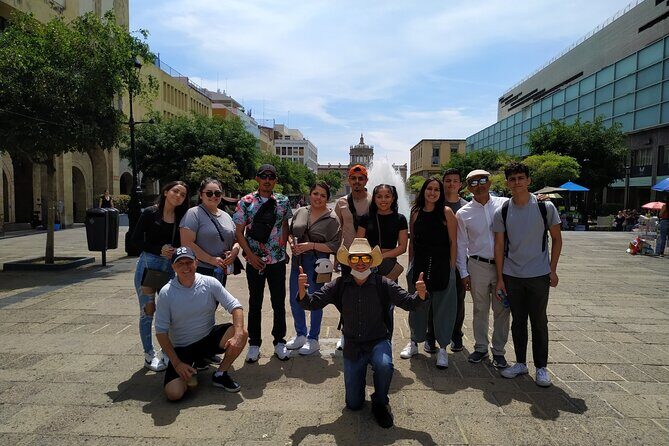
You begin at Plaza de Armas, the oldest square in Guadalajara’s historic center. It’s surrounded by the kinds of buildings that help you understand the city’s layout: where power sat, where people gathered, and how the center became the stage for daily life.
Even early on, you’ll learn how to read the area. Instead of seeing a pretty plaza, you’ll start noticing why certain streets and institutions sit where they do—and how that shaped Guadalajara’s growth.
Admission at this stop is free, which is good news because it sets a calm tone before the more ticketed highlights.
Parroquia El Sagrario and Guadalajara Cathedral: architecture with a timeline
Next up is Parroquia El Sagrario Metropolitano, inaugurated in 1839. It’s described as having a neoclassical style and a striking stone look, and it’s treated as one of Guadalajara’s architectural jewels. The big win here is that the tour doesn’t rush past it like a drive-by.
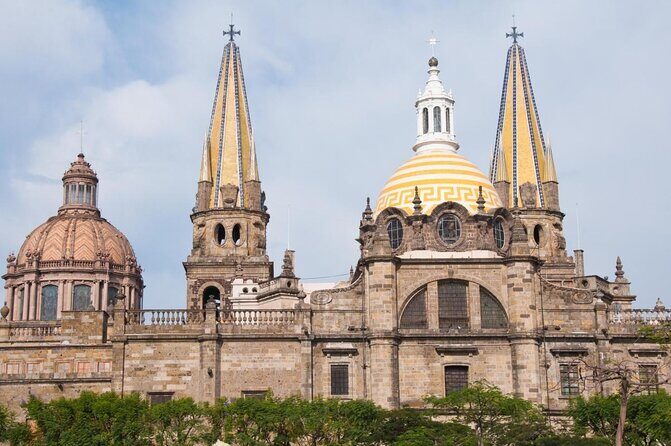
After that, you’ll look at Guadalajara Cathedral—both exterior and interior. Construction began in the 16th century, and the cathedral is one of the state’s most important churches. The tour aims to make the building feel less like background and more like a milestone.
Both of these stops have admission included, so you’re not constantly checking your wallet mid-walk.
Rotonda de Los Jaliscienses Ilustres: statues with a purpose
Then you’ll hit Rotonda de Los Jaliscienses Ilustres, a neoclassical monument dedicated to major figures in Jalisco’s history. This is the kind of stop that many walking tours ignore because it’s not a museum or a mega-attraction.
Here, it works because the guide ties the monument to what it represents: memory, recognition, and how communities build a public “who mattered” story. It’s quick—about 10 minutes—but it adds meaning to the more scenic landmarks.
Government buildings and the Orozco mural idea (with access caveats)
From the squares, the tour moves into the theme of murals as public storytelling. You’ll pass by the Guadalajara Municipal Palace, a neocolonial building built between 1949 and 1952. It’s the headquarters of the Municipal Council, so it’s more than a pretty facade.
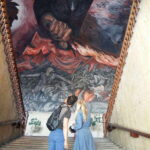
Then comes Palacio de Gobierno del Estado de Jalisco, inaugurated in 1790 and used over time for different political and military roles. The star detail is its main staircase, where you can appreciate a mural connected to José Clemente Orozco.
Here’s the practical caveat: access to some government buildings can be limited based on what local authorities allow that day. That means you may not always get inside the same spaces.
The tour’s structure helps with that reality. If certain buildings can’t be accessed, you still get the core mural experience where entry is planned.
You can also read our reviews of more historical tours in Guadalajara


Plaza de la Liberación, Plaza Fundadores, and Teatro Degollado
The walk continues through Plaza de la Liberación, built in the 1950s and dedicated to Mexico’s independence. It’s a reminder that the city’s identity isn’t only about the colonial-era core—it keeps updating its public monuments as national history changes.
Next is Plaza Fundadores, dedicated to Guadalajara’s foundation in 1542. You’ll see a bronze sculpture by local artisan Rafael Zamarripa honoring the founders. This stop is brief, but it anchors the city’s story in the “how it started” moment.
After that, you may visit Teatro Degollado, opened in 1866 during the war of Reform. The tour notes that access depends on conditions set by local authorities—so treat it as a possible bonus, not a guaranteed indoor experience. When you do see it, it’s worth it because the building is known for beauty and acoustics.
Plaza Tapatía: the newer square with the commerce focus
Next comes Plaza Tapatía, built in the 1970s and described as the largest and newest square in the historic center. It’s dedicated to commerce and the sale of handicrafts, which makes it a good bridge from old Guadalajara (churches and plazas) to the living Guadalajara (shopping, buying, everyday movement).
This stop is free and gives you breathing room before the bigger ticket highlight: the mural museum and the market finale.
Museo Cabañas: José Clemente Orozco murals you can’t really rush
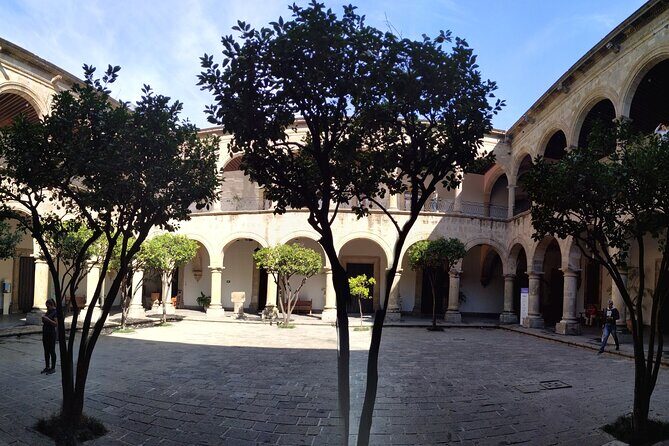
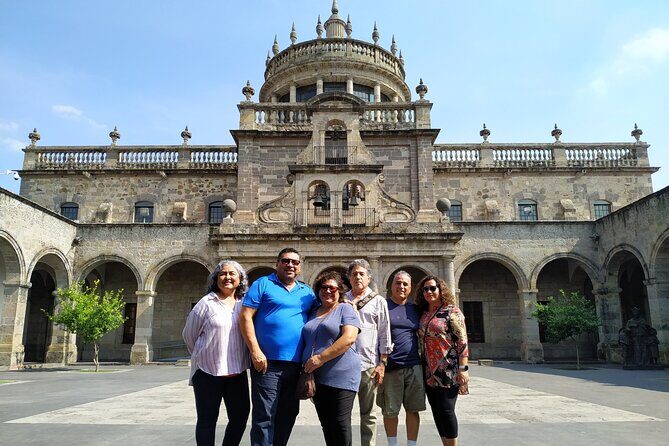
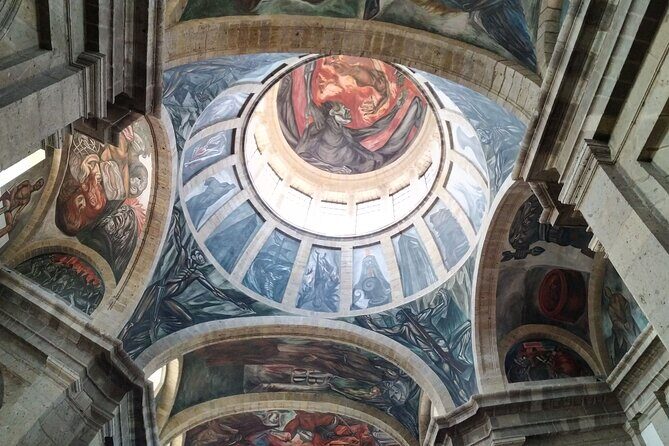
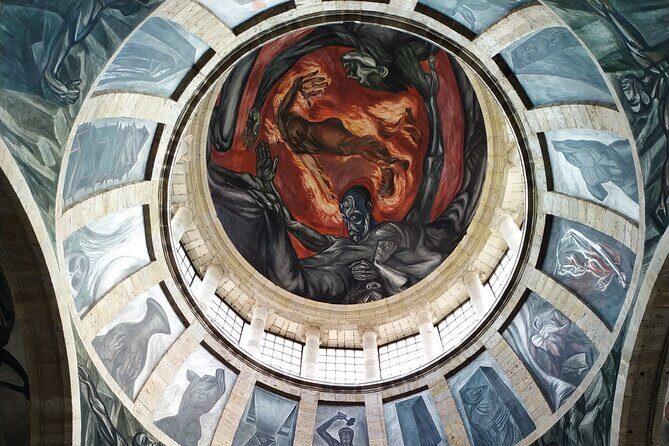
The tour’s anchor is Museo Cabañas, where you’ll spend about an hour. This is where the Orozco murals land hard. The museum houses 57 fresco murals painted on the walls and domes of the main chapel, created by one of Mexico’s three greatest muralists: José Clemente Orozco.
The big practical advantage is included entrance that helps you beat the queues. In real life, this is often what separates a “we got there eventually” visit from a focused one. Here, you’re more likely to enjoy the art without losing your whole day to line management.
One detail that matters: the guide’s approach. You’re encouraged to first experience the murals visually, then you get deeper explanations. That order helps you form your own reactions—then you learn what you might have missed on your first look.
The tour also emphasizes that Cabañas is recognized as UNESCO World Heritage, which gives the murals a bigger frame than “important art in a museum.” It’s a heritage site, built into the cultural identity of the city and beyond.
Mercado Libertad (San Juan de Dios): food, crafts, and easy souvenirs
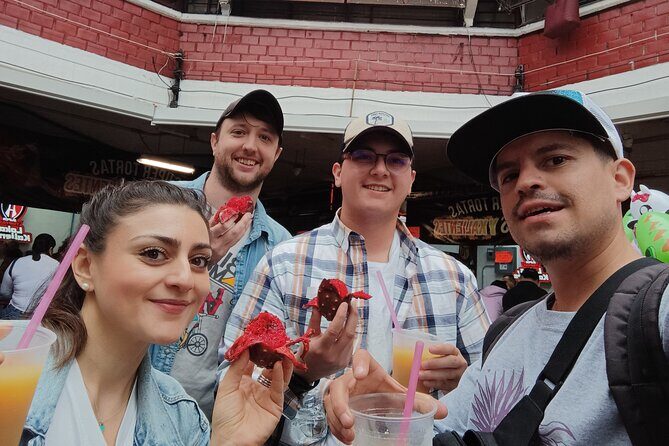
End your walk at Mercado Libertad, also known as San Juan de Dios in the area. The tour positions it as the largest traditional market in the city and in Latin America of its kind. That’s a big claim, but the practical takeaway for you is simple: this is where you can keep moving without needing to plan the next stop.
You’ll find typical food, regional crafts, and souvenirs. Even if you don’t want a lot of shopping, it’s a great place to eat something local and pick up a small item without paying “tourist convenience” prices.
Admission to this market visit is included, so you’re not stuck doing math on what’s worth it once you’re already here.
Price, pace, and logistics that actually matter
This is listed as 3 to 4 hours total, starting at 10:00 am. Most travelers can participate, and the tour stays close to public transport, which matters if you want an easy connection back to your hotel.
Because it’s on foot, plan for comfort. Reviews point out that it’s mostly standing, and there are no headsets or microphones—so you’ll want to choose an area where you can hear your guide clearly if the group gets crowded.
On the brighter side, there are breaks built into the experience. A short rest stop around Café Degollado is mentioned as a time to use the restroom, hydrate, and recover a bit before the next mural-heavy segment.
Also: some stops are “try to enter” rather than guaranteed. Government buildings and Teatro Degollado can depend on what authorities allow. If access changes that day, the tour still keeps the mural and cathedral core intact.
What kind of traveler should book this
Book it if you want a structured walk through Guadalajara Centro that doesn’t turn into a checklist of churches. This route works best when you like learning how art and politics share space—like when muralists use public walls to talk to the public.
It’s also a great fit for a first-time visit. You’ll get bearings fast: plazas, major institutions, and then the reason Guadalajara is famous beyond its architecture.
If you need lots of seated time, or if you depend on audio devices, you may want to skip this exact format and choose a different tour style.
Should you book it?
Yes—if you want a short, high-impact introduction to Guadalajara’s historic center and mural legacy, this is strong value. The included entry for Museo Cabañas and the focus on José Clemente Orozco make it feel like more than “just walking.”
The only real reason to hesitate is comfort with a standing-and-walking schedule and the lack of headsets. If that’s fine for you, you’ll come away understanding not only what you saw, but why it matters—then you finish with market time for food and souvenirs in one clean ending.
FAQ
How long is the Guadalajara walking tour?
It runs about 3 to 4 hours.
Where does the tour start and end?
It starts at Plaza de Armas (Zona Centro), 44100 Guadalajara and ends at Mercado Libertad – San Juan de Dios (C. Dionisio Rodríguez 52), 44360 Guadalajara.
Is the tour offered in English?
Yes, it’s offered in English.
What’s the group size?
The tour has a maximum of 15 travelers.
What entrance tickets are included?
Admission is included for Parroquia El Sagrario, Guadalajara Cathedral, Cabañas Museum, and Mercado Libertad. Other stops are free as listed, while some access points (like government buildings and Teatro Degollado) can vary and may not be included.
Is access to the government buildings and Teatro Degollado guaranteed?
No. Access to these places is subject to availability based on indications from local authorities.
Does it require good weather?
Yes. The experience requires good weather. If it’s canceled due to poor weather, you’ll be offered a different date or a full refund.
What is the cancellation policy?
You can cancel up to 24 hours in advance for a full refund. If you cancel less than 24 hours before the start time, the amount paid is not refunded.