REVIEW · PUERTO VALLARTA
Tandem Skydive in Puerto Vallarta With Beach Landing
Book on Viator →Operated by FLY Skydive Puerto Vallarta · Bookable on Viator
Skydiving with a beach landing feels very real. I love that this tandem jump pairs a classic plane-to-parachute experience with a soft touchdown on the sand and big Puerto Vallarta views from above. I also like the human side: the team’s USPA-certified tandem instructors and hands-on briefing are the difference between thinking about it and actually going. One drawback to consider is the 243 lbs weight limit and the note about added charges if you’re over 85 kg.
You’ll start with harness fitting and a safety session, then ride in a Cessna 182 for a scenic Puerto Vallarta tour before the jump from 10,000 feet. The altitude and timing are pretty clear cut—about 45 seconds of freefall and then 7-8 minutes under canopy—so you know what’s coming. Just keep in mind that the whole thing is weather dependent, because skydiving won’t happen when conditions aren’t right.
In This Review
- Key Points You’ll Care About
- Why the Playa del Holi Landing Changes the Feeling
- Price and Timing: What $390.27 Buys You
- Before You Fly: The Safety Training That Actually Preps You
- The Cessna 182 Scenic Flight Over Puerto Vallarta
- The 10,000-Foot Moment: Freefall Speed and Timing
- Parachute Time: From Deployment to 7-8 Minutes of Views
- Soft Landing on the Beach: What to Expect at Playa del Holi
- Safety, Equipment, and USPA Certification: Why It Matters Here
- Weight Limit, Surcharges, and Fit: The Practical Checklist
- Who Should Book This Skydiving Experience
- Should You Book FLY Skydive Puerto Vallarta With Beach Landing?
- FAQ
- Where do I meet for the Puerto Vallarta tandem skydive?
- How long does the experience take?
- Do I get safety training before the jump?
- What height do you jump from?
- How long is freefall and how long is the parachute flight?
- Is there a weight limit?
- What aircraft do you use for the scenic portion?
- Is this activity private?
- What happens if the weather is bad?
Key Points You’ll Care About
- Beach landing on Playa del Holi instead of a distant landing field
- USPA-certified tandem instructors with documented jump experience
- Cessna 182 scenic flight of about 25 minutes over ocean and mountains
- 45 seconds of freefall from 10,000 feet, plus 7-8 minutes of parachute flight
- Weight limit (243 lbs) and possible surcharges above 85 kg
- Private activity setup so your group is the only one participating
Why the Playa del Holi Landing Changes the Feeling
Most skydives end with you landing somewhere you’ll forget fast. Here, the goal is to end with a beach landing, which changes the mood from purely adrenaline to something more “wow, I just did that” and then, suddenly, you’re standing near the ocean. You’re not just flying for the thrill; you’re flying through Puerto Vallarta’s coastline and then coming down where you can really take it in.
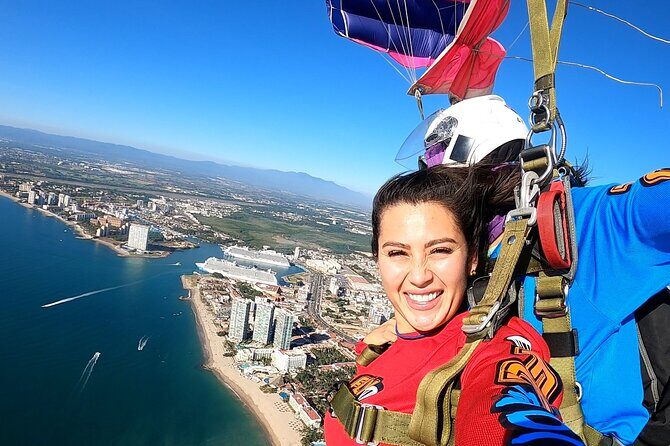
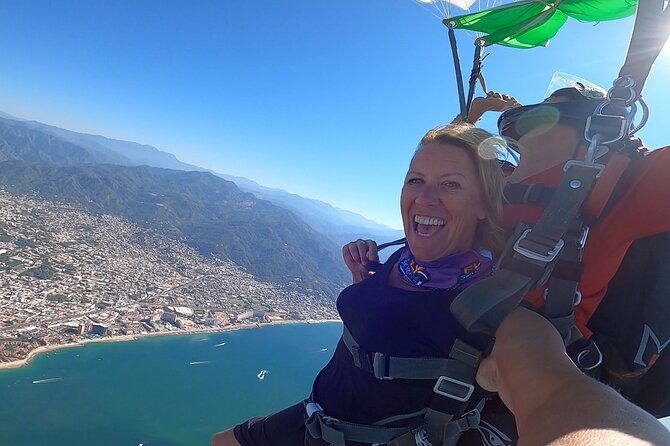
Puerto Vallarta also gives you built-in scenery. From the plane, you’re looking down at ocean and mountain views, and then from higher up you get that wide, coastal perspective that you just can’t get from a viewpoint. The beach landing makes that last moment memorable too, because it feels like the jump naturally connects to the town.
If your idea of a perfect travel day includes a huge action moment and an easy place to regroup afterward, this setup fits.
You can also read our reviews of more tours and experiences in Puerto Vallarta.


Price and Timing: What $390.27 Buys You
At $390.27 per person, this isn’t a “try it someday” bargain, but it’s also in line with what tandem skydiving costs when you include aircraft time, tandem gear, and certified instruction. What you’re really paying for is the full system: the plane ride up, the tandem parachute setup, and the instructor who does the technical work while you get the experience.
The total time is about 2 hours, which matters in Puerto Vallarta where you might want the rest of the day free. Most of that time isn’t “waiting around”; it’s the pre-jump process: training, harness fitting, getting organized, then moving through the flight and landing.
One more value point: you’re not relying on luck for the “quality” part. This operator emphasizes equipment, aircraft maintenance, and a USPA-certified drop zone setup in Puerto Vallarta. That doesn’t guarantee every day is identical (weather decides), but it does mean the structure is designed around safety and smooth execution.
Before You Fly: The Safety Training That Actually Preps You
You’ll go through a safety training session and get fitted to the harness that connects you to your instructor and the parachute system. This is the part people sometimes underestimate, but it’s where your brain gets the rules and your body learns how to respond.
From a practical standpoint, the training helps with two things:
- You understand what positions to take during the jump and under canopy.
- You learn how communication works with your tandem instructor when wind and speed take over.
You’ll also want to listen closely during fitting. A properly adjusted harness affects comfort during freefall and canopy, and it also reduces the chance you’ll feel distracted by anything slipping or pinching. If you have any mobility concerns or tightness issues, it’s the moment to mention them so adjustments can be made before you’re in the air.
The overall vibe from the experience reports I see is that people who were nervous ended up feeling comfortable fast. One couple specifically mentioned how the team made the jump feel easier than they imagined, and they credited staff by name, including Marcos and Base. That’s a good sign: nerves are normal, but good coaching matters.
The Cessna 182 Scenic Flight Over Puerto Vallarta
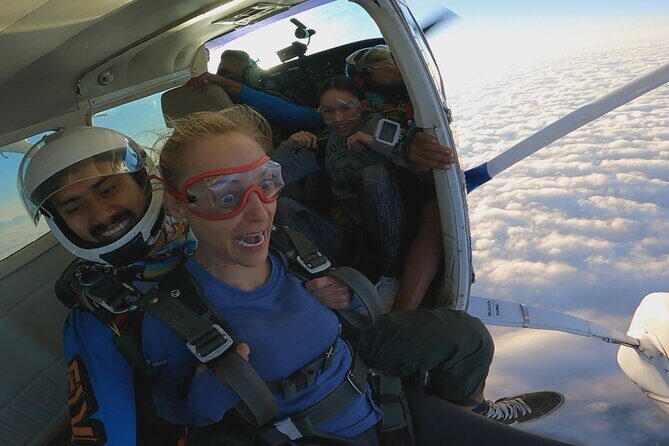
Once you’re harnessed and briefed, you board a Cessna 182 for about a 25-minute scenic flight up toward jump altitude. This is not a throwaway segment. It’s the emotional runway that transitions you from “this sounds crazy” to “okay, I’m going up there.”
You’ll get ocean and mountain views, which is a big deal in Puerto Vallarta because the geography is dramatic. From the air, the coastline reads like a map: you can see where the water curves, how dense the hills are, and how the city sits right up against the sea. If you’re the type who needs to picture what you’re about to do, this portion gives you that mental anchor.
It’s also a good time to settle into your breathing. Ask your instructor any final quick questions before takeoff, then shift your attention to what you’ll do when it’s time to exit. The more calm and clear your focus, the more your freefall experience feels like a moment you’re in rather than something you endure.
The 10,000-Foot Moment: Freefall Speed and Timing
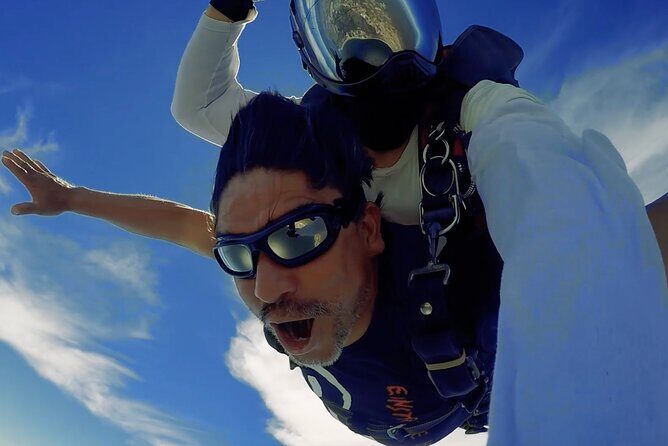
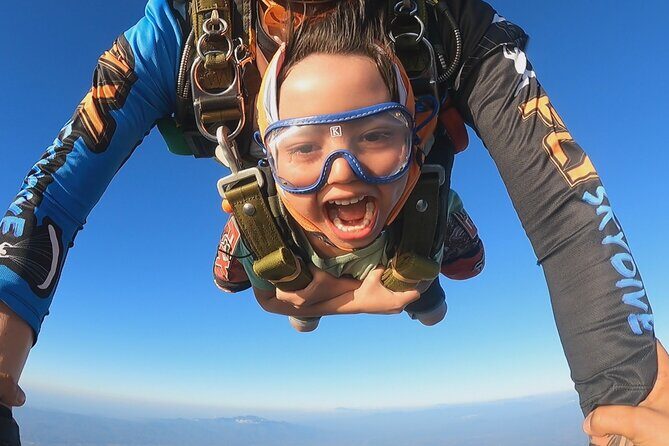
You’ll jump from 10,000 feet. Once you’re out of the plane, your instructor takes the lead and you experience freefall for about 45 seconds. The speed is listed as around 200 km/h, which explains why that time feels both short and intense.
Here’s the key reality: freefall is brief, but it’s the loudest part of the whole experience. Wind is strong, your senses are overwhelmed, and your brain tries to process too much at once. That’s why training and trust matter. Your instructor’s job is to stabilize the setup and make the transition to parachute deployment smooth.
A useful mental trick: treat those 45 seconds as a single, unfolding moment rather than “countdown time.” If you focus on what you can control—your body position as guided, your trust in the harness setup—freefall becomes more like a ride than a test.
If you’re worried you’ll panic, don’t ignore that feeling. Use it as a cue to concentrate on the instructor’s instructions and the training you did on the ground. The best outcomes come from being ready to follow directions quickly.


Parachute Time: From Deployment to 7-8 Minutes of Views
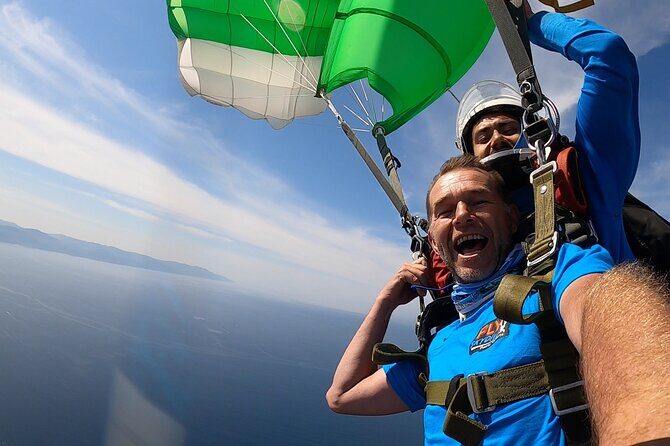
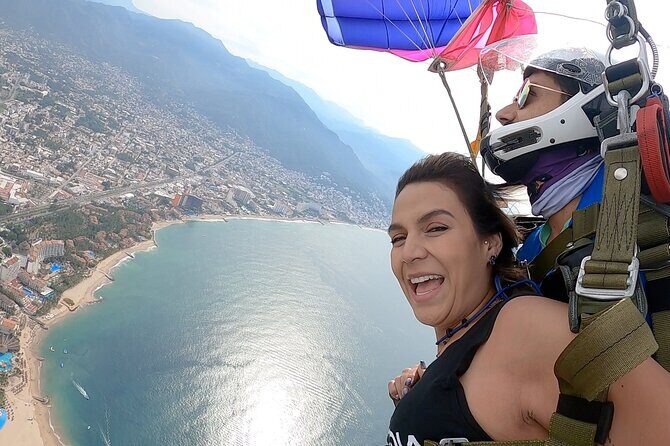
Around 5,500 feet, your instructor deploys the parachute. After that, you fly under canopy for about 7-8 minutes. This is where the experience shifts gears: speed drops, the wind changes, and suddenly you can look around.
The value here isn’t just “smoother than freefall.” It’s the chance to enjoy Puerto Vallarta from a slower, more readable perspective. You’re not in a blur; you’re gliding. You can take in the ocean, the coastline, and the shape of the area below.
If you’re a “photos matter” person, canopy time is your best window. It won’t be perfect for everyone (wind and seat position depend on your setup), but the slower pace gives you more time to capture what you want.
Also, pay attention to how you’re instructed to prepare for landing. Under canopy is not the end of the lesson—it’s the final stretch where good habits improve comfort during touchdown.
Soft Landing on the Beach: What to Expect at Playa del Holi
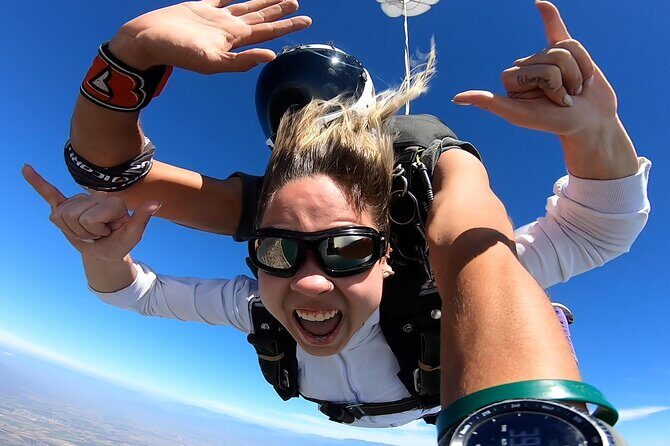
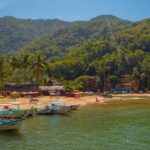
The experience ends with a soft landing on the beach at Playa del Holi. Beach landings are popular because they feel cinematic, but they also create practical advantages: it’s easy to orient yourself, easy to regroup, and you’re not trekking away from your jump location.
This portion is where you feel the “human” part of the sport. After the adrenaline hits, your instructor guides you through the final seconds and the landing transition. The soft landing goal matters because it reduces the shock and keeps the day from turning into a sore, stressful finish.
It’s also a nice way to connect the adventure back to your vacation. If your plan is to keep exploring Puerto Vallarta after your jump, finishing near the water can make the transition smoother.
Safety, Equipment, and USPA Certification: Why It Matters Here
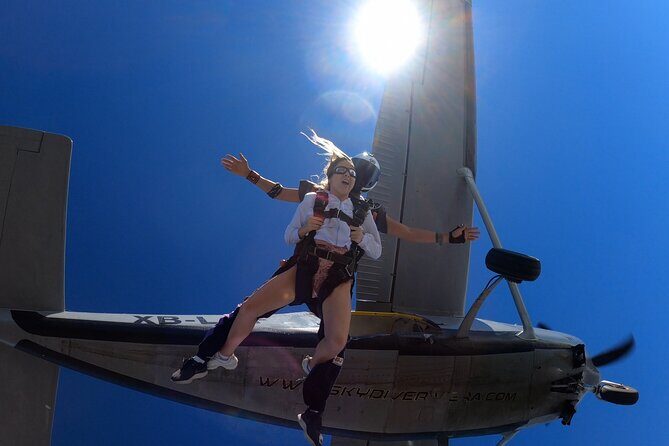
This operator stresses safety by leaning hard on certified instruction and equipment standards. They say their tandem equipment and systems are top-tier, maintained on schedule, and supported with trained personnel. They also state that instructors are certified by the USPA and have extensive skydiving experience, with a top tandem master listed at 7,000+ skydives.
They also highlight that this is the only USPA certified drop zone in Puerto Vallarta. That detail matters because it points to an established standard for training and operations, not just a one-off stunt.
Now for the balanced reality check: no operator can control weather. That’s why the experience requires good conditions, and you’ll be offered a different date or a full refund if it’s canceled for poor weather. Safety isn’t just gear and credentials; it’s also knowing when not to fly.
One review detail I’d take seriously: there was a complaint alleging a mismatch around booking and received package contents. I can’t confirm the details from here, but it’s enough to recommend one simple action: double-check your reservation details before the day of your jump. Make sure the package you paid for matches what you expect to receive.
Weight Limit, Surcharges, and Fit: The Practical Checklist
This jump comes with a 243 lbs weight limit. They also note weight surcharges if you’re over 85 kg, including a stated rate of 70 mx/kilo for that range. If you’re close to those limits, don’t assume it’s automatic. Check your weight information and plan for the possibility of added charges so there are no surprises.
From your side, the safest approach is to:
- Know your weight in advance.
- Wear clothing that’s easy for harnessing and doesn’t restrict movement.
- Be ready for the harness fitting process to take a few minutes of adjustment.
Also, since this is a private activity setup, you’ll typically be moving through the process with only your group. That can feel calmer than sharing every step with strangers, especially when you’re nervous.
Who Should Book This Skydiving Experience
This is a strong fit if you:
- Want a tandem jump with a clear plan and a safety-first approach
- Like the idea of scenic time before the jump, not just the jump itself
- Prefer a finish near the beach so your day doesn’t feel broken up
It may be less ideal if you:
- Are anxious and can’t handle speed and wind, even with instruction (though many people do improve once they’re in it)
- Are over the weight limit or close to the surcharge threshold and want to avoid extra costs
Because the experience is weather dependent, try not to schedule it as your only activity on a tight timetable. Build in a little flexibility.
Should You Book FLY Skydive Puerto Vallarta With Beach Landing?
If you want a Puerto Vallarta adrenaline day that ends where you can actually enjoy the moment, I think this is a good choice. The mix of USPA-certified tandem instructors, a structured safety briefing, and the actual sequence—scenic flight, freefall, canopy, beach landing—makes the experience feel complete.
Book it if you’re comfortable following instructions quickly and you meet the weight requirements. If you’re nervous, go in ready to listen. The positive feedback you’ll find about staff support and comfort isn’t accidental; it’s usually what turns nerves into excitement.
Before you pay, do one smart thing: verify what’s included in your reservation and confirm there are no surprises about the package. Then keep your day flexible for weather.
If that sounds like you, this is the kind of trip memory that lands like the parachute does: softly, and then suddenly you realize you’re already replaying it.
FAQ
Where do I meet for the Puerto Vallarta tandem skydive?
You’ll meet at FLY Skydive Puerto Vallarta, Plaza Marina, Local A-41, Clinica Dental Plaza Marina on Av. Francisco Medina Ascencio S/N, Marina Vallarta, 48335 Puerto Vallarta, Jal., Mexico.
How long does the experience take?
It runs about 2 hours (approx.).
Do I get safety training before the jump?
Yes. You’ll participate in a safety training session and be fitted to the harness that connects you to your instructor and the parachute system.
What height do you jump from?
You jump from 10,000 feet.
How long is freefall and how long is the parachute flight?
Freefall is about 45 seconds, and the parachute flight is about 7-8 minutes.
Is there a weight limit?
Yes. The weight limit is 243 lbs. Weight surcharges may apply if you are over 85 kg.
What aircraft do you use for the scenic portion?
You’ll fly in a Cessna 182 for a scenic flight.
Is this activity private?
Yes. It’s listed as a private tour/activity, with only your group participating.
What happens if the weather is bad?
The activity requires good weather. If it’s canceled due to poor weather, you’ll be offered a different date or a full refund.