REVIEW · PUEBLA
Puebla: Cholula Magical Town Tour by Double-Decker Bus
Book on GetYourGuide →Operated by Tip Tours & DMC · Bookable on GetYourGuide
A pyramid rises over a church town. This Cholula Magical Town tour uses a double-decker bus to connect the biggest sights with minimal hassle. You’ll ride west from Puebla and then bounce between plazas, convents, and viewpoints where the Spanish-era story meets older sacred sites.
I especially love the way the route concentrates your time: Cholula’s Great Pyramid plus the stunning convent churches are all built into a single 6-hour loop. The other big win for me is the architecture—Mexican Baroque church interiors at Santa María Tonanzintla and San Francisco Acatepec are packed with detail, so it feels like sightseeing with texture, not just backdrops.
One possible drawback to plan around: the audio guide is in Spanish, and the tour price doesn’t include pyramid admission or meals.
In This Review
- Key takeaways before you go
- Puebla Zócalo to Cholula by double-decker: efficient sightseeing on wheels
- Plaza de la Concordia and the Convento de San Gabriel (Franciscans, 1549, and Quetzalcóatl echoes)
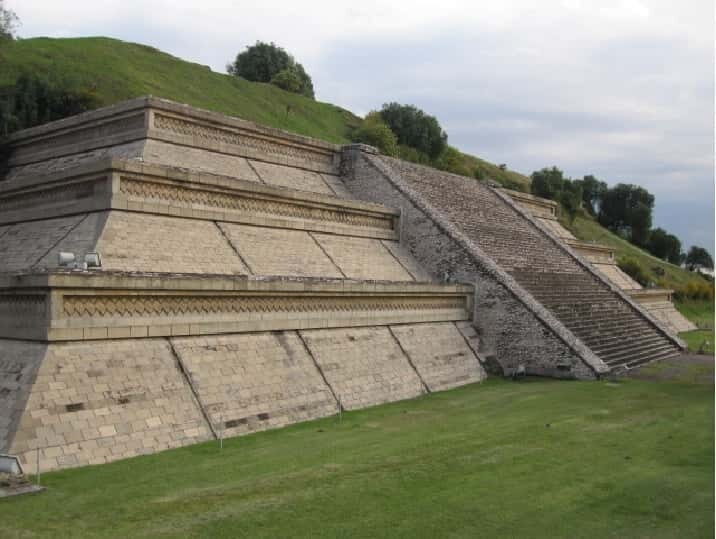
- Cholula’s Great Pyramid: the largest in the world and what you see when you reach the top
- San Andrés Cholula: two towns, two squares, one blended feel
- Tonanzintla and Acatepec: Mexican Baroque interiors that reward patience
- San Pedro return, plus possible surprises: local market time, Royal Chapel, and tunnel stories
- Guide quality and language: how to make Spanish audio work for you
- Price and value: why $11 can feel like a deal
- Who this tour fits best (and who might want a different plan)
- Should you book this Puebla to Cholula double-decker tour?
- FAQ
- Where does the tour start in Puebla?
- How long is the Puebla to Cholula tour?
- How much does it cost?
- What’s included in the ticket price?
- What is not included?
- Do I need to pay for the Great Pyramid?
- Is the audio guide available in English?
- What language is the driver/experience in?
- Is the tour suitable for people with mobility impairments?
- Is smoking allowed?
- Does the tour run in the morning or afternoon?
Key takeaways before you go
- Great Pyramid + temple on top: Cholula’s tallest views come with an on-site Spanish-era church.
- Convento de San Gabriel and the 49-domed Capilla Real: Franciscan-era splendor in the Plaza de la Concordia area.
- Mexican Baroque church interiors: Tonanzintla and Acatepec are famous for “every surface has something.”
- Two Chulous in one: San Pedro and San Andrés are so close the border feels like a myth.
- A little free time goes a long way: You can stretch your legs around the Zócalo, market area, and key church stops.
Puebla Zócalo to Cholula by double-decker: efficient sightseeing on wheels
The tour starts right at Puebla’s main square (the Zócalo). From there, you head about 5 miles west to Cholula, switching scenery from city streets to the kind of dramatic hills-and-volcano views you remember even after you’re back home.
What I like about the double-decker setup is simple: you can keep your orientation without constantly walking between distant stops. You’re also not stuck trying to coordinate local transport when you only have one half-day. For a full 6 hours, this is a “see the key things without burning energy” kind of day.
Do wear comfortable shoes—even though you’re on a bus, you’ll still spend meaningful time on foot at plazas, church entrances, and viewpoints. And bring sun protection. Cholula is often bright and exposed where you’ll want to stop for photos.
You can also read our reviews of more tours and experiences in Puebla.


Plaza de la Concordia and the Convento de San Gabriel (Franciscans, 1549, and Quetzalcóatl echoes)
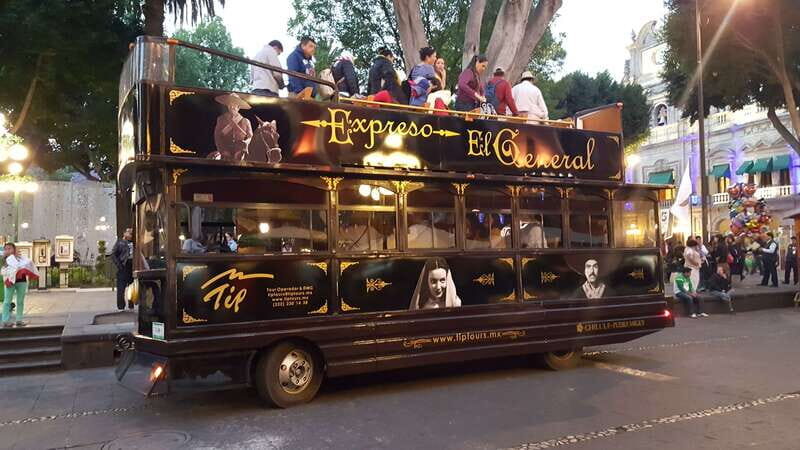
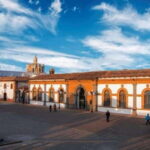
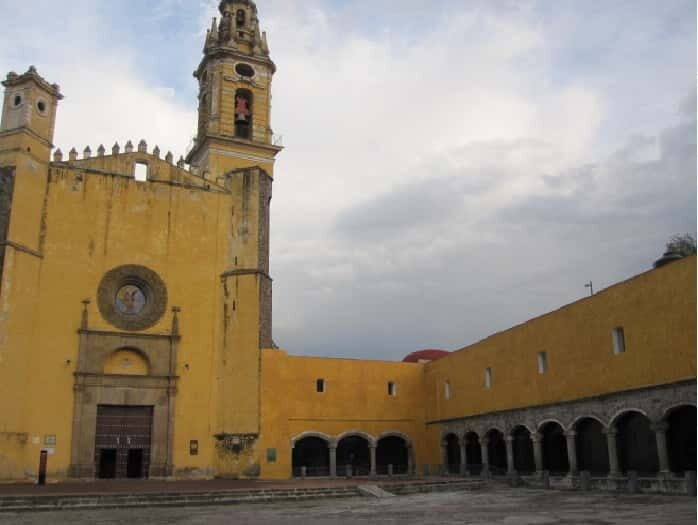
Your first big anchor point in Cholula is San Pedro Cholula’s Plaza de la Concordia. This is where the Convento de San Gabriel sits, built by Franciscans in 1549 on the site of earlier ruins, including a temple dedicated to Quetzalcóat—so you’re looking at layers, not a single story.
On the square-side, the convent complex is the classic “grand approach” you want at the start of a day: you arrive, orient, and quickly understand why people call Cholula magical. Then the architecture keeps going once you step inside related spaces.
One detail worth knowing: the Capilla Real is noted for 49 domes. Even if you’re not the type who counts architectural features, that many domes changes the feeling of the space—you stop treating it like a quick photo stop and start paying attention to how the room works.
This is also a good moment to slow down and let your eyes adjust. Baroque churches are easy to rush through, and rushing makes you miss what makes them special: repetition, symbolism, and the way decoration guides your gaze.
Cholula’s Great Pyramid: the largest in the world and what you see when you reach the top
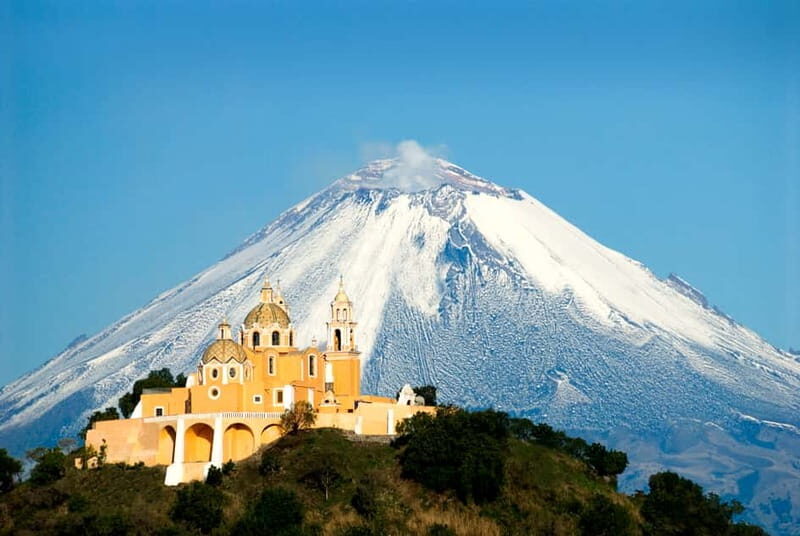
Cholula’s Great Pyramid is described as the largest pyramid in the world, and you feel that scale the moment you understand you’re not just visiting a hill—you’re visiting a monumental base.
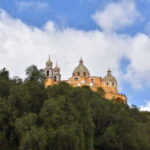
Here’s the twist that makes it more than a viewpoint: atop the pyramid is the Nuestra Señora de los Remedios Temple, built by the Spanish in 1549. So you get a layered experience: sacred pre-Hispanic ground below, then Spanish-era religious architecture above.
Important practical point: admission to the pyramid isn’t included. That means you’ll want to plan a little cash (or whatever payment method the site accepts) so the “top visit” doesn’t turn into a disappointment.
If you love panoramic views, this is the stop that justifies the ride. If you don’t care about heights, you can still enjoy the surrounding plaza energy and the feeling of standing in a place people have considered important for centuries.
San Andrés Cholula: two towns, two squares, one blended feel
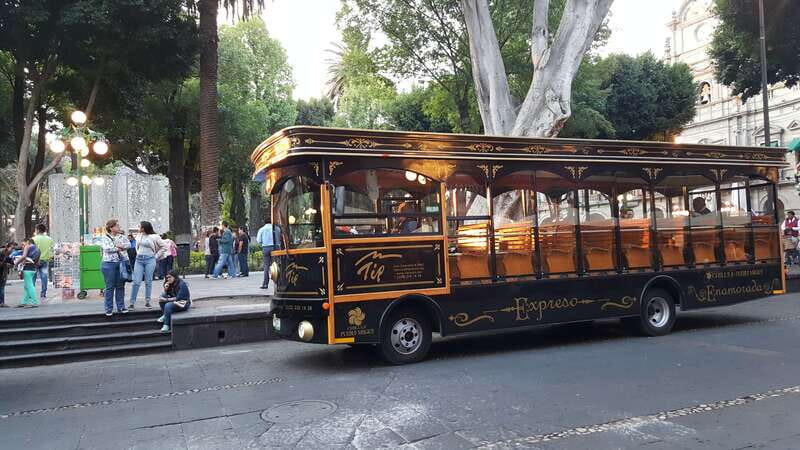
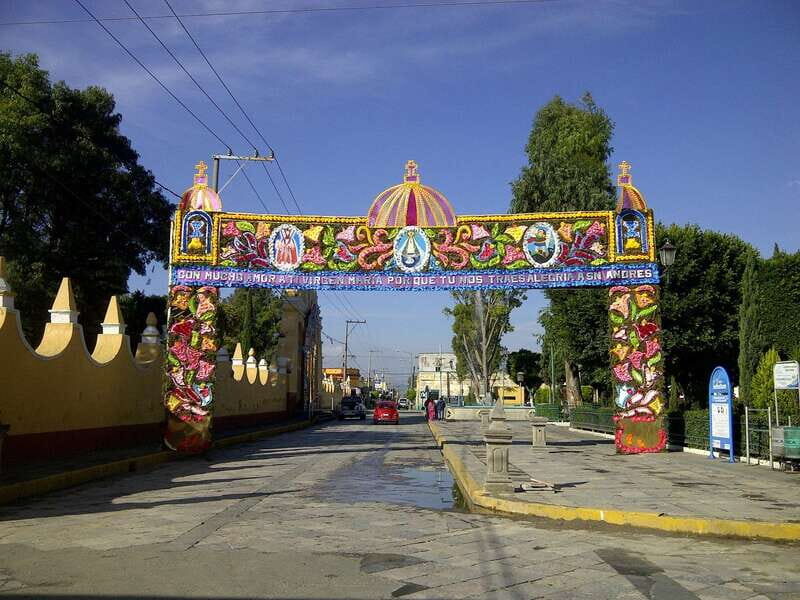
Cholula is often described as a “double” town: San Pedro and San Andrés are close enough that the border has been lost, and many people treat them as one. That makes this part of the tour more interesting than it sounds. You’re not just hopping between buildings—you’re moving through slightly different neighborhood identities that blend together.
Your route includes a brief moment to visit the beautiful parish in San Andrés Cholula. Even if you only have a short stop here, the payoff is contrast. You see how the town’s religious centers help define daily life—this isn’t a museum town you visit from the sidewalk. It’s a lived-in place where churches anchor streets and routines.
If you enjoy small, local details, look for everyday cues around the plaza: how people move, what families do, and where conversations happen. That “ordinary life next to big landmarks” is one of the reasons Cholula works so well in a short tour.
Tonanzintla and Acatepec: Mexican Baroque interiors that reward patience
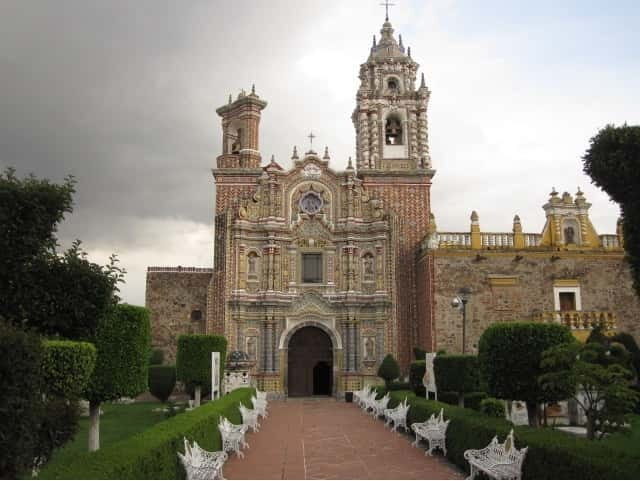
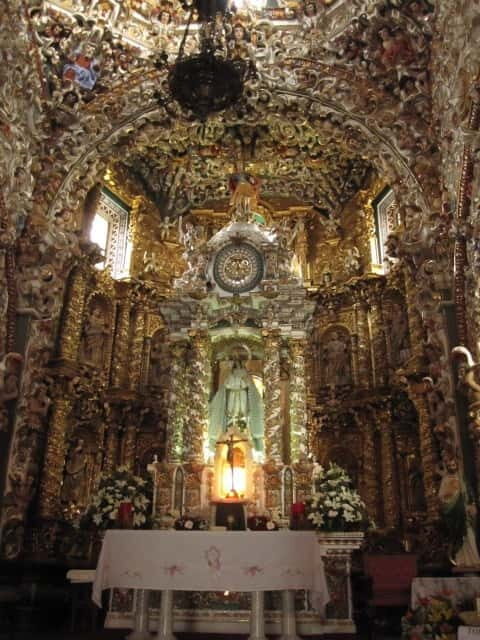
Next comes the pair of churches that typically steal the show for art-and-architecture lovers: San Francisco Acatepec and Santa María Tonanzintla. Both are known for Mexican Baroque style, described as so heavily decorated that you don’t find a corner without ornament.
This is one of those stops where “look fast” is the wrong strategy. Baroque interiors are detail-driven. If you give yourself 10–15 minutes to wander slowly—up, then back down, then sideways—you start recognizing patterns: the way surfaces are treated, how light hits carved or painted elements, and how the overall design keeps guiding you deeper.
If you’re trying to decide whether it’s worth it to stop for these churches (vs. just grabbing views), my advice is yes—because this is where Cholula shows its cultural personality. The pyramid tells you scale. These interiors show you taste, belief, and local craft.
Some reviews also mention the guide making extra connections to tradition and history during church time, which is exactly how you should experience places like this: use the art as the hook, then let the explanation give it meaning.
San Pedro return, plus possible surprises: local market time, Royal Chapel, and tunnel stories
After the Acatepec and Tonanzintla temples, you head back toward San Pedro Cholula. Along the way, the tour passes landmarks like the wizard’s house and the Copa de Oro cider factory—little side-notes that break up the day so it doesn’t feel like a nonstop march of churches.
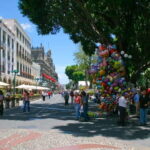
Then you get your best chance to wander: a stop at San Pedro Cholula’s Zócalo with free time. This is where you can choose your pace. The included free time is set up so you can explore the Great Pyramid area again, check out the local market, visit the Royal Chapel, and revisit major points like the Convento de San Gabriel and Plaza de la Concordia.
A couple of practical tips from what people liked: if your guide suggests specific snack or market choices, take them seriously. Some past visitors reported tasting local favorites like quesadillas and even chocolate from the market area, with guides stepping in to point them toward good stops.
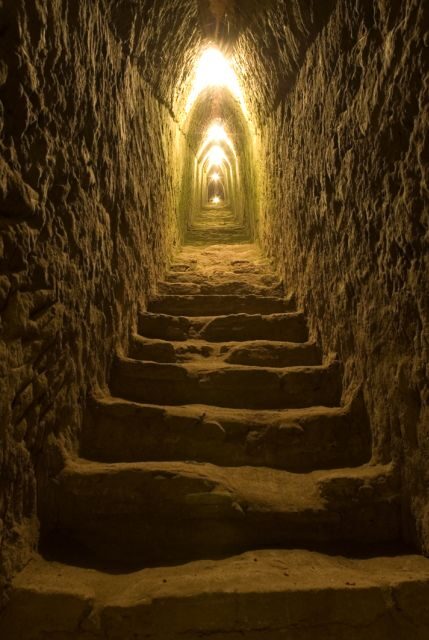
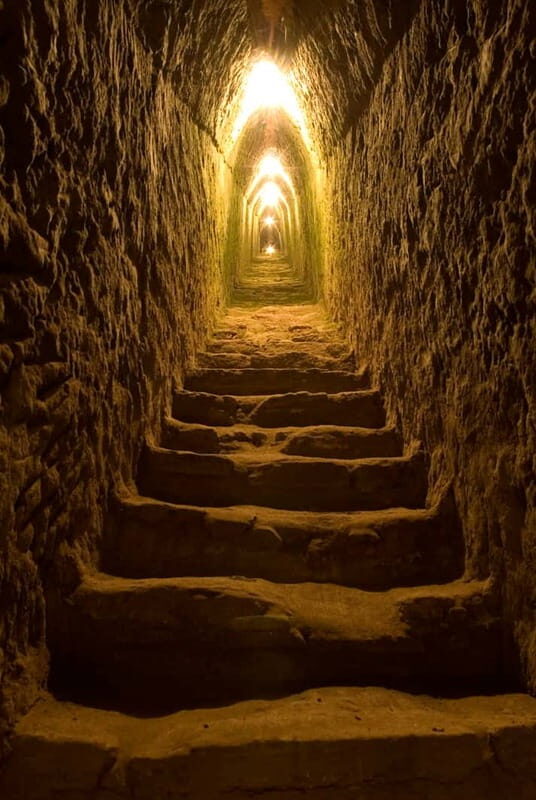
Also, there’s one extra-interest detail that showed up in feedback: some groups got a guide-led look into the tunnel area of Cholula. If your timing or guide allows it, it’s a fun add-on because it changes the mood from “pretty churches” to “surprising hidden engineering.”
Guide quality and language: how to make Spanish audio work for you
The tour includes an audio guide in Spanish and a driver who speaks Spanish. That’s the official baseline. So if you don’t speak Spanish well, don’t treat this as a pure audio experience—you’ll likely lean on what your guide does in real time and what you can follow through basic cues.
One reason this tour gets strong praise is the human touch when the guide is good. Several people specifically highlighted guides like Karla/Carla for clear explanations and for going beyond the basics—giving recommendations for where to eat and showing small details inside churches.
If you want to get more out of the Spanish audio, here’s what helps: pick two or three stops you care about most (for many people it’s Tonanzintla/Acatepec and the pyramid). Then listen actively only for those. For the other stops, use the audio as background while you focus on what you can see.
If you’re worried about language, the fix is easy: come with a small list of questions (like what you’re supposed to notice in the domes, altars, or decoration). Even a few answered questions can turn a church visit from “pretty” into “I understand what I’m looking at.”
Price and value: why $11 can feel like a deal
At $11 per person for a 6-hour day, this tour is priced for real value—especially because round-trip transportation from Puebla’s Zócalo to Cholula is included. You’re also covered by transportation insurance.
The tradeoff is what’s not included:
- Pyramid admission
- Food and drinks
That’s normal for this style of tour. The key is budgeting smartly so you don’t get surprised at the pyramid ticket. Once you add admission and a snack, the day cost goes up a bit, but you still pay less than many private tours that would only cover one attraction.
My take: this is a strong choice when you want a structured route with minimal planning. If you’re the type who loves self-guided wandering and already knows exactly what you want to pay for, you might find cheaper ways to get around. But if you’d rather spend energy on exploring instead of organizing transport, this price-to-time ratio is tough to beat.
Who this tour fits best (and who might want a different plan)
This works well for:
- First-timers who want Cholula’s major landmarks in one afternoon
- People who enjoy church interiors and are curious about Mexican Baroque
- Travelers who want a clear plan when language or navigation feels like a hassle
- Anyone who appreciates a mix of big sights (pyramid) and smaller details (domes, convent spaces, market snacks)
It may not fit as well if you:
- Have mobility limitations (it’s noted as not suitable for people with mobility impairments)
- Need an English-led experience every step of the way (audio is Spanish, and English support isn’t promised in the core info)
If you fall into the “I just want the highlights” group, you’ll likely be happy. If you’re hoping for full-day independence, you may find the structured stop pattern less satisfying.
Should you book this Puebla to Cholula double-decker tour?
Yes, I’d book it if your top priorities are Cholula’s Great Pyramid plus the standout Mexican Baroque churches without the stress of arranging transport on your own. The itinerary is built for efficient sightseeing, and the free time in the Zócalo area gives you enough room to taste the local vibe and handle pyramid access on your own terms.
Skip it only if you’re strongly dependent on English-speaking guidance throughout, or if you know you don’t want to pay any extra admissions once you arrive. If those two points aren’t your deal-breakers, this tour is a smart value way to experience Cholula’s biggest spiritual and architectural moments in one half-day.
FAQ
Where does the tour start in Puebla?
You meet at the Tip Tours Dmc booth at the Puebla Tourism Office, Portal Hidalgo 14, Zócalo, Puebla (on Juan de Palafox y Mendoza Avenue).
How long is the Puebla to Cholula tour?
The duration is 6 hours.
How much does it cost?
The price is $11 per person.
What’s included in the ticket price?
It includes round-trip transportation from Puebla Zócalo to Cholula, an audio guide in Spanish, and transportation insurance.
What is not included?
Admission to the pyramid and food and drinks are not included.
Do I need to pay for the Great Pyramid?
Yes, pyramid admission is not included in the tour.
Is the audio guide available in English?
The audio guide provided is in Spanish.
What language is the driver/experience in?
The driver is Spanish-speaking, and the audio guide is Spanish.
Is the tour suitable for people with mobility impairments?
No, it is not suitable for people with mobility impairments.
Is smoking allowed?
No smoking is allowed, including smoking in the vehicle and indoors.
Does the tour run in the morning or afternoon?
It is usually available in the morning and afternoon.