REVIEW · TULUM
Private Kiteboarding Lesson in Tulum
Book on Viator →Operated by Mexican Caribbean Kitesurf · Bookable on Viator
Learning to kite starts with wind. This private kiteboarding lesson in Tulum blends real coaching with beach-based wind and safety theory so you know what you’re doing before you jump into the water. It runs about 3 hours, and it’s taught in English by IKO–certified instructors.
I love how the teaching sequence builds from basics to control, including kite setup and kite control using concepts like the wind window. The other big win is safety-first instruction: you practice bar workings, self-rescue technique, and then progress into assisted and solo waterstarts. One possible drawback to plan for: the activity depends on favorable weather, so if conditions are poor you may need an alternative date (or a full refund).
In This Review
- Quick Takeaways Before You Go
- Why Tulum Works So Well for Learning Kiteboarding
- Your Private 3-Hour Lesson Plan (What the Coaching Rhythm Feels Like)
- Beach Foundations: Kite & Wind Theory to Self-Rescue
- In-Water Progression: Body Drag Upwind to Power Strokes
- Waterstart Training: Assisted, Then Solo
- Riding Practice: Downwind, Upwind, and Transitions
- The Included Extras That Make the Day Easier
- Price and Value: What $270 Buys You
- Logistics and Location: Meeting at Ahau Tulum
- Who This Private Kiteboarding Lesson Is For
- Should You Book This Kiteboarding Lesson in Tulum?
- FAQ
- How long is the private kiteboarding lesson in Tulum?
- Where is the meeting point?
- Is this lesson private or shared?
- What language is the instruction offered in?
- What is included in the price?
- What is not included?
- What happens during the beach portion of the lesson?
- What happens once you’re in the water?
- What if weather conditions are poor?
Quick Takeaways Before You Go
- Private, not crowded: only your group participates, so you get focused feedback
- Wind window + setup taught step-by-step so the gear makes sense, not just the tricks
- Safety skills are built in, including self-rescue and bar/safety system basics
- You’ll progress in the water, from body drag upwind to power strokes and waterstarts
- Mauricio and Roma are known for friendly, adaptable coaching for different skill levels
- Comfort extras are included with bathrooms, showers, and Wi‑Fi available on site
Why Tulum Works So Well for Learning Kiteboarding
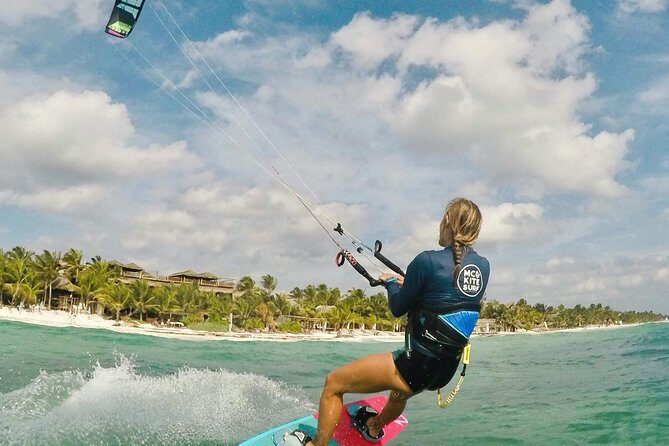
Tulum is one of those places where learning outdoors feels natural. The day is built around wind, water, and a clear learning rhythm. In a 3-hour private lesson, that matters, because you don’t waste time wondering what to do next—you follow a structured plan while your instructor adjusts to what the wind is doing.
The best part for you is that you’re not just getting time on the board. You’re learning how kiting works as a system: wind direction, kite position, line tension, and safety reactions. That’s the difference between someone who can get going and someone who can repeat a safe, controlled session.
And yes, you’ll likely appreciate the human factor too. Coaches Mauricio and Roma are highlighted for being personable and adaptable—so if you want to work on specifics (like strapless or winging), they can steer the lesson that way without losing sight of core fundamentals. If you’re brand new, that same adaptability helps you avoid getting overwhelmed.
You can also read our reviews of more private tours in Tulum

Your Private 3-Hour Lesson Plan (What the Coaching Rhythm Feels Like)
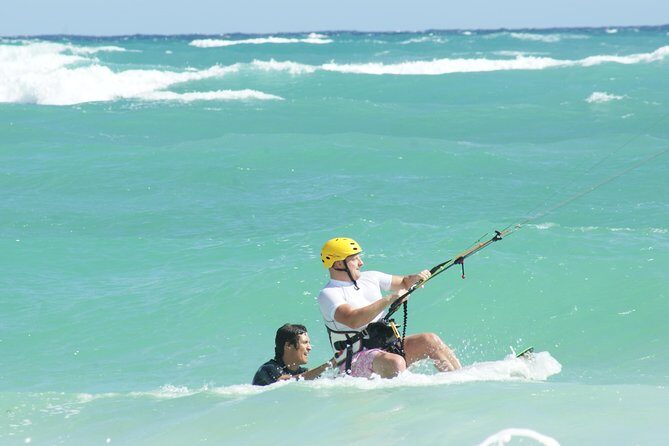
This is a private session in Tulum, offered in English, with an IKO–certified instructor. You can expect the lesson to move like this:
1) Start at the beach for theory and hands-on setup
2) Go into the water for progression steps
3) Finish riding practice that reinforces what you learned
Because it’s private, you get more than general instruction. You get course correction. Your instructor can watch your body position, kite angles, and timing—then coach what to change right then. That’s where most beginners either level up fast or stall out, and privacy helps you avoid the stall.
The lesson also respects your pace. The structure is firm, but the way you get there can be adjusted based on your comfort, your fitness level, and what the wind allows that day.
Beach Foundations: Kite & Wind Theory to Self-Rescue
The beach portion is where you build the mental model. And for kiteboarding, that model is safety. If you understand wind behavior and kite control, the rest becomes practical skill practice instead of guesswork.
Here’s what you can expect on shore:
1) Kite & wind theory
You’ll cover how kite position relates to power. The concept of the wind window is especially important: it explains where the kite should be relative to you so you can manage pull instead of getting yanked.
2) Set up the kite & lines
You’ll learn how the system goes together and how to check it properly. This isn’t glamorous, but it’s the foundation of every safe ride.
3) Inner workings of the bar & safety systems
This is not just name-dropping. You should leave with a clear understanding of what the bar does, how the lines interact, and how the safety system is meant to react. It’s the kind of knowledge you’ll be glad you have the moment something feels off.
4) Self-rescue technique
This is hands-on safety training. You learn a method to handle yourself if you end up in trouble. It’s one of the most valuable parts for anyone who’s nervous or unsure about what happens when you lose control.
5) Kite control
Once the kite is set and you understand the bar and safety basics, you practice controlling the kite so you can communicate with it. That means smoother starts later, and fewer scary surprises.
Why this beach sequence is such good value: it compresses the learning curve into one focused session. Instead of piecing it together from scattered advice, you get a guided order that matches what instructors look for in real skill progression.
In-Water Progression: Body Drag Upwind to Power Strokes
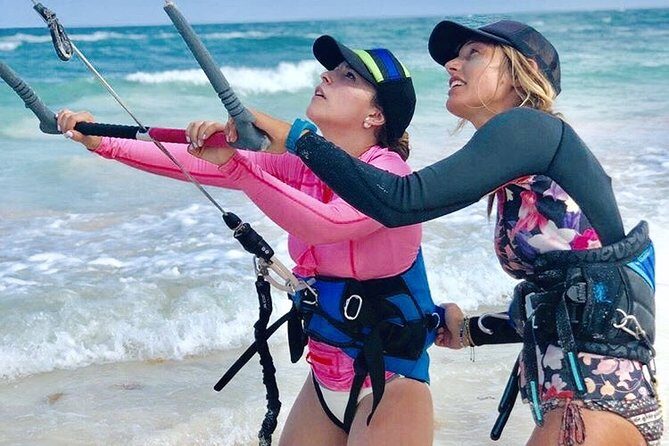
Once you hit the water, you shift from controlling the kite on land to coordinating your body with the kite’s pull. This is where you’ll feel the real difference between theory and skill.
The water progression typically looks like this:
6) Body drag upwind
You learn how to move with control even without the board doing all the work yet. Upwind progress matters because it sets you up for more stable riding later.
7) Power strokes
You practice getting the kite to generate the right kind of pull at the right time. Think of this as learning the timing of acceleration instead of trying to ride through random power.
Here’s the practical benefit: by training the kite timing and your body response early, you reduce the chance you’ll just chase the board in later steps. It gives you a rhythm you can reuse.
Waterstart Training: Assisted, Then Solo
Waterstarts are usually the make-or-break skill for beginners. This lesson treats them seriously, with a step-by-step approach.
8) Waterstart with assistance
You’ll get help as you learn the sequence: body position, kite pull, timing, and how to manage the transition from slow movement into planing.
9) Waterstart solo
Then you try it on your own. The point isn’t perfection in one session—it’s learning the correct structure so you can replicate it safely next time.
This is also where your private coaching really shows. If you’re struggling with timing, your instructor can change the cues or adjust what you’re focusing on. If you’re progressing quickly, you’re not stuck repeating mistakes.
A few more Tulum tours and experiences worth a look


Riding Practice: Downwind, Upwind, and Transitions
Once you can control the kite and move with purpose, the lesson shifts toward riding basics that give you real satisfaction.
10) Ride downwind
Downwind riding helps you practice keeping tension and speed with less complexity than upwind at first.
11) Ride upwind
Upwind riding is harder, and it’s the skill that turns you from a drifter into a rider who can actually return where you need to go.
12) Transitions
Transitions teach you how to change direction and keep your setup organized. This is where you start to feel like kiteboarding is a flow, not a set of disconnected tasks.
Even if you end the session still working on one piece, you’ll usually have a clearer map of what to practice next: kite control, body timing, or waterstart mechanics.
The Included Extras That Make the Day Easier
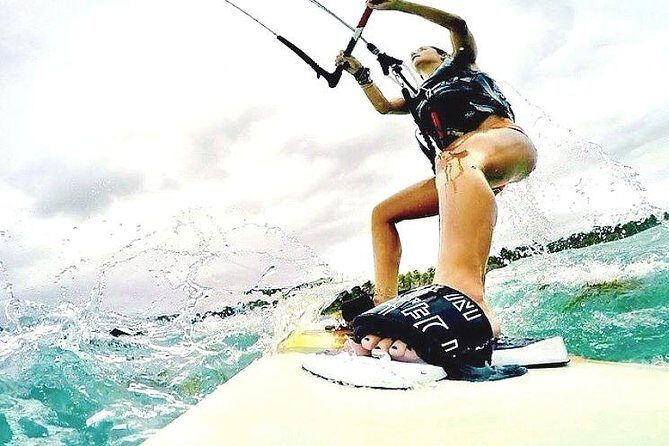
It’s smart to notice what’s included beyond the obvious gear.
You get:
- Kiteboarding gear
- An IKO-certified instructor
- Bathrooms and showers
- Wi‑Fi
- Access to paddleboarding boards
That bathroom/showers detail sounds basic, but on a beach day it matters. You’ll appreciate having a place to rinse and reset before heading back. The paddleboarding boards are a nice bonus if you want an alternate activity while you wait for moments when wind is right.
You’ll also get a mobile ticket, and the meeting point is clearly defined. Instruction is in English, which helps you focus on the lesson instead of decoding instructions.
Price and Value: What $270 Buys You
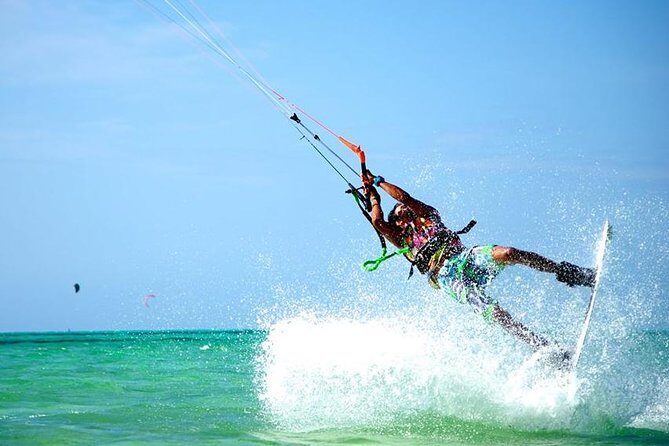
At $270 per person for about 3 hours, this isn’t a budget activity—but it is a realistic way to pay for instruction that actually changes your skill.
Here’s why it’s good value for many people:
- You’re paying for private coaching time, not a group lesson where you compete for attention.
- You get structured training: theory, safety systems, self-rescue, and progression in the water.
- You’re not renting and fumbling alone. Gear is included, and you’re shown how to use it properly.
The main value tradeoff: you’ll be more successful if you show up ready to learn, listen, and work through the steps in order. If you only want to ride immediately with no safety or theory, a lesson like this will feel slower—but that’s because it’s building the right foundation.
Also remember what’s not included: transportation and food/drinks. If you plan ahead for those, the rest of the day runs smoother.
Logistics and Location: Meeting at Ahau Tulum
You start at Ahau Tulum, specifically along Carr. Tulum a Boca Paila Km. 7.5, Zona Costera, Tulum Beach, 77760 Tulum, Q.R., Mexico. The activity ends back at the meeting point.
That “start and end at the same place” format is helpful. You’re not trying to figure out a second pickup later. It’s also easier to coordinate your day around the lesson time—especially if you’re pairing it with other activities in Tulum.
If you’re sensitive to waiting, plan your expectations around wind. Kiteboarding is weather dependent, so your instructor may adjust when conditions are favorable.
Who This Private Kiteboarding Lesson Is For
This lesson fits best if you want coaching that’s tailored to you. It works for all skill levels, and the private format helps you get feedback right when you need it.
It’s a strong choice if:
- You’re a beginner who wants the safety basics and a real progression plan
- You already kite and want a structured session focused on technique
- You want an instructor who can adapt to what you’re trying to work on—like adjustments in strapless or winging goals
It may not be a great fit if:
- You have back problems or serious medical conditions (it’s not recommended)
- You don’t feel comfortable with moderate physical effort
- You’re hoping for a guaranteed ride no matter the weather (conditions matter)
Minimum age is 10 years, so families can consider it as long as the child meets the physical and safety needs.
Should You Book This Kiteboarding Lesson in Tulum?
If you want the fastest route from first-time confusion to real control, I’d book it. The lesson’s structure is the point: wind theory, safety systems, self-rescue, and then waterstarts leading into downwind, upwind, and transitions. That sequence gives you a clear set of skills you can practice again after you leave.
Skip it only if you know your body can’t handle moderate physical effort, or if you’re not comfortable with the reality that kiteboarding depends on favorable weather. If you can be flexible with timing and you’re ready to learn in steps, this private setup is a smart way to spend a memorable day on the water.
FAQ
How long is the private kiteboarding lesson in Tulum?
The lesson is about 3 hours.
Where is the meeting point?
You meet at Ahau Tulum, Carr. Tulum a Boca Paila Km. 7.5, Zona Costera, Tulum Beach, 77760 Tulum, Q.R., Mexico.
Is this lesson private or shared?
It’s private. Only your group will participate.
What language is the instruction offered in?
The lesson is offered in English.
What is included in the price?
Included are an IKO-certified instructor, kiteboarding gear, bathrooms and showers, Wi‑Fi, and use of paddleboarding boards.
What is not included?
Transportation and food/drinks are not included.
What happens during the beach portion of the lesson?
You’ll cover kite and wind theory (including wind window), kite and line setup, the bar and safety systems, self-rescue technique, and kite control.
What happens once you’re in the water?
You’ll practice body drag upwind, power strokes, waterstarts with assistance, waterstarts solo, and then riding downwind, upwind, and transitions.
What if weather conditions are poor?
The lesson is subject to favorable weather. If canceled due to poor weather, you’ll be offered an alternative date or a full refund.
You Might Also Enjoy




More Workshops & Classes in Tulum
More Private Tours in Tulum


More Tour Reviews in Tulum
- Selva Maya Eco Adventure Park: Ziplining, Hanging Bridges, Rappelling and Cenote
★ 5.0 · 1,057 reviews