REVIEW · MONTERREY
Nido de los Aguiluchos, Monterrey: Hiking + Rock Climbing + 3 Rappels
Book on Viator →Operated by Gaia Xtreme Tours · Bookable on Viator
That early-morning start changes everything. This full-day outing at Nido de los Aguiluchos blends hiking + climbing with metal rungs, safety cables, 3 rappels, and zip lining, all aimed at getting you from ground level to Huasteca mountain views. The small-group setup (max 15 people) keeps the pace focused, and the guides teach as you go, including safety-first coaching you can understand fast even if your Spanish is limited.
What I like most is how hands-on the experience feels. You’re not just watching gear and hoping you can figure it out; you’ll climb with a professional guide nearby, and the cable-and-rung system helps first-timers participate without feeling totally lost. I also love the payoff: sunrise and high viewpoints over Monterrey’s Huasteca mountains and valleys, plus the midair perspective during rappels that makes the effort feel real.
One consideration: this is not for people who hate heights or have shaky balance. Even with safety cables, you’ll face steep, exposed sections and suspended moments during rappels, so it’s wise to take the height warnings seriously.
In This Review
- Key highlights
- Why Nido de los Aguiluchos feels different from a regular hike
- Getting there early: meeting point, transport, and the 5:00 am start
- The climb setup: safety cables, metal rungs, and learning fast
- Hiking to the viewpoints: where your legs will feel it
- Ridge to the summit and the adrenaline payoff
- Three rappels and how to handle the scary parts
- Zip lining: the fun-break after the rope work
- What to pack: gloves, boots, water, and sun gear that actually matter
- Price and value: $115.95 for equipment, pros, and round-trip transport
- Who this tour is for, and who should skip it
- Should you book this tour?
- FAQ
- How long does the Nido de los Aguiluchos hike and climbing tour take?
- Where is the meeting point and what time do we start?
- Do I need prior rock climbing experience?
- Is the tour suitable if I’m afraid of heights?
- What’s included in the price?
- What if the weather is bad?
Key highlights
- Small group (up to 15): easier guidance and a more personal pace
- Hands-on climbing help: metal rungs and safety cables guide your progress
- Three rappels: real time-on-the-rope moments with big valley views
- Morning departure at 5:00 am: more comfortable conditions and a sunrise-oriented schedule
- Bilingual-style guidance you can follow: guides are used to teaching English speakers
- Includes equipment and transport: air-conditioned vehicle plus all fees and taxes in the price
Why Nido de los Aguiluchos feels different from a regular hike
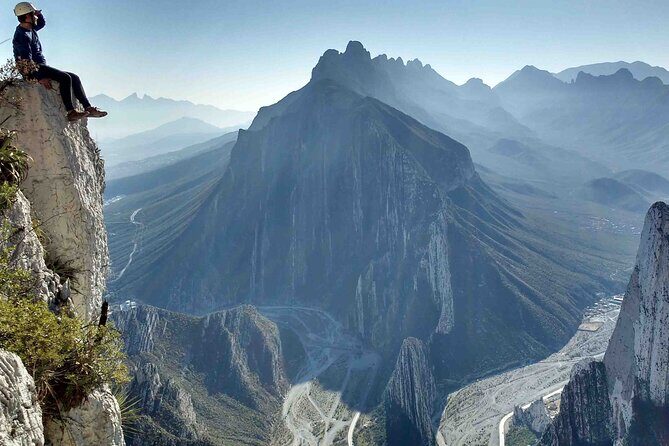
Nido de los Aguiluchos is the kind of Monterrey adventure where the activity shifts under your feet. You start hiking, then you’re suddenly climbing with fixed safety elements. Later, you’re rappelling down instead of walking back. It’s not one long scenic walk. It’s a sequence of different skills, each one building on the last.
That variety is a big reason people rate this so highly. The cable-protected climb sections make you feel capable sooner than you’d expect, and the rappels are the kind of adrenaline that actually sticks in your memory. Add the Huasteca mountain-and-valley views, and the day becomes equal parts effort and reward.
Also, it’s a guided experience with people whose job is to keep you moving safely. Names that show up in guides for this route include Omar, Ramses, Cedric, Jimi, Luiz, Tony, Adán, and Denise. The common thread is confidence-building coaching—especially when it’s your first time on metal rungs or doing rappels.
You can also read our reviews of more hiking tours in Monterrey
Getting there early: meeting point, transport, and the 5:00 am start
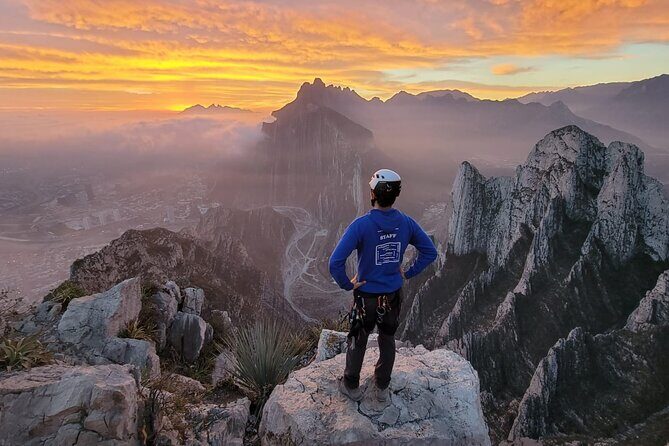
This tour starts at 5:00 am and uses a round-trip air-conditioned vehicle from Monterrey. You meet at H-E-B Gonzalitos, Av. Dr. José Eleuterio González 315, Sin Nombre de Col 69, 64050 Monterrey, N.L., Mexico, and the activity ends back at the meeting point.
Early morning matters more than it sounds. Cooler air can make the steep hiking feel less punishing, and it helps you stay steady during the climb and cable sections. Several people noted the route can be strenuous, so arriving rested helps you enjoy the technical parts instead of just surviving them.
You’ll also want to keep in mind that the day is long—plan for about 7 hours on the clock. Time can stretch with group pacing and waiting for turns during rappel sections, especially when everyone’s taking their safety setup seriously.
The climb setup: safety cables, metal rungs, and learning fast
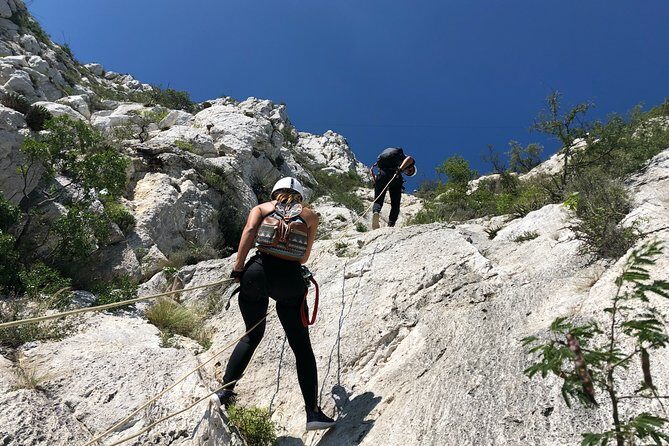
The core of the experience is a guided climb through sections that use metal rungs and safety cables. If you’re imagining a chaotic scramble, change that mindset. This route is designed so you can progress with the aid of fixed elements and instruction from your guide.
You’ll get coaching on how to move your body on the rung sections, how to stay balanced with your feet and hips, and how to handle the moments where the terrain forces you to slow down. Guides like Omar and Denise are repeatedly praised for making people feel prepared for rappelling, which usually means they spend enough time getting you comfortable before you transition from climbing to rope work.
If you’re a first-timer, you should still expect real effort. The system helps with security, but it doesn’t turn the climb into an easy ladder walk. You’ll work your legs and core, and you’ll use grip and stability skills you might not use on normal trails.
Hiking to the viewpoints: where your legs will feel it
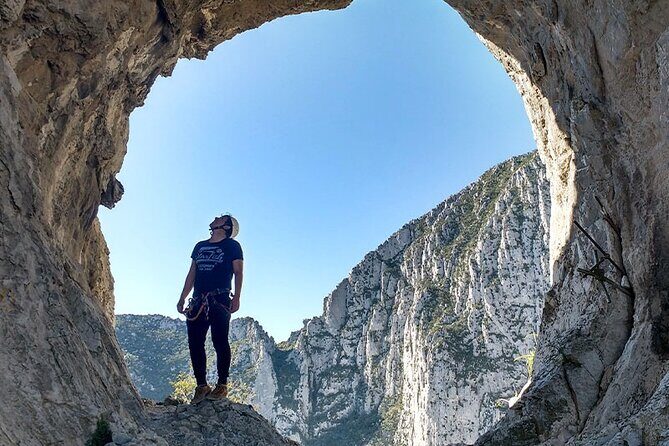
The day starts with hiking through mountain terrain before you’re fully in the climbing and cable rhythm. Even though the overall level is often described as suitable for all levels, the terrain is not a casual stroll. Expect steep sections and scrambling on rocky ground—especially earlier in the day when your body is still adjusting to the workload.
A couple of patterns show up in what you’ll feel:
- The early approach can be tough, so don’t expect everything to get easier immediately.
- Your pace matters. If you run out of energy on the approach, cable sections can feel harder than they need to be.
- Footwear makes a difference. People strongly recommend hiking boots because the route involves uneven rock and steep angles.
One practical tip: treat the first climb like a warm-up for the skills ahead. Slow down, keep your breathing controlled, and focus on getting your footing. Once you’re past the hardest initial push, the route becomes more manageable for many people.
Ridge to the summit and the adrenaline payoff
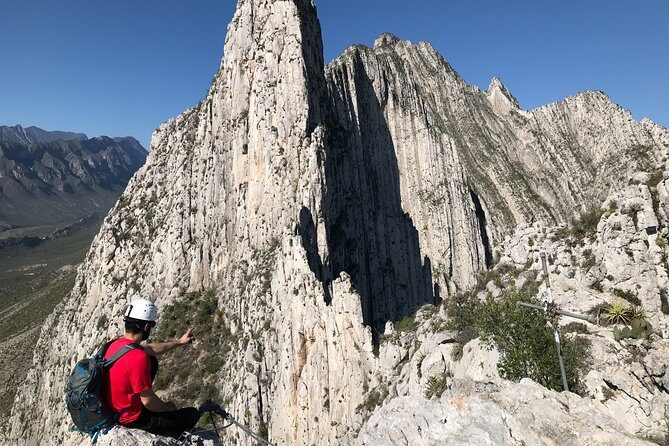
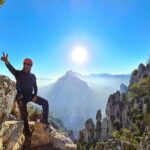
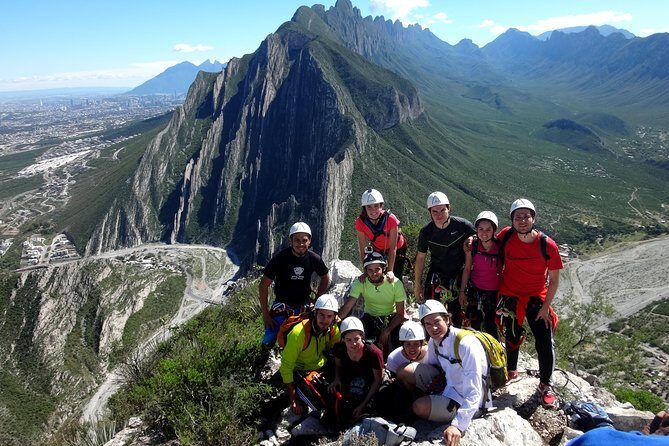
As you progress, the route leads you toward ridge and summit areas with expansive views of Monterrey’s Huasteca mountains and valleys. This is where the “worth it” factor kicks in for most people. When you’re moving through exposed sections, the view is not just scenery—it’s motivation.
The summit moment is also commonly described as a rush. The day starts early, and the climb is active enough that you’ll feel the satisfaction of earning height. If you’re not afraid of heights and you enjoy mountain activities, this is where the experience clicks.
A key detail: the sense of exposure can be intense even when you’re clipped in or guided. If you keep your focus on movements—step, grip, breath—you’ll do better than if you spend time thinking about what’s below you.

Three rappels and how to handle the scary parts
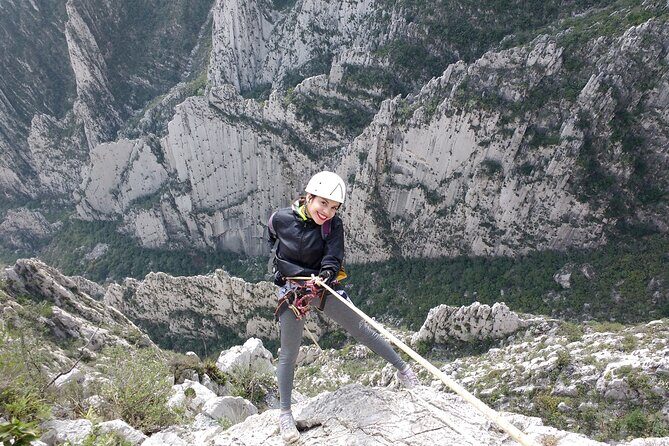
Rappelling is the headline moment for many people, and this tour includes 3 rappels. That means you’ll transition from climbing up to descending with gravity doing the work—while you manage control.
Here’s what to know before you go:
- The first rappel often feels the scariest because it’s unfamiliar.
- By the second and third rappels, you usually start trusting the system and your guide’s instructions.
- Waiting time can happen between rappel turns, so your legs may feel tired even if the rope work is the fun part.
Several people describe rappels as exciting and nerve-wracking at first. The good news is that guides take safety seriously, and many people say they never felt in danger—just challenged. Omar, Cedric, and Denise are specifically praised for making people comfortable and teaching the rappel setup.
If you get nervous, don’t fight it by rushing. Follow the guide’s instructions step-by-step and keep your movements smooth. Smooth beats fast here.
Zip lining: the fun-break after the rope work
Your day also includes zip lining. After climbing and rappelling, it provides a different kind of adrenaline: speed and glide without the technical tension of rope control.
Even if you don’t think you’ll care about zip lining as much, it helps break up the day mentally. You go from hard physical effort to a lighter experience where you can breathe and enjoy the air and views.
The biggest value of including zip lining is pacing. It gives your body a mental reset after the most intense parts of the route.
What to pack: gloves, boots, water, and sun gear that actually matter
This is one of those tours where what you wear affects your comfort more than you’d expect. Based on what people advise, here’s the packing list that tends to work:
- Hiking boots with solid grip for rocky, steep terrain
- Light gloves (more than once, people mention gloves as a real help, not a fashion choice)
- Plenty of water (one person specifically noted that skipping water can lead to feeling unwell by the end)
- Snacks for energy during a long day
- Sunscreen and sunglasses because you’re outside and moving in exposed areas
- A hat for early sun and glare
A couple of smaller extras can help:
- If you’re used to using trekking poles, bringing hiking sticks can make scrambling and steep sections feel steadier.
- Wear clothing you can move in comfortably; you’ll be climbing, shifting weight, and bracing.
Also remember: this is a mountain day. One review notes there are no facilities along the way, so you’ll need to plan bathroom breaks accordingly before you start the route.
Price and value: $115.95 for equipment, pros, and round-trip transport
At $115.95 per person, this is not a bargain-basement hike—but it’s also not priced like an ultra-exclusive private adventure. The value comes from what you get bundled into the ticket:
- Climbing equipment
- Professional guides
- Air-conditioned vehicle for round-trip transport
- All fees and taxes
What that means for you is fewer “surprise” costs. You’re paying for a guided day where safety systems, gear, and trained instruction are part of the experience, not add-ons.
If you tried to replicate parts of this day on your own, the hard parts would be finding qualified instruction, coordinating safe rope work, and managing timing for multiple rappels. This tour handles those logistics, and that’s where your money goes.
If you’re traveling solo, the small-group cap (max 15) helps keep the experience social enough without feeling crowded. If you want more attention, there’s also an option to upgrade for a private tour.
Who this tour is for, and who should skip it
This excursion is described as suitable for all levels, and many first-timers do it. But “suitable” doesn’t mean “easy.” Your body needs to handle steep hiking, scrambling, and climbing mechanics.
You should consider it if:
- you have moderate physical fitness
- you’re comfortable with hands-on climbing and using safety cables
- you enjoy mountain activities and want a bigger challenge than a standard trail hike
You should skip it if:
- you’re afraid of heights
- you need kid-friendly comfort breaks and smooth walking (it’s not set up that way)
- you don’t fit the guidance level around climbing effort and stamina
The tour also notes it’s not recommended for children under 12, which matters if you’re traveling as a family and hoping to make it a shared adventure.
Should you book this tour?
Book it if you want a real Monterrey adventure that feels earned: early start, guided cable climbing, three rappels, and major views over the Huasteca mountains. The combination is what makes people rave—especially the sense of achievement when you finish and look back at what you just did.
Skip it if heights make you freeze, or if you’re expecting a simple hike with photo stops. This is a technical, exposed day even with safety support, and your comfort with that reality matters more than your fitness rating on paper.
If you book, do one smart thing: arrive prepared. Solid boots, water, and light gloves can turn a stressful day into a confident one.
FAQ
How long does the Nido de los Aguiluchos hike and climbing tour take?
The tour runs about 7 hours (approximately), starting early in the morning and ending back at the meeting point.
Where is the meeting point and what time do we start?
You meet at H-E-B Gonzalitos, Av. Dr. José Eleuterio González 315, Sin Nombre de Col 69, 64050 Monterrey, N.L., Mexico, and the start time is 5:00 am.
Do I need prior rock climbing experience?
No prior climbing experience is required. The route uses metal rungs and safety cables, and guides provide hands-on instruction, including support for first-time climbers and rappelling.
Is the tour suitable if I’m afraid of heights?
It is not recommended if you’re afraid of heights, since the route includes exposed sections and you’ll be suspended during rappels.
What’s included in the price?
The price includes climbing equipment, professional guides, air-conditioned vehicle transportation, and all fees and taxes. Video service is not included.
What if the weather is bad?
The experience requires good weather. If it’s canceled due to poor weather, you’ll be offered a different date or a full refund.