REVIEW · NATIONAL MUSEUM OF ANTHROPOLOGY
Mexico City: Anthropology Museum Tour with Historian
Book on GetYourGuide →Operated by Walk Mexico · Bookable on GetYourGuide
Symbols you can actually read. In this small-group, historian-led tour, you connect Mesoamerica through the museum’s top galleries, from the Sun Stone to Pakal’s tomb replica.
I love the way the tour stitches civilizations together instead of treating each room like a separate theme park. I also love the plain-language teaching moments, especially around the Olmec colossal head and Maya writing, where meaning clicks fast.
One drawback to plan for: the museum is huge, and 3 hours can feel quick, so you’ll want to keep your pace and energy ready for lots of walking and looking.
In This Review
- Key highlights that make this tour worth your time
- Why a historian tour makes the Anthropology Museum make sense
- Meeting point and the small-group rhythm (what to expect in real time)
- Museum architecture and the courtyard fountain: the story starts before the galleries
- What is Mesoamerica? Paul Kirchhoff’s idea turns scattered galleries into one map
- Textiles, agave, and natural pigments: see “everyday life” behind sacred objects
- Cultural blending: ritual attire and ceremonial objects in context
- Olmec colossal head: why the “mother culture” label still matters
- Mexica highlights: Templo Mayor, chinampas, and the Sun Stone
- Teotihuacán as a multicultural metropolis you can actually picture
- Maya writing and Pakal’s tomb replica: the finish that sticks
- Price and value: is $175 per person worth it?
- Who this tour suits best (and who might want another plan)
- Final call: should you book this Anthropology Museum historian tour?
- FAQ
- How long is the tour?
- How much does the tour cost?
- Where do we meet the guide?
- What languages is the tour offered in?
- What group size is this tour?
- What’s included in the price?
- What is not included?
- Is the tour wheelchair accessible?
- Do children need an adult with them?
- Can I cancel for a refund, and is reserve now pay later available?
Key highlights that make this tour worth your time
- A connected Mesoamerica story that links myths, symbols, and technologies across cultures
- The museum’s design and courtyard fountain explained as cultural symbolism, not just architecture
- Agave, textiles, and natural pigments that show daily life and craft traditions
- Iconic stops like the Sun Stone, Templo Mayor, and Teotihuacán’s masterpieces tied together with context
- A dramatic finish at Pakal’s tomb replica, including the 1985 Christmas Eve heist story
Why a historian tour makes the Anthropology Museum make sense
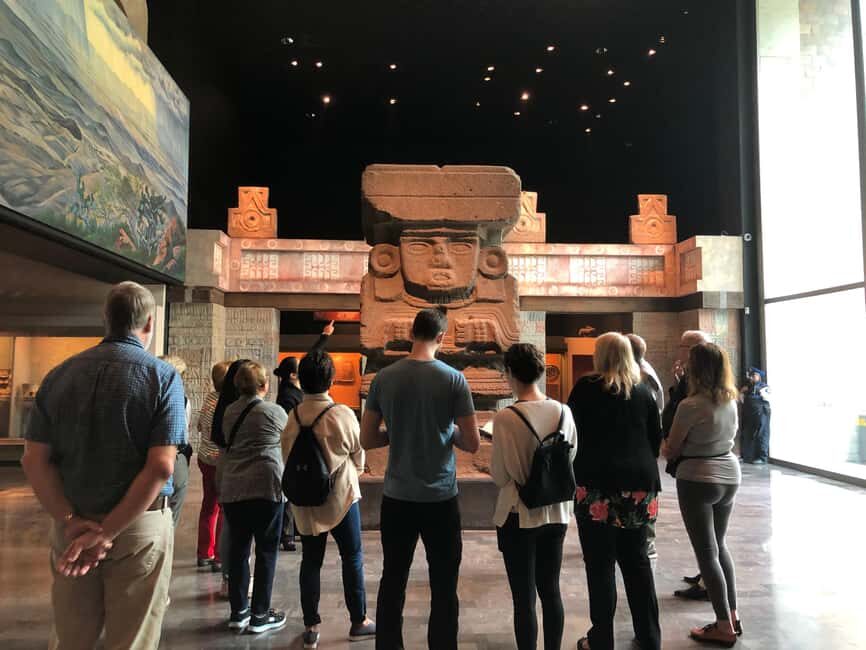
The Anthropology Museum in Mexico City is world-class, but it’s also massive. Without a guide, it’s easy to see famous objects and still miss what they’re saying.
This tour solves that. You’re not wandering room to room with no thread. You’re getting a historian-led path that connects ideas across time: shared symbols, repeated artistic techniques, and beliefs that traveled and transformed across regions.
And the guide team matters. The experience is led by an expert with a graduate academic degree (either art historian or historian), and that shows in how they explain what you’re looking at. People have described guides like Natalia and Hector as personable and funny, which is a big deal here. Complex topics land easier when the delivery is human.
Meeting point and the small-group rhythm (what to expect in real time)
You meet at the Anthropology Museum main lobby, near the ticket booth, and your guide waits there with the WALK MEXICO logo. It’s an easy start, and it gets you into the right flow fast.
The group is capped at 10 people, which keeps the tour from feeling like a conveyor belt. If you’re in a busier situation, you’ll have headsets to hear the guide clearly, which helps in a museum where sound travels in weird ways.
The pacing is built around discussion. You’ll get time at each stop to look closely, then hear the story that makes the object less mysterious. If you ask questions, the tour style supports it. You’re not just being shown things; you’re being taught how to read them.
Also, it’s wheelchair accessible, so you can expect the route to be workable for visitors who need it.
Museum architecture and the courtyard fountain: the story starts before the galleries
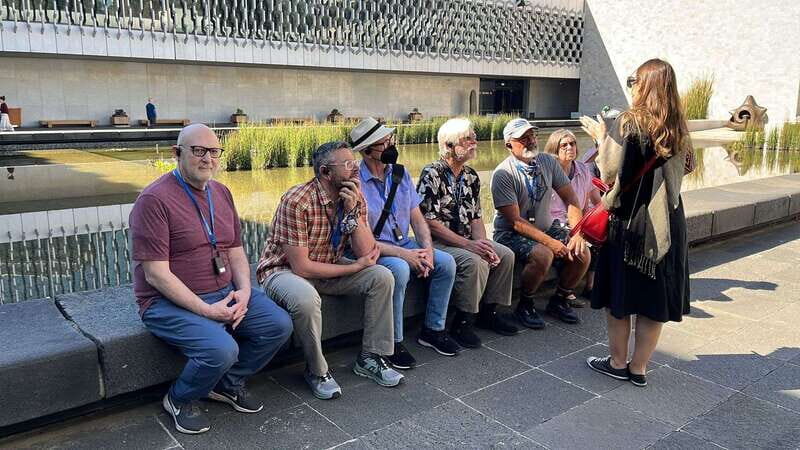
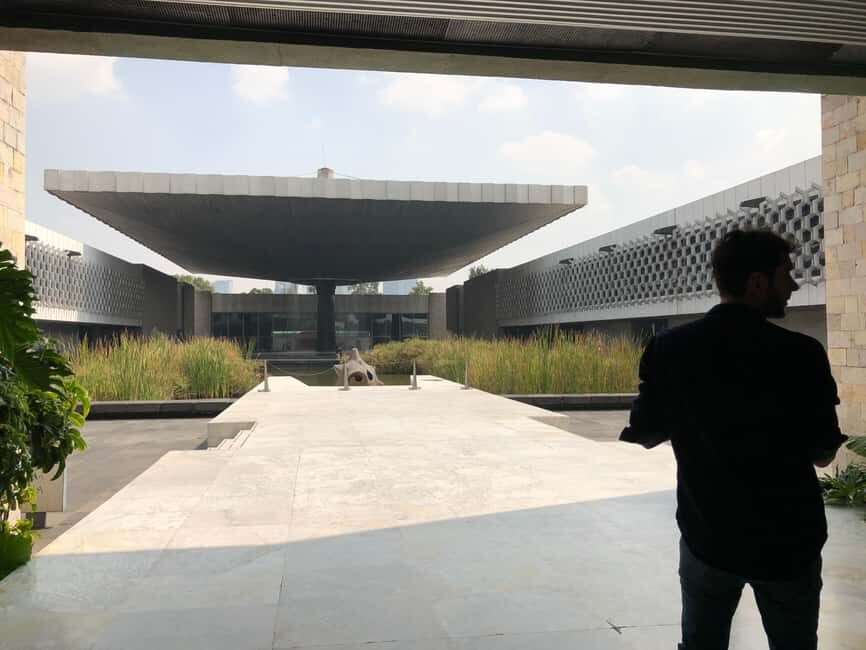
You begin with how the museum itself was designed to carry meaning. The tour introduces the museum’s layout and the collaboration between architects and artists, including how murals, symbolism, and monumental replicas help honor Mesoamerican cultures.
That matters because it changes how you look around. Instead of thinking, this is just a container for artifacts, you start realizing the building is part of the message.
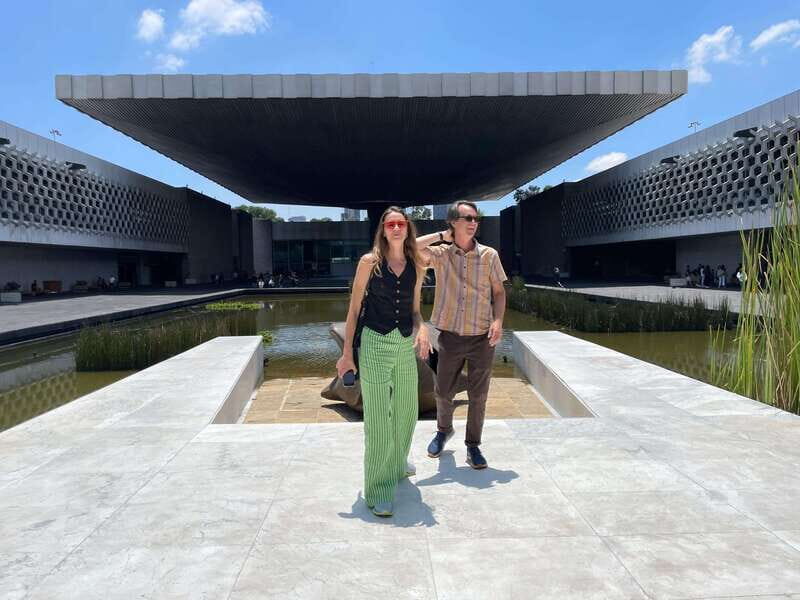
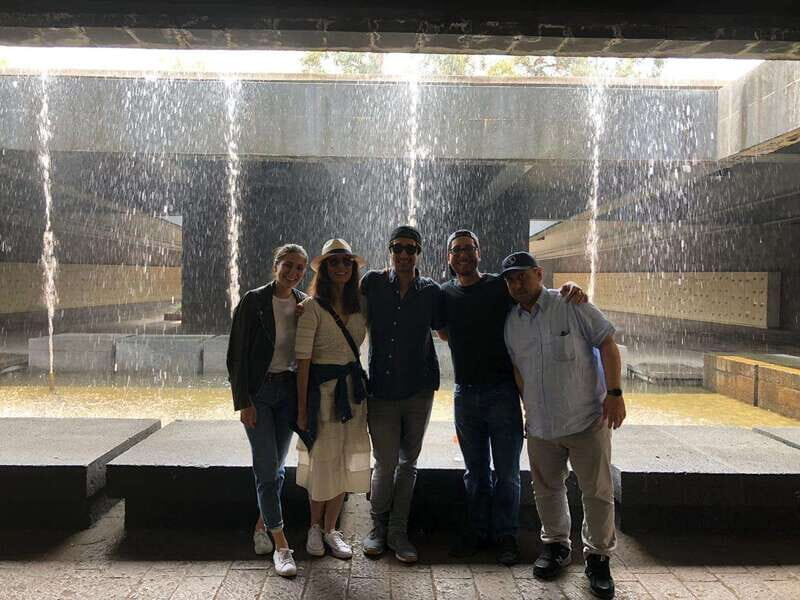
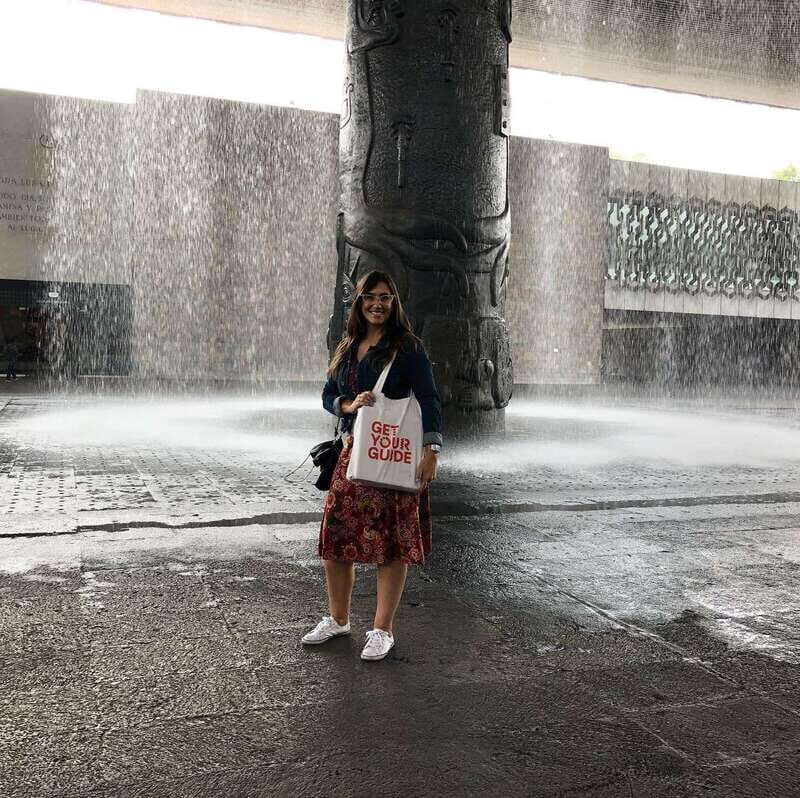
Then you step into the famous courtyard to admire the spectacular fountain. The guide doesn’t treat it like a photo spot. You explore the meaning and symbolism behind this monumental structure, which sets the tone for the rest of the tour: objects here are loaded, and the connections are the point.
What is Mesoamerica? Paul Kirchhoff’s idea turns scattered galleries into one map
One of the most useful parts of the tour is the moment you get a clear definition of what Mesoamerica means. You learn Paul Kirchhoff’s concept of Mesoamerica as a shared cultural region.
This isn’t trivia. It’s the key that unlocks the whole tour structure.
Instead of memorizing civilizations as separate lists, you’ll hear how distant groups shared common traditions, languages, agricultural systems, and cosmological ideas. That helps explain why symbols repeat and why artwork from different cultures can still feel related.
Once you have this frame, the next galleries land with less confusion. You can start noticing patterns yourself, like recurring themes of rulers, ritual objects, and cosmic symbolism.
Textiles, agave, and natural pigments: see “everyday life” behind sacred objects
In many museums, textiles and craft items get treated like decorative extras. Here, they get equal weight because they show how knowledge lived in daily routines.
You’ll spend time in the hall with looms, garments, and textiles across Mesoamerica. The guide connects these objects to techniques like spinning, weaving, and dyeing with organic pigments.
Then agave takes center stage. You learn about many uses of agave, including fibers, tools, and household items. The effect is practical and visual: you start understanding how plants became materials, how materials became tools, and how tools supported both ordinary life and ritual practice.
This is also where the tour often becomes surprisingly modern in its feeling. You start seeing craft as engineering, not just art.
Cultural blending: ritual attire and ceremonial objects in context
A key theme of the tour is cultural blending—how exchange shaped identity. You walk through displays of ritual attire and ceremonial objects, and you discuss how centuries of cultural exchange influenced festivals, body decoration, and artistic style across the region.
This section helps you avoid a common trap: thinking each civilization lived in a sealed bubble. The tour’s message is closer to reality—cultures interacted, adopted ideas, and adapted them.
So when you later see symbols reused or reworked in later galleries, it doesn’t feel like an accident. You’ll recognize it as part of how Mesoamerican cultures communicated with one another over time.
Olmec colossal head: why the “mother culture” label still matters
The Olmec Gallery is one of those stops where the famous object can still look strange until you hear the explanation.
You encounter an iconic Olmec colossal head, then learn why the Olmec are often considered a “mother culture” of Mesoamerica. The tour focuses on influence: how their artistic styles and religious concepts shaped what came later.
This is a good moment to slow down. These heads are imposing, but the story gives them purpose. You’re not just looking at a sculpture; you’re looking at a visual language that helped define a regional world of meaning.
If you’ve ever wondered why people care so much about a culture that predates others by centuries, this stop answers it.
Mexica highlights: Templo Mayor, chinampas, and the Sun Stone
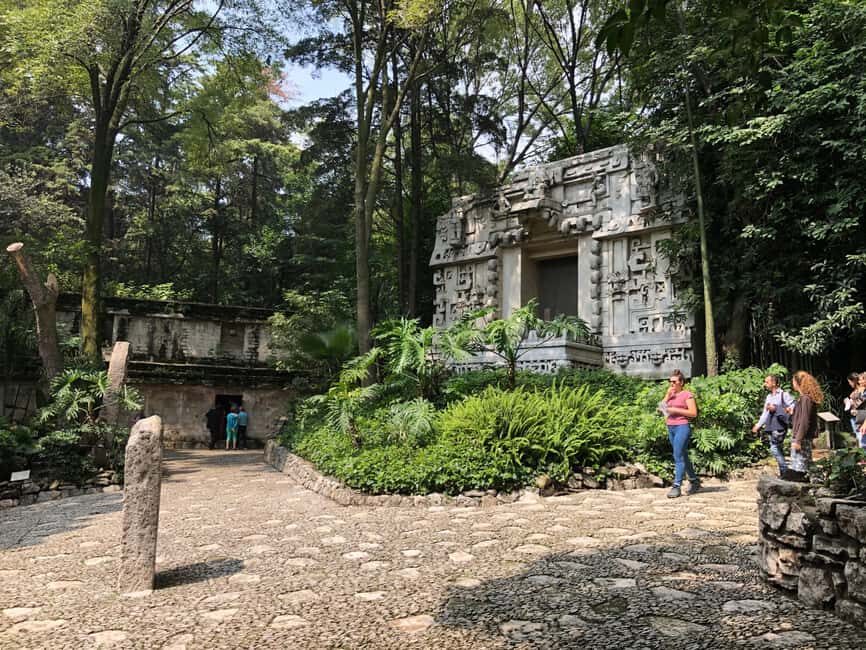
Next you move into the Mexica Gallery, where multiple major themes share the same space.
You’ll see key highlights connected to the Templo Mayor, plus the story of chinampas and the Sun Stone. The guide also addresses the famous misnaming often used for the so-called Aztec Calendar, explaining the real name and what it means.
Chinampas deserve special attention. You learn how the Mexica built their city on artificial islands supported by bridges, aqueducts, and a sophisticated hydraulic system. Then you get a detailed scale model showing how ancient Mexico City still lies beneath colonial Mexico City.
That model is a turning point. It helps you understand the landscape as a designed system, not a natural backdrop. The lesson is clear: the environment wasn’t just where history happened. It was part of the technology.
And the Sun Stone stop ties it together with symbolism. You learn how cosmic imagery and political power were linked—so the object becomes less of a calendar puzzle and more of a statement about the world.
Teotihuacán as a multicultural metropolis you can actually picture
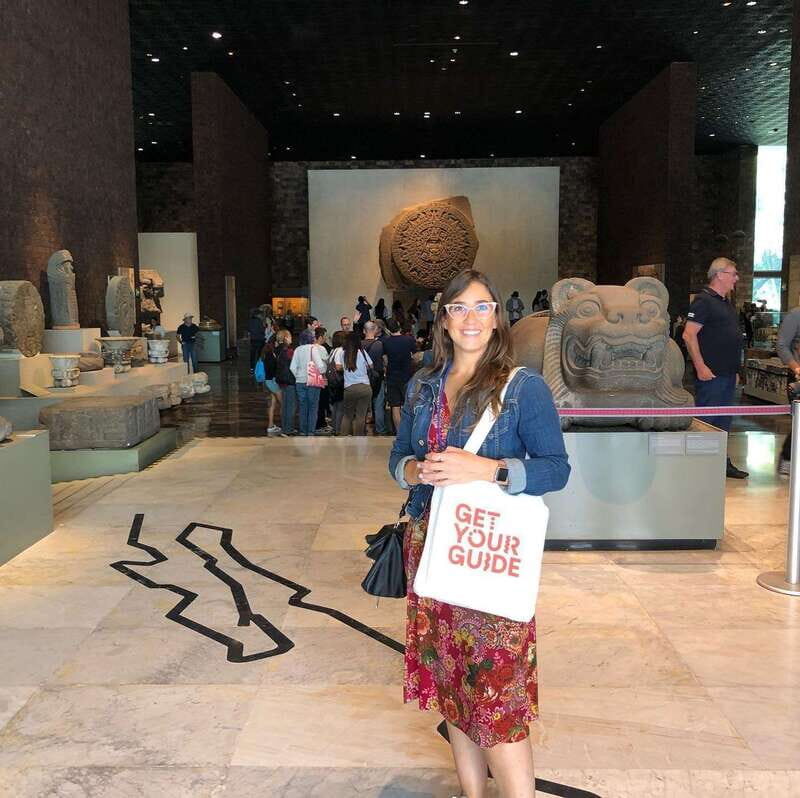
The Teotihuacán Gallery reframes the city as something bigger than a single culture.
You discover Teotihuacán as a multicultural metropolis inhabited by multiple cultures. You’ll also hear theories about its rise and its mysterious decline. It’s the kind of discussion that keeps you thinking, not just looking.
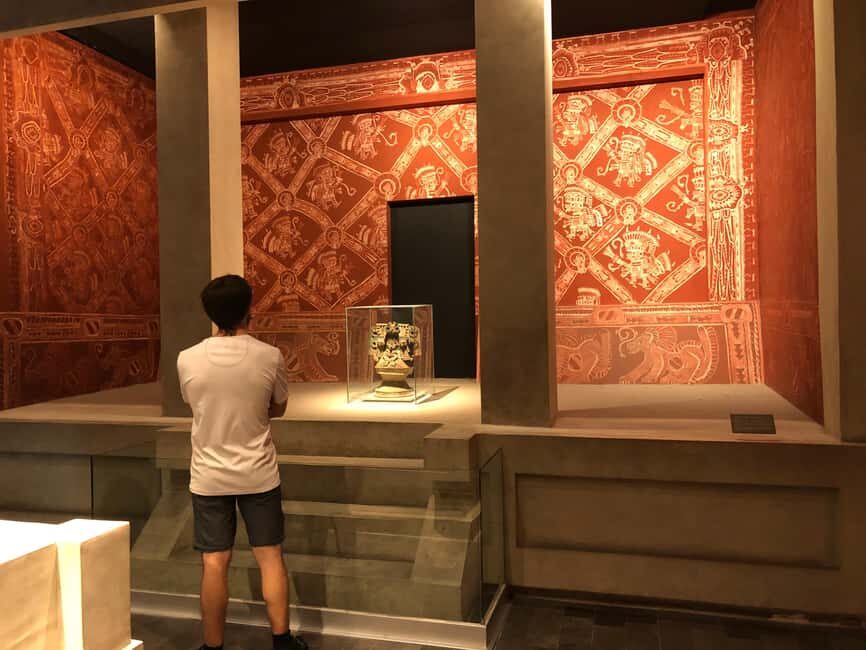
Then you get the payoff in the collection itself: refined ceramics, obsidian masterpieces, mural fragments, and colorful architectural replicas. Even when the details are small, the tour helps you interpret what you’re seeing and why it fits the theme of mixing.
This is a great stop if you like art history but also like people stories. Teotihuacán becomes a place where different groups coexisted, shared artistic habits, and left traces that still show up today.
Maya writing and Pakal’s tomb replica: the finish that sticks
The tour ends in the Maya hall, where writing, portraiture, and royal imagery converge.
You see ceramic portraits, vibrant vessels, and jade carvings. The guide connects these objects to the story of how Maya writing was deciphered.
The explanation is unusually human: it spans colonial archives, lost manuscripts, and the work of a WWII Russian soldier. That arc makes the decipherment feel less like a distant academic event and more like a detective story with real artifacts at stake.
Then you reach the dramatic conclusion: the replica of Pakal’s tomb. It’s one of the most dramatic spaces in the museum, and the tour treats it like the emotional peak it is.
You also hear the story of the 1985 Christmas Eve museum heist, when Pakal’s mask and many treasures were stolen. It’s a reminder that history isn’t locked behind glass. It lives in real events, real risks, and real mysteries.
Price and value: is $175 per person worth it?
At $175 per person for a 3-hour tour, this isn’t the cheapest way to see the museum. But it is priced like an expert experience, not a casual walk-through.
Here’s what you’re paying for, specifically:
- A guide with a graduate academic degree (historian or art historian)
- Museum ticket included
- Headsets if needed for clearer audio
- A connected teaching path across multiple civilizations instead of random gallery hopping
If you’re the type of visitor who wants meaning—why symbols repeat, how craft links to belief, and what those famous objects actually represent—then the price starts to look fair quickly.
If you mostly want a quick photo and a relaxed stroll, you may feel the cost more. In that case, you could still enjoy the museum alone, but you’d lose the thread that makes the artifacts talk to each other.
Also consider time. The museum is big enough that 3 hours is either a focused hit or a “too short” feeling, depending on your pace and your question style. This tour is built for focus, not for drifting.
Who this tour suits best (and who might want another plan)
This tour is a strong match if you:
- Want to understand multiple Mesoamerican cultures in one visit
- Like museum storytelling that turns symbols into clear explanations
- Prefer small-group pacing over crowded group tours
- Enjoy asking questions and getting direct answers
It’s also a solid choice for families with older kids, because the structure helps keep attention on meaning and relationships between cultures. Just note the rule: an adult must always accompany children.
If you’re traveling with someone who only wants a casual browsing experience, you might need to negotiate the pace. This tour leans toward interpretation and context, so it’s not just a “see everything” sprint.
Final call: should you book this Anthropology Museum historian tour?
I think you should book it if your goal is understanding, not just sightseeing. The tour’s real value is the way it connects Olmec, Mexica, Teotihuacán, and Maya into one storyline, with stops that explain both the art and the ideas behind it.
It’s also a smart move if you worry you’ll feel overwhelmed. A historian-led route turns a huge museum into a sequence you can follow, and the guide support (including headsets when needed) helps you stay focused.
If you’re price sensitive or you don’t care much about context, you might choose a self-guided museum plan. But if you want the objects to make sense—especially the Sun Stone, the chinampas model, and Pakal’s tomb replica—this tour is built for exactly that.
FAQ
How long is the tour?
It lasts 3 hours.
How much does the tour cost?
The price is $175 per person.
Where do we meet the guide?
You meet your guide at the Anthropology Museum main lobby, near the ticket booth.
What languages is the tour offered in?
The tour is offered in English and Spanish.
What group size is this tour?
It’s a small group, limited to 10 participants.
What’s included in the price?
You get an expert guide with a graduate academic degree, headsets to hear the guide (for large groups), and the museum ticket.
What is not included?
Food and drinks, transportation, and pickup or drop-off are not included.
Is the tour wheelchair accessible?
Yes, the tour is wheelchair accessible.
Do children need an adult with them?
Yes. An adult must always accompany children.
Can I cancel for a refund, and is reserve now pay later available?
You can cancel up to 24 hours in advance for a full refund, and you can reserve now and pay later to keep your plans flexible.