REVIEW · TULUM
Freediving Intro for Beginners in a Cenote in Tulum Mexico
Book on Viator →Operated by Freedive Utopia · Bookable on Viator
Breath-hold lessons in a cenote feel magic. You get private transportation from central Tulum and close coaching that starts on land, so you spend less time wrangling logistics and more time learning breathing and equalization. I also like that the package includes underwater videos, which makes it easier to spot what to improve. The one real drawback to note is the booking is non-refundable, so only lock it in when your dates are solid.
This is a beginner-focused session that moves at a calm pace. You’ll start with basic gear setup and drills, then work your way deeper and farther into Casa Cenote, staying supervised the whole time. Total time is about 5 hours, with roughly 1.5 to 2.5 hours in the water depending on the group.
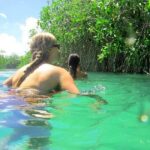
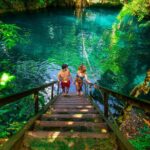
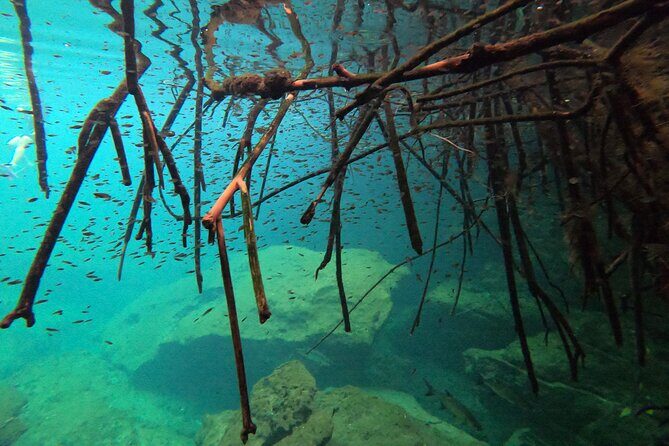
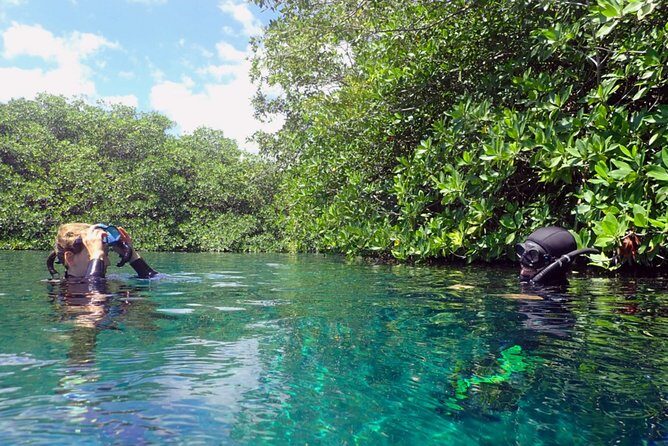
What makes Casa Cenote especially worth it is access. This experience lets you explore sections that aren’t open to casual walk-in visitors, and you’ll do swim-throughs in clear water with mangroves overhead. If you’re nervous about signing a medical release or you’re unsure how your body will handle being in open water, plan to take the briefing seriously and ask questions upfront.
In This Review
- Key things that make this course worth your time
- Casa Cenote training: what you’ll learn (and what you won’t)
- Getting to the cenote: private transport that saves your energy
- Equipment matters: what’s included and why it helps beginners
- The in-water progression: drills first, then longer swims
- Why having a patient instructor and video feedback is a game-changer
- Timing: how a 5-hour day usually unfolds
- Price and value: is $214.94 worth it?
- Who should book this cenote breath-hold intro
- Quick notes on what’s included and what to plan for
- Should you book this Casa Cenote beginner course?
- FAQ
- Where is the meeting point for the tour?
- What pickup areas are available?
- How long is the experience?
- How much time will I spend in the water?
- What is the maximum depth during the session?
- What freediving gear is included?
- Are underwater videos included?
- What’s not included in the price?
- Do I need to sign a medical release?
- What is the cancellation policy?
Key things that make this course worth your time
- Small group max of 4 means more coaching attention during drills and gear checks
- Casa Cenote access off-limits areas so you get more than the usual walk-in route
- Maximum depth 7 meters / 23 feet keeps the training within a controlled range
- Underwater video included so you can review technique right away
- All freediving gear provided (mask, snorkel, fins, wetsuit, weights) so you don’t buy or borrow mismatched equipment
Casa Cenote training: what you’ll learn (and what you won’t)
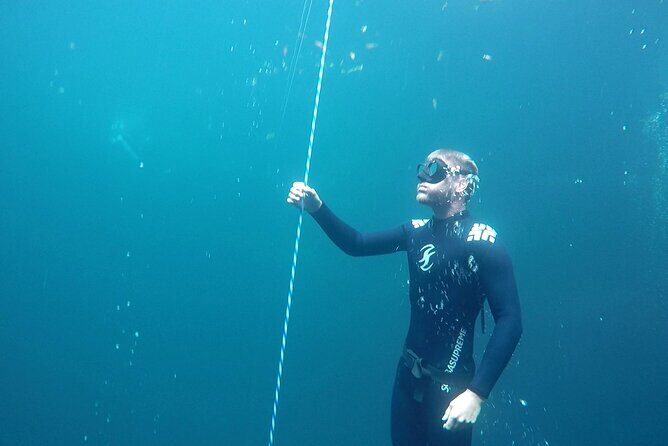
Casa Cenote is the only listed stop, and it’s where the whole lesson happens. You’ll learn breath-hold basics in clear cenote water, with the instructor guiding you through technique and pacing. The plan keeps you at a maximum depth of 7 meters / 23 feet, which is high enough to feel real underwater movement, but still structured for beginners.
Before you get in, the instructor will cover the foundation: how to equalize, how to time your breathing, and how to put on the equipment correctly. That sounds simple, but it’s exactly what makes the day feel manageable. If your gear is set wrong, or you’re confused about breathing and equalization, everything gets harder once you’re underwater.
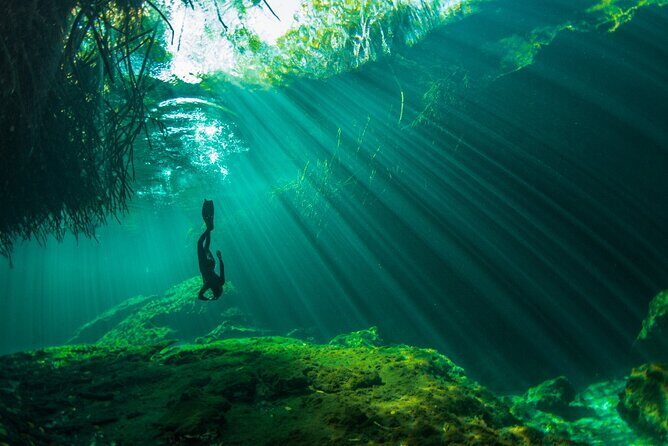
Once you’re in the water, you’ll start familiarizing yourself with the area and the gear. Then you’ll progress gradually into the cenote, applying what you practiced. You’ll also do swim-through style training under the clear-water mangroves, which is where the experience stops being a classroom exercise and starts feeling like exploration—just with safety rails.
One practical consideration: the water time changes by group size. Expect anywhere from 1.5 to 2.5 hours in the water, which is long enough to build comfort, but short enough that you’re not wiped out for the rest of the day.
You can also read our reviews of more tours and experiences in Tulum.

Getting to the cenote: private transport that saves your energy
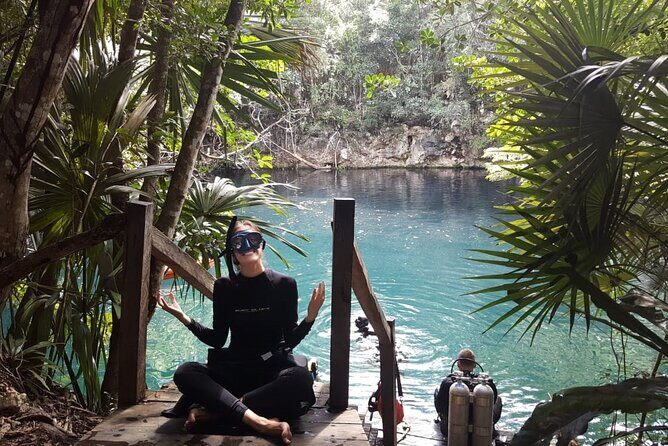
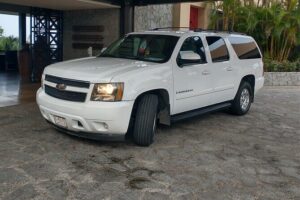
Logistics can make or break a day like this. This experience includes private transportation to and from Casa Cenote, and the cenote is about a 15-minute drive from the pick-up point in Tulum downtown.
That short drive matters more than it sounds. You’ll spend less time juggling local transport, and you’ll be fresher when it’s time to suit up. It also keeps the day on schedule, which helps when your instructor is pacing drills for a small group.
Pickup is offered, but with boundaries. You can only be picked up from hotels and stays in Tulum downtown—not from the beach/hotel zone, and not from Aldea Zama or La Veleta. The meeting point is Ki’bok Coffee Tulum (Avenida Zamna, Calle 12 Sur, La Veleta), and the activity ends back at the same meeting point.
If you’re staying somewhere that’s technically close but not in the eligible pickup area, you might need to plan to meet at Ki’bok Coffee instead. I’d treat the pickup rules as part of the value: it’s convenient when you qualify, and you’ll avoid surprises if you double-check your exact location.
Equipment matters: what’s included and why it helps beginners
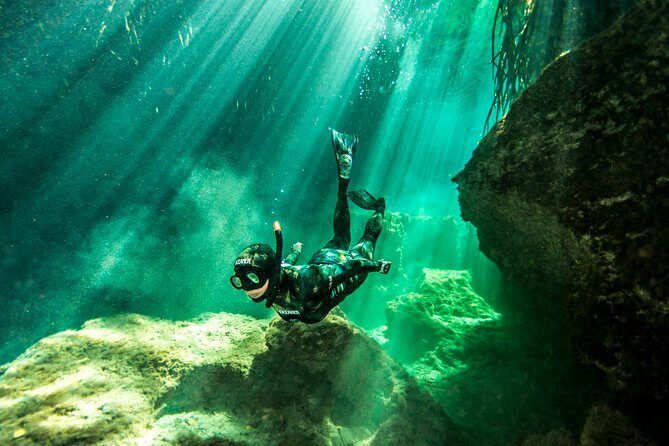
For many beginners, the hardest part isn’t the water—it’s the gear. Here, the course includes full equipment: mask, snorkel, fins, wetsuit, weight belt and weights.
Having everything included is a big value point for you. You don’t have to guess which mask shape works for your face, which fins fit your feet, or what weight makes sense. Incorrect gear can lead to wasted effort in the water, so being handed the right setup from the start makes the training more efficient.
Wetsuit time also changes the feel of the experience. Even in warm cenote water, being properly suited helps with comfort and reduces distraction. Combine that with fins and weight belt use during drills, and you get a consistent learning environment.
One more benefit: because the instructor handles equipment donning and checks before you enter the water, you get fewer “fix it later” moments. That means more practice time and less frustration.
If you’re the type who wants to show up ready, you’ll like this setup. You can focus on breathing, equalization, and body position—where the real progress happens in a course like this—rather than on figuring out how to assemble gear that you’ve never used before.
The in-water progression: drills first, then longer swims
Once you’re suited up, the session shifts into the water portion. You’ll start with orientation: getting familiar with the area and moving with the gear. Then you’ll do basic drills that match the skills you worked on during the briefing—especially breathing timing and equalization.
A smart way to think about it: this course isn’t about doing one big “hero moment.” It’s about building repeatable habits. Slow progression gives you the chance to feel what works, then practice it again.
As the lesson continues, you’ll gradually move into the cenote and apply your skills in more challenging dives and swim-throughs under the mangroves. The water is clear, and the mangroves create that classic cenote feeling: a tunnel-like sense of space, with light filtering in. For beginners, the value is not just beauty—it’s visibility. Clear water helps you stay oriented, which supports calmer breathing and better control.
The maximum depth is capped at 7 meters / 23 feet, and the instructor supervision stays constant. That combination is exactly what you want when you’re learning a breath-hold skill that depends on comfort, pacing, and technique.
Also, remember that your actual time in the water depends on the group. If you’re in a smaller group, you may get more time for practice rounds. If you’re at the higher end of group size (still small), the pacing may be adjusted so everyone gets their turns.
Why having a patient instructor and video feedback is a game-changer
What I value most in a beginner breath-hold course is feedback—quick, clear, and repeatable. The instruction here is designed to make you safe and comfortable, with a briefing before you enter the water and constant supervision once you’re underwater.
From the instructor style highlighted in the experience notes, one name that comes up is Esteban, known for being patient and detailed. That matters because breath-hold technique is not something you “just figure out” instantly. You need corrections that are specific and timed. A patient instructor also helps you trust the process long enough to learn, even if you’re not a natural at equalization right away.
Even better, underwater videos are included. This is one of those perks you don’t fully appreciate until you’ve seen your own position in the water. Video feedback can help you understand what your body is doing during breath-hold attempts—like how your head position affects comfort and how your movement changes with fin use.
If you tend to learn visually, the included videos can turn this day from a one-time activity into a skill you can keep improving afterward. You also leave with a record of what you did right, not just a memory of how it felt.
- Selva Maya Eco Adventure Park: Ziplining, Hanging Bridges, Rappelling and Cenote
★ 5.0 · 1,057 reviews
Timing: how a 5-hour day usually unfolds
The total duration is about 5 hours. The “about” part is important because cenote training includes briefing, gear checks, and practice rounds that depend on group flow.
You’ll meet at Ki’bok Coffee Tulum. Pickup (when eligible for your location) brings you to the cenote, which is about a 15-minute drive. Once you arrive, the instructor will brief you on the basics: equalization, breathing for breath-hold training, and equipment donning.
Then you’ll enter the water for familiarization drills and progression. The total time in the water can vary between 1.5 to 2.5 hours depending on group size. After your final practice rounds, you’ll head back and the tour ends back at the meeting point.
Plan the rest of your day around that water time. Because you’re wearing a wetsuit and doing breath-hold technique drills, you’ll feel it afterward—hydration and a light meal help. Bottled water and snacks aren’t included, so I’d treat that as a heads-up rather than an afterthought.
This is also an experience that moves with intention. You’ll get plenty of instruction, but it won’t feel like you’re standing around waiting for the session to start. That balance is a big reason the day feels worth the money.
Price and value: is $214.94 worth it?
At $214.94 per person, this isn’t a cheap add-on. But you’re not just paying for access to a cenote. You’re paying for a structured beginner lesson, small-group supervision, private transportation, and full equipment with weights and video.
Here’s where the value comes from for you as a beginner:
- Gear is included, which can easily become a hidden cost if you have to rent or improvise
- Instruction + safety supervision reduces the “trial and error” that beginners often spend time on
- Underwater videos add real feedback value
- Private transportation saves energy and reduces schedule stress
The course also includes all fees and taxes, which helps you avoid surprise add-ons. The downside is that you’re committing to a fixed experience. Since it’s non-refundable and cannot be changed for any reason, you should book only when your plans are firm.
So, is it worth it? If you want a guided, beginner-friendly way to learn breath-hold basics in a spectacular cenote setting—without worrying about gear choices and transport—it’s priced like a true guided activity, not a DIY day trip.
Who should book this cenote breath-hold intro
This is best for people who want structured instruction more than they want pure adventure. If you’re a first-timer and you want help with technique like equalization and breathing timing, the setup is built for you.
It’s also a good fit if you:
- like small-group experiences (max 4 travelers)
- want all gear provided so you can show up light
- value safety supervision and a clear progression plan
- learn well with video feedback
Most travelers can participate, but everyone has to sign a medical release. If you have health concerns related to breath-hold activities, it’s worth taking that requirement seriously and being honest on your release form.
If you’re only looking for a quick swim, this may feel more instructional than relaxing. But if you want to leave with a better understanding of breath control, equalization, and movement underwater, this course offers a lot for one day.
Quick notes on what’s included and what to plan for
Included:
- Full gear: mask, snorkel, fins, wetsuit, weight belt and weights
- Private transportation
- All fees and taxes
- Underwater videos
Not included:
- Snacks
- Bottled water
Service animals are allowed. Confirmation is received within 48 hours of booking, subject to availability. The tour is offered in English.
If you want to make your day smoother, bring a plan for food and water on either side of the session. And if you’re prone to cold, consider that you’ll be in a wetsuit and still in a stable training environment, not sprinting around in the open.
Should you book this Casa Cenote beginner course?
I’d book it if you want a guided, beginner-friendly path into breath-hold training in a clear Tulum cenote, with small-group attention, gear handled for you, and video feedback to help you improve. Access to parts of Casa Cenote that aren’t open to walk-in visitors is another strong reason—this isn’t just a generic cenote swim.
I’d think twice if your schedule is flexible or you’re not ready for a non-refundable booking. Also, if you’re uncomfortable completing a medical release, don’t treat it as optional.
If you can commit and you want real instruction rather than guesswork, this is one of the better ways to experience Casa Cenote with confidence. You’ll leave with the feeling of having learned something real—plus footage you can actually use.
FAQ
Where is the meeting point for the tour?
The meeting point is Ki’bok Coffee Tulum, Avenida Zamna, Calle 12 Sur, La Veleta, 77760 Tulum, Q.R., Mexico.
What pickup areas are available?
Pickup is only available from hotels and stays in Tulum downtown. Pickups are not available from the beach/hotel zone, not from Aldea Zama, and not from La Veleta.
How long is the experience?
The tour duration is approximately 5 hours.
How much time will I spend in the water?
Total time in the water can vary by group size between 1.5 to 2.5 hours.
What is the maximum depth during the session?
The maximum depth is 7 meters / 23 feet.
What freediving gear is included?
Gear included is a mask, snorkel, fins, wetsuit, weight belt, and weights.
Are underwater videos included?
Yes, underwater videos are included.
What’s not included in the price?
Snacks and bottled water are not included.
Do I need to sign a medical release?
Yes, all participants have to sign a medical release.
What is the cancellation policy?
This experience is non-refundable and cannot be changed for any reason. If you cancel or ask for an amendment, the amount you paid will not be refunded.
You Might Also Enjoy

More Tour Reviews in Tulum
- Selva Maya Eco Adventure Park: Ziplining, Hanging Bridges, Rappelling and Cenote
★ 5.0 · 1,057 reviews