REVIEW · TECOH
Chichen Itza On-Site Guided Tour with Certified Local Expert
Book on GetYourGuide →Operated by Amigo Tours LATAM · Bookable on GetYourGuide
Chichén Itzá gets way more real with a guide. This 90-minute on-site walk brings the Maya culture and astronomy-linked architecture into focus, without the drag of a huge group tour. You’ll see the big names fast, then slow down where it matters—so the stones start telling stories instead of just looking old.
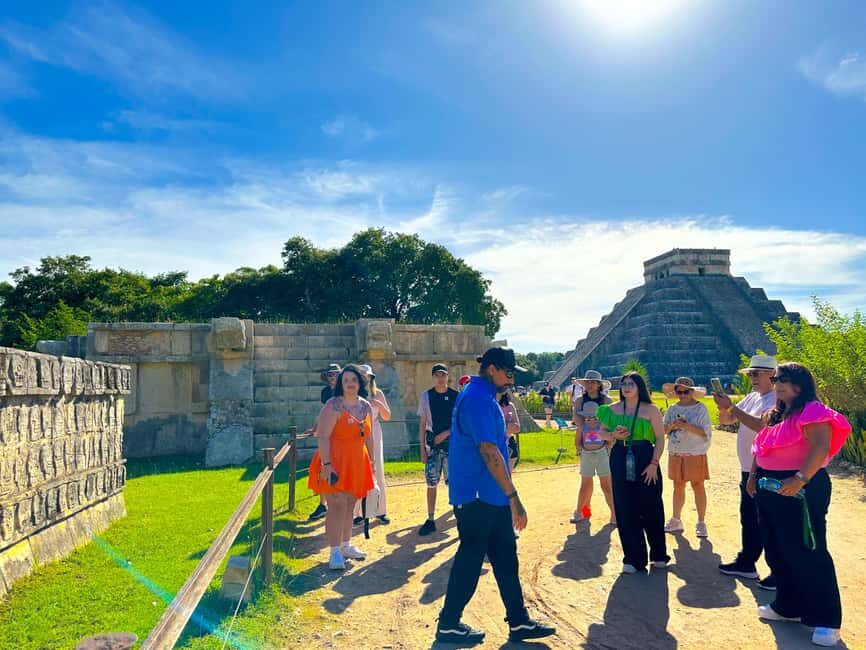
I like two things most. First, you get certified local expertise that’s built for questions, not just facts. Second, guides like Omar, Pedro, René, and Santos are known for pointing out the best angles and helping with phone photos (and even showing recreations on an iPad).
The main drawback is practical: it’s a short, walking-heavy tour, and it’s not suited for wheelchair users. Also, this is hot, bright work—so skip the flimsy shoes and forget the sunscreen.
In This Review
- Quick Take: What’s Special Here
- Meeting at Parador Turístico: Start Smarter at Chichén Itzá
- Shared Bilingual vs Private Monolingual: Which Tour Fits Your Style
- Shared bilingual: smoother and social
- Private monolingual: more questions, more breathing room
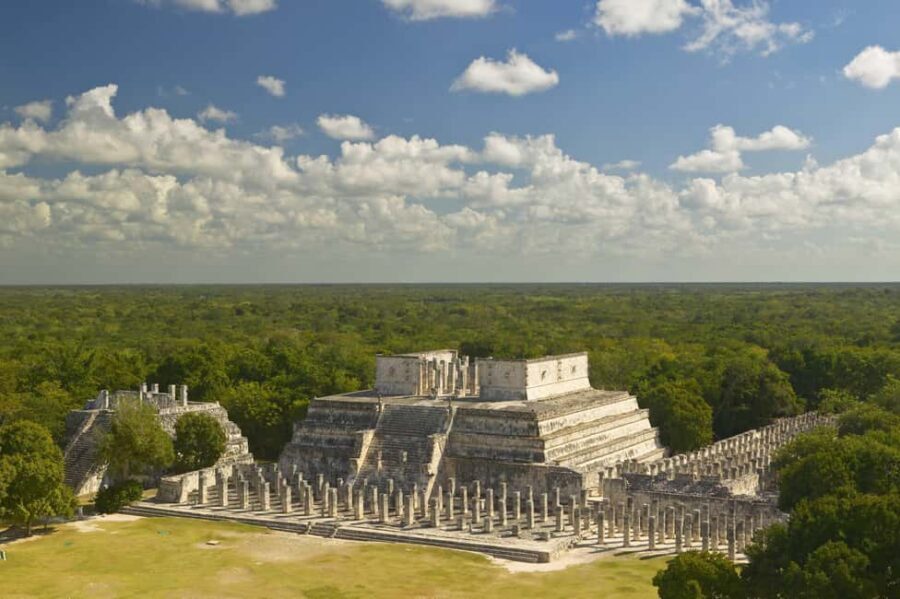
- Your 90-Minute Route: Castillo, Kukulcán Temple, and the Great Ball Court
- First stop: a quick photo moment, then straight into the walk
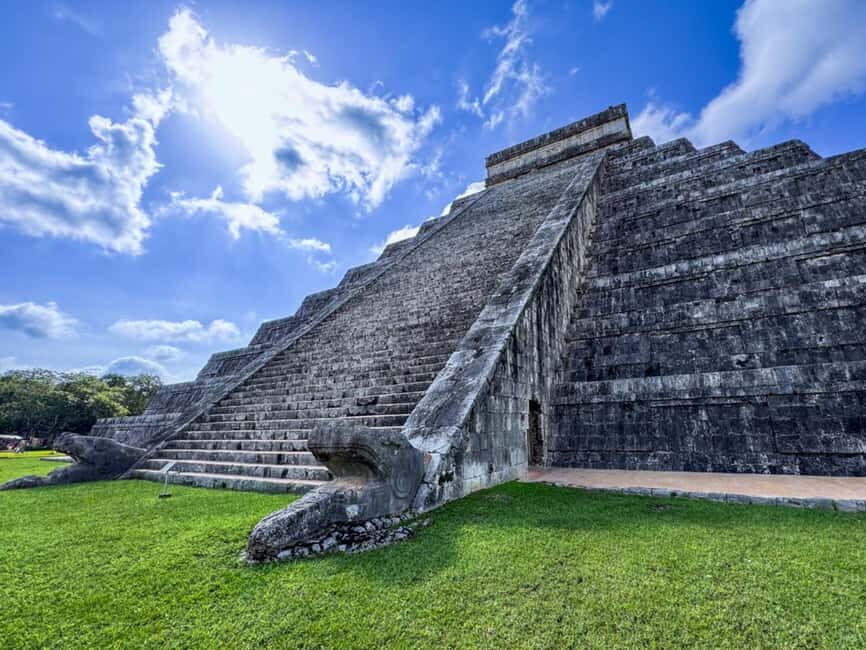
- El Castillo and the Pyramid focus
- Temple of Kukulcán: meaning in the details
- The Great Ball Court: not just a game
- Free time inside the flow
- Sacred Cenote and Maya Rituals: Why the Guide’s Stories Matter
- Photo Help That Actually Improves Your Pictures
- What to Bring, What Not to Do, and How to Handle the Heat
- Price and Ticket Value: Is $52 Worth It?
- Who This Tour Fits Best (And Who Might Skip It)
- Final Decision: Should You Book This Chichén Itzá Guided Tour?
- FAQ
- Where do I meet the guide?
- How long is the tour at Chichén Itzá?
- Is the tour shared or private?
- What languages are offered?
- Is the entry ticket included in the price?
- Will the guide help with photos?
- What should I bring?
- Are drones or professional cameras allowed?
- Is the tour wheelchair accessible?
- Are children allowed?
- Can I get a full refund if I cancel?
Quick Take: What’s Special Here
- Certified local expert leads the walk through the site’s most iconic structures.
- Shared bilingual (English/Spanish) or private monolingual (Italian, English, Spanish, Portuguese).
- Photo help is part of the deal, including guidance on where to stand for better shots.
- Expect hands-on context for rituals, astronomy, and how architecture signals meaning.
- You’ll get time for questions and a bit of free movement, not just a sprint.
Meeting at Parador Turístico: Start Smarter at Chichén Itzá
Chichén Itzá is one of those places where the “how do I even look at this?” feeling is real. The tour starts at the Chichén Itzá Parador Turístico, with an Official Mayan guide. That matters because you’re not trying to decode where to go first while the sun climbs and everyone else is rushing.
Plan to arrive at least 10 minutes early. You’ll have a moment to match your face to your guide and get your bearings—then you’re ready to step into the site with purpose. The format is a walking tour, so you’ll want your day arranged around shade breaks you control, not around where a bus drops you next.
Also, note the rules: no touching exhibits or plants, no drones, and no professional cameras or tripods. You can bring a camera, but the goal here is casual visitor photos, not a production shoot.
You can also read our reviews of more guided tours in Tecoh
Shared Bilingual vs Private Monolingual: Which Tour Fits Your Style
This tour lets you choose how you want your explanations delivered, and that can change the whole experience.
Shared bilingual: smoother and social
If you pick the shared option, the commentary runs in English and Spanish simultaneously. That’s great if you want the lower price and don’t mind that the group is mixed. The upside is that the guide keeps moving at a steady pace while explaining in a way that works for multiple languages at once.
Private monolingual: more questions, more breathing room
If you choose private, you get a monolingual live guide in Spanish, English, Italian, or Portuguese. A private guide is especially useful if you want to ask a lot—about symbolism, astronomy connections, or how the Maya built and used spaces day-to-day. Private also works well for families, since the guide can adjust the explanations to kids without forcing everyone to follow a single pace.
One detail to watch: private options require a minimum of 2 people. If you’re traveling solo, you’ll likely end up in the shared option (unless you’re pairing up with someone).
Your 90-Minute Route: Castillo, Kukulcán Temple, and the Great Ball Court
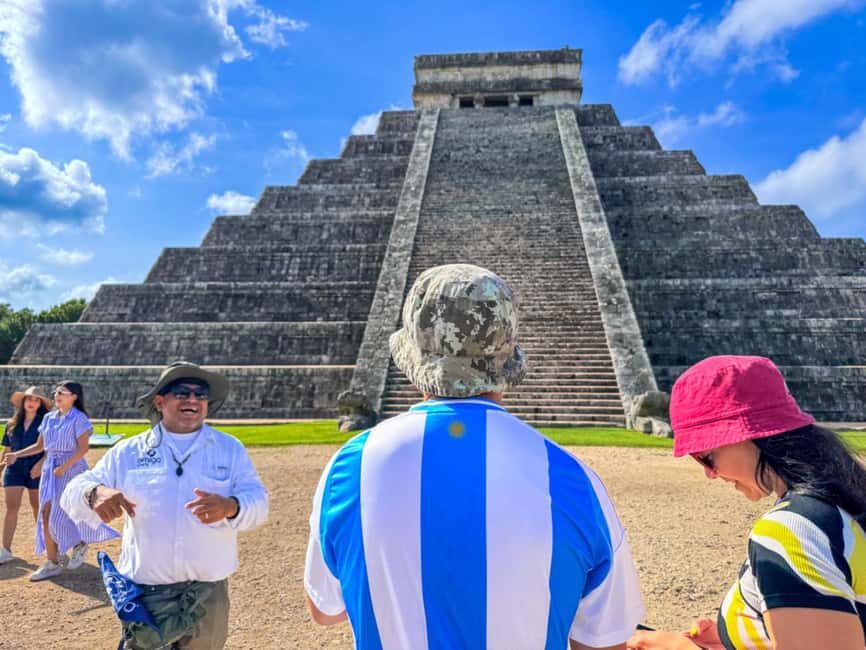
You get about 1.5 hours on-site. That’s short enough to stay focused, but long enough to learn what you’re looking at instead of just snapping photos and leaving confused.
First stop: a quick photo moment, then straight into the walk
The tour begins with a photo stop and a guided walkthrough. This is where the guide usually sets the tone—what each landmark is, what questions to keep in mind, and where you should stand to see key architectural features clearly.
El Castillo and the Pyramid focus
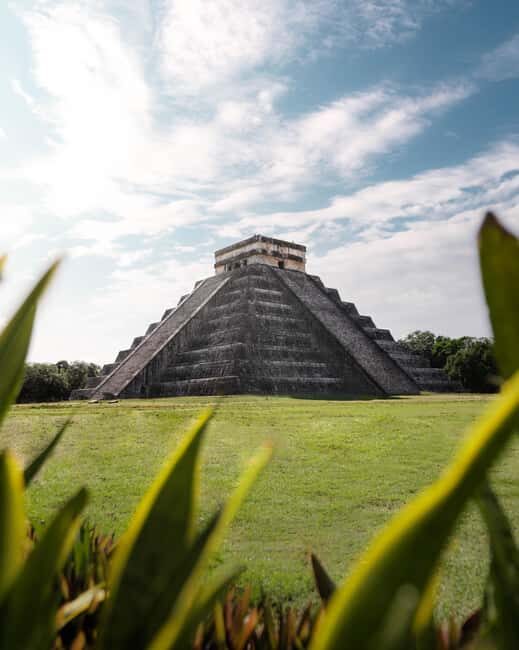
El Castillo is the “I know this from photos” moment. A good guide does two things here: they identify what you’re seeing (stairs, platform levels, design patterns), and they explain why it mattered to the people who built it. Expect interpretation around Maya rituals and how science and belief were connected in daily thinking.
A practical note: this is a crowded, open area inside the complex, so if you want your best shots, listen when the guide tells you where to stand and when to pause. Several guides mentioned in the experience examples—like Omar and Javier—are praised for finding strong photo angles quickly.
Temple of Kukulcán: meaning in the details
Next is the Temple of Kukulcán. This is where the tour shifts from “big structure” to “specific structure.” You’ll learn how Maya astronomy and architecture connect, not through heavy jargon, but through guided explanation that turns repeating design elements into something you can actually recognize in the moment.
If you like architecture, this part is satisfying because the guide points out relationships between parts of the building rather than treating each section as separate trivia.
The Great Ball Court: not just a game
Then you’ll visit the Great Ball Court. Guides often treat this like a key to understanding social life and belief systems. One of the most memorable themes from guided experiences here is the guide’s explanation of how the ball game worked and what it may have represented, sometimes described with a light, “you’re seeing the context now” energy.
You’ll also notice how the site sounds. The open stone surfaces and space shape acoustics, and the ball court area can feel extra alive when the guide brings up how people used it.
Free time inside the flow
Even with a planned route, there’s time for sightseeing and quick stops. You’ll get a chance to look around on your own after the guide points you in the right direction. That balance is ideal if you’re the type who wants to form your own impression rather than just follow like a metronome.
Sacred Cenote and Maya Rituals: Why the Guide’s Stories Matter
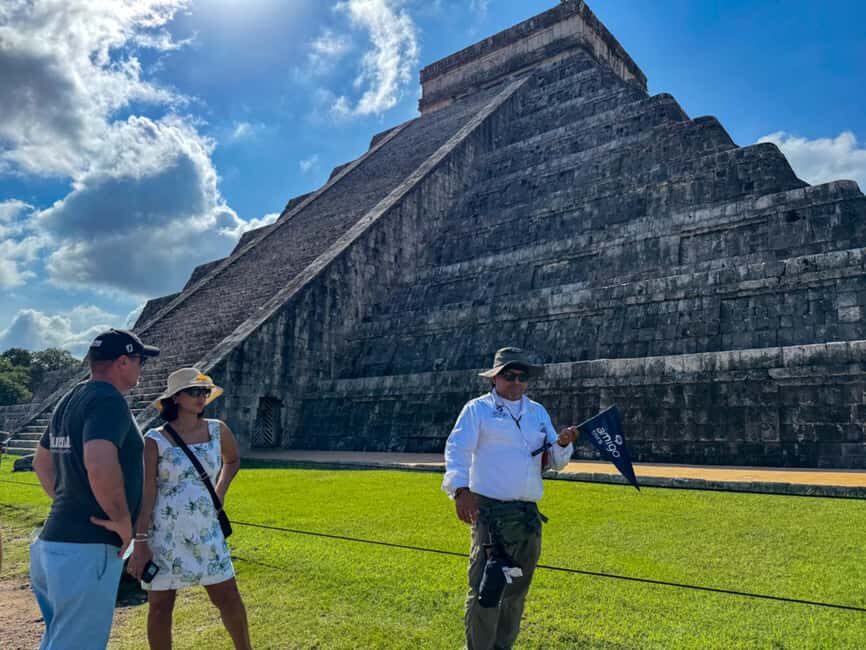
The Sacred Cenote is one of the most powerful stops because water and meaning overlap in a way that makes the site feel less like ruins and more like a living belief system.
This part of the tour focuses on ancient Maya rituals and the significance of the cenote. The guide explains how architecture and natural features worked together in the Maya worldview—especially how people understood the world through ceremony, timing, and observation.
What I like about this approach is that it gives you context for what you’re seeing. Without a guide, the Sacred Cenote can feel like a “wow, that’s deep” photo spot. With a guide, you understand why people would have treated it as more than geography.
Expect respectful explanations—not just facts. In experience examples, guides such as Santo Mariano and Santos are praised for making the site feel meaningful, with patience for questions and a calm delivery even when it’s scorching out.
Photo Help That Actually Improves Your Pictures
Yes, the ruins are photogenic. But Chichén Itzá is also busy, bright, and full of angles that trick your phone camera. This is why the photography assistance is more than a gimmick.
Guides are known for taking group photos for you, and for guiding you toward better positions. That means you spend more time looking at the place and less time waving your phone around at a bad angle.
Some guides also use an iPad to show recreations of what structures may have looked like in the past. That can be a game-changer, especially at El Castillo and around the pyramid areas. The “before” images help your brain fill in what time has worn away, so you don’t feel like you’re studying fragments with no reference point.
If you care about photos, this tour format is a win: you get hands-on help, and you also get enough story context that your pictures feel like evidence of something, not just proof that you were there.
What to Bring, What Not to Do, and How to Handle the Heat
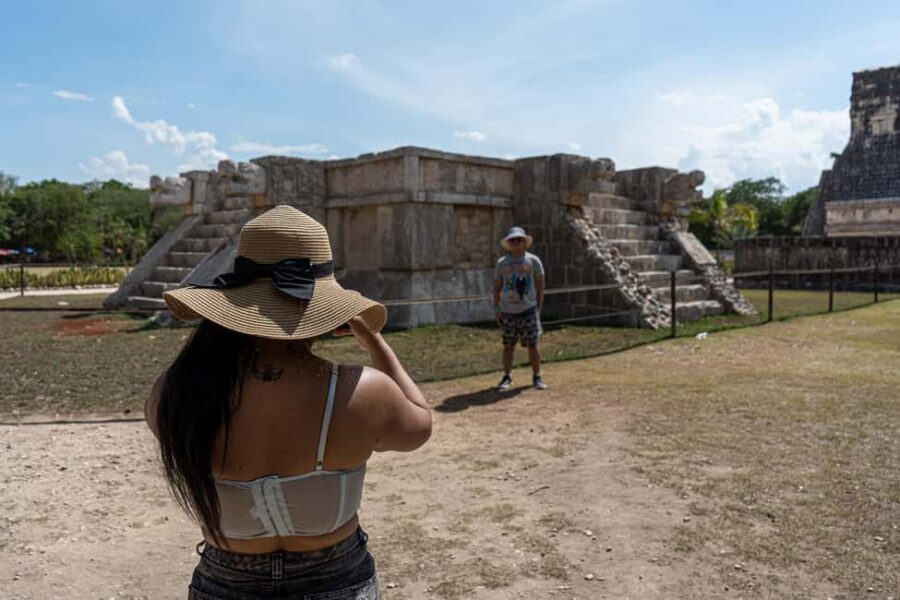
Chichén Itzá doesn’t politely wait for you. It’s hot and open, and most of your comfort will come down to your prep.
Bring:
- Comfortable shoes (the site is walk-heavy)
- Hat and sunglasses
- Sunscreen
- Water
- Comfortable clothes
- Passport or ID card
- Camera
- Cash (useful for the reality of site rules and small purchases)
Don’t bring or do:
- Luggage or large bags
- Food
- Alcohol or drugs
- Smoking
- Drones
- Professional cameras
- Tripods
- Touching exhibits or plants
One more practical thought: if you’re planning your day around this stop, give yourself early timing. An experience example suggests arriving early and waiting for entry tickets onsite can cost less than buying online. If that strategy appeals to you, it can be a smart way to manage budget—just make sure you still meet your guide on time.
Price and Ticket Value: Is $52 Worth It?
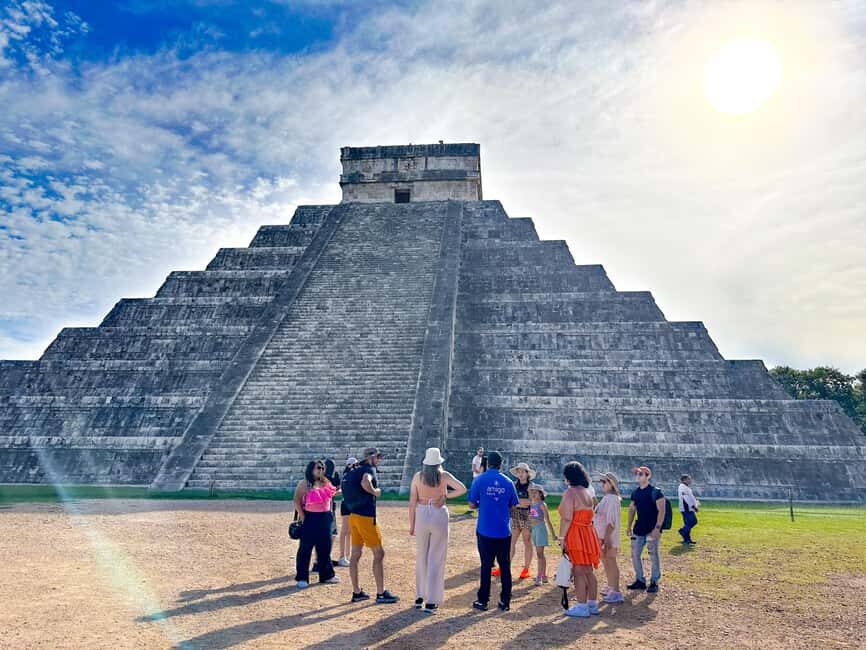
At $52 per person for a 90-minute on-site guided walk, the value depends on how you like to travel.
Here’s the tradeoff:
- Without a guide, you’ll still see the monuments.
- With a guide, you’ll understand what you’re seeing, including how Maya rituals, astronomy, and architecture connect.
That knowledge is exactly what many guide experiences highlight: the difference isn’t that you walk more—it’s that you walk with meaning. Guides are repeatedly praised for explanations that feel clear and engaging, plus photo help that improves results fast.
One important detail: the entry ticket to Chichén Itzá is included only if you select the option that includes it. So before you buy, check whether your chosen package has the ticket inside the price or if you’ll need to plan ticket purchase separately.
My rule of thumb: if you care about history and want your photos to have context, pay for the guide. If you’re purely here for views and you’re already comfortable reading the site on your own, you might question the cost. For most people, though, $52 for 1.5 hours of expert guidance at one of the world’s most famous Maya sites is fair.
Who This Tour Fits Best (And Who Might Skip It)
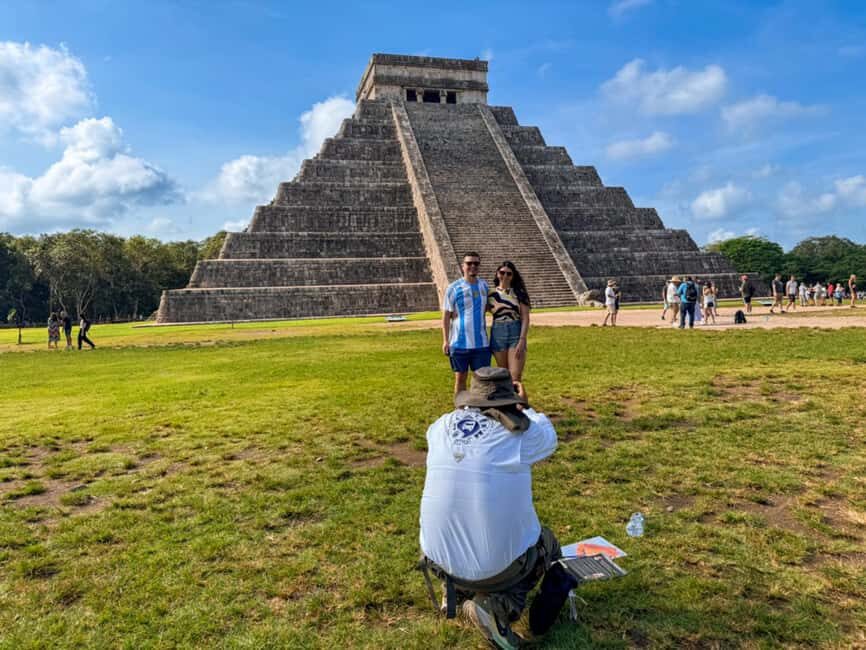
This tour is a great fit if:
- You want a shorter, focused experience instead of a long cattle-car group day
- You like asking questions and getting answers on the spot
- You want better photos without turning your trip into a photography class
- You’re traveling as a couple or small group and can match up with a guide style
It’s less ideal if:
- You need wheelchair access (this tour isn’t suitable for wheelchair users)
- You hate walking in heat and sun
- You’re expecting a deep archaeology seminar with zero time for sightseeing. The format is guided walking with time to look around—not a lecture marathon.
If you’re traveling with kids, it can still work well. One experience example praises how a guide accommodated kids while still keeping the adults engaged. If you have very small children, note that children between 0 and 2 are complementary.
Final Decision: Should You Book This Chichén Itzá Guided Tour?
I’d book it if you want Chichén Itzá to make sense. The guide component is the value engine here: you get certified local expertise, photo help, and explanations that connect Maya rituals, astronomy, and architecture to the places you’re standing.
Skip it only if you’re determined to explore purely on your own and you’re comfortable translating the site without a guide. Even then, you might still want a guide for El Castillo and the Sacred Cenote—those are the stops where context changes everything.
If you do book, come prepared for sun, wear comfortable shoes, and arrive early enough to feel calm at the Parador meeting point. Your photos, your photos’ angles, and your understanding will all thank you.
FAQ
Where do I meet the guide?
Meet your guide at Chichén Itzá Parador Turístico, at the Official Mayan guide meeting point. Arrive at least 10 minutes before your booked time slot.
How long is the tour at Chichén Itzá?
The guided on-site tour lasts 1.5 hours (about 90 minutes).
Is the tour shared or private?
Both options are available: a shared bilingual tour or a private monolingual tour, depending on what you choose.
What languages are offered?
Guides provide live commentary in Italian, English, Spanish, or Portuguese. The shared option runs English and Spanish simultaneously. Private can be one language.
Is the entry ticket included in the price?
An entry ticket to Chichén Itzá is included only if you select the option that includes it. Otherwise, you may need to plan the ticket separately.
Will the guide help with photos?
Yes. The experience includes photography assistance, including help with photos using your phone.
What should I bring?
Bring a passport or ID card, comfortable shoes, sunglasses, a hat, sunscreen, water, and comfortable clothes. A camera is also recommended, along with cash.
Are drones or professional cameras allowed?
No. Drones are not allowed, and professional cameras and tripods are not allowed.
Is the tour wheelchair accessible?
No. This experience is not suitable for wheelchair users.
Are children allowed?
Yes. Children aged 0 to 2 are complementary.
Can I get a full refund if I cancel?
You can cancel up to 24 hours in advance for a full refund.